
British Columbia has added three mining projects to its Critical Minerals Office advanced-projects portfolio, selecting Northisle Copper and Gold’s (TSXV: NCX) North Island Project, Surge Copper’s (TSXV: SURG) Berg Project, and Defense Metals’ (TSXV: DEFN) Wicheeda Project for early coordination support ahead of environmental assessment and future permitting.
Mining and Critical Minerals Minister Jagrup Brar said the CMO is intended to move “promising projects” forward faster and improve clarity and alignment among communities, First Nations, and proponents as projects enter environmental assessment and permitting.
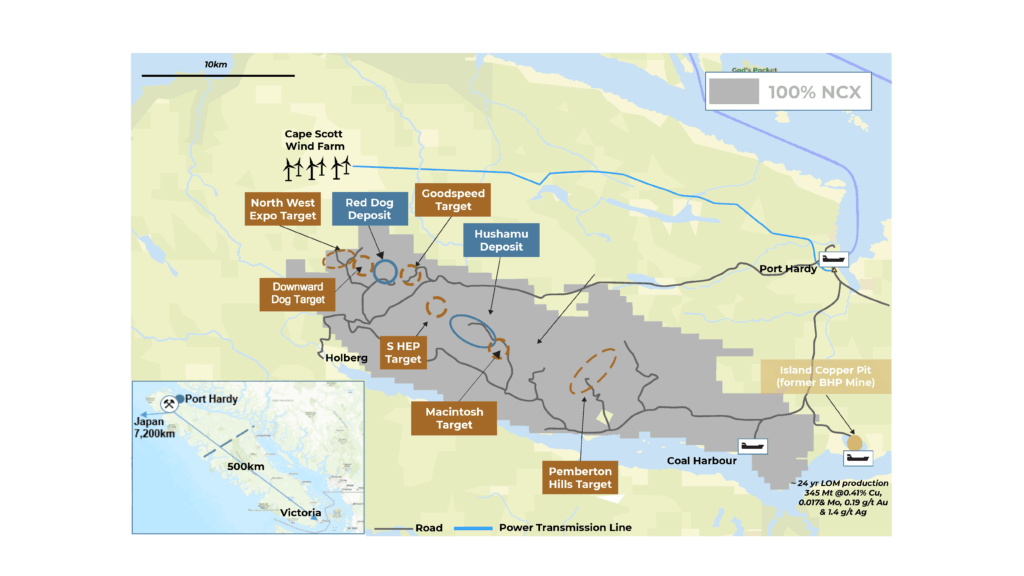
Northisle Copper and Gold said it has completed a preliminary economic assessment and is continuing technical and planning work as it prepares for the environmental-assessment process.
In an earlier announcement tied to the North Island Project site office near Port Hardy, Northisle said hereditary and elected leadership, elders, and youth from Quatsino First Nation, Kwakiutl First Nation, and Tlatlasikwala First Nation attended, alongside the Port Hardy mayor and councilors. It added that agreements are now in place with all three First Nations whose territories overlap the project, covering 100% of the project’s mineral tenure and establishing formal frameworks for engagement, Nation-specific processes, information sharing, and exploration-related activities.
In the latest assessment, the North Island Project base case scenario suggests an after-tax NPV7% of $2.00 billion, a 28.6% IRR, and 1.9 years payback, alongside a 29-year mine life with average annual production of 157.0 million copper equivalent pounds and 307,000 gold equivalent ounces.
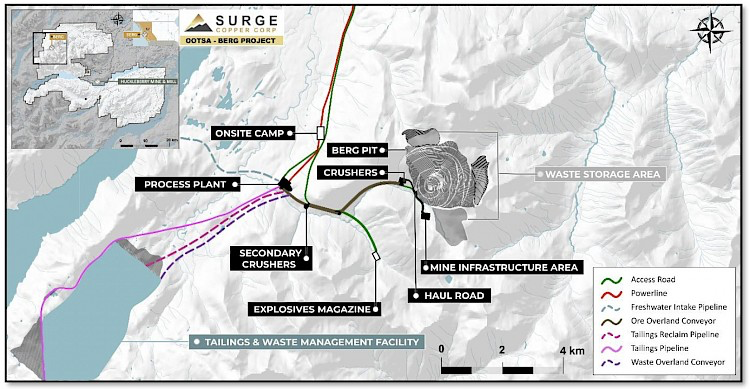
On the other hand, Surge Copper said that the Berg Project was accepted into the CMO, describing ongoing technical and baseline work supporting an “imminent” pre-feasibility study release and entry into the environmental-assessment process.
The firm asserts the project as aligned with national critical minerals objectives and a Western Canadian Critical Minerals Strategy, with projected copper and molybdenum output described as potentially among the largest in Canada if developed as envisioned.
According to its latest PEA, Berg project economics include an after-tax NPV8% of $2.1 billion and an IRR of 20%, supported by an updated resource of more than 1.0 billion tonnes of measured and indicated material containing 5.1 billion copper pounds, 633.0 million molybdenum pounds, 150.0 million silver ounces, and 744,000 gold ounces, alongside a 30-year mine plan with average annual production of 191.0 million copper-equivalent pounds.
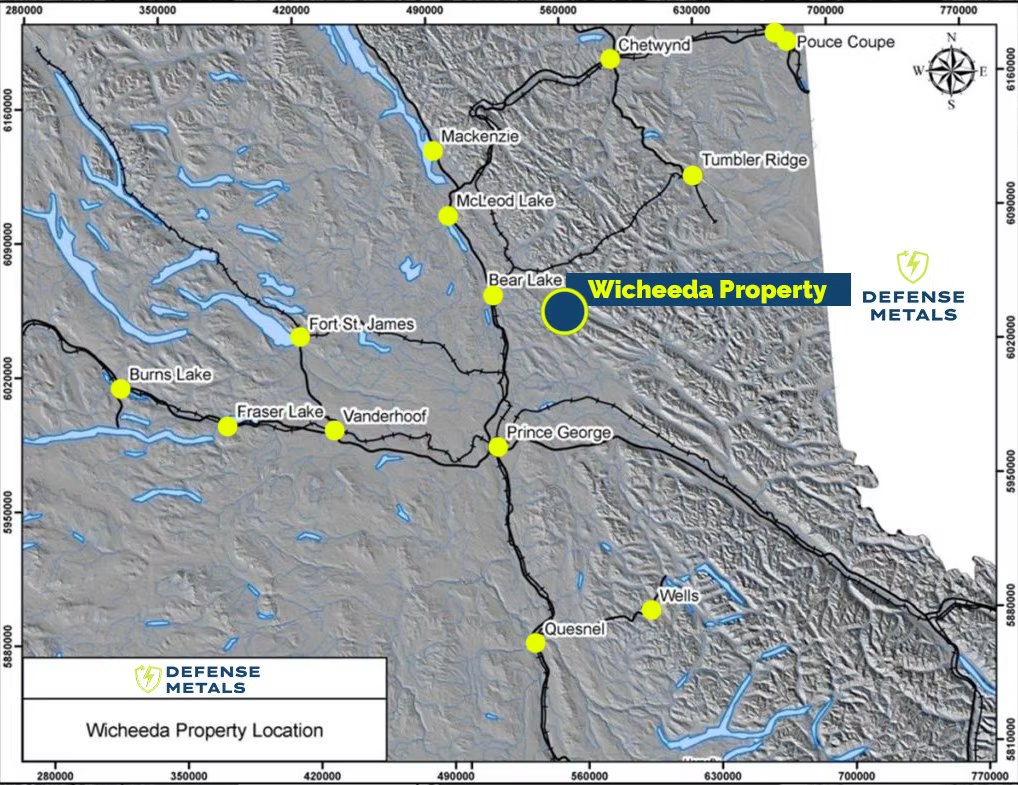
Lastly, Defense Metals said that its Wicheeda Project near Prince George was selected by the province to work with the CMO as an advanced project, noting it has completed a pre-feasibility study and is undertaking environmental baseline work, confirmatory metallurgical studies, and engineering planning required to advance feasibility-level studies and move into environmental assessment and permitting.
The pre-feasibility study moves the Wicheeda project into the “advanced” bucket for undeveloped rare earth assets across North America and Europe, with headline economics of a pre-tax NPV8% of $1.8 billion and a 24.6% IRR, plus an after-tax payback of 3.7 years. The reserve-backed mine plan outlines a 15-year life-of-mine averaging 31,900 tonnes per year of total rare earth oxide in concentrate, translating to roughly 5,200 tonnes per year of TREO in a higher-value mixed rare earth carbonate once cerium and lanthanum are removed.
The province said projects are selected using established criteria including strength of working relationships with local First Nations, geological potential, project readiness, commodity type, and other factors, and it positioned dedicated, project-specific support as a way to secure alignment on a transparent and efficient regulatory pathway for all parties.
Northisle, Surge, and Defense Metals join FPX Nickel Corp. as recipients of dedicated CMO support services.
BC anchored the announcement in sector-scale figures: the mining sector supports more than 40,000 jobs, the province contributes around 50% of Canada’s copper production and is Canada’s only producer of molybdenum. The province said it has strong potential to produce at least 22 of the 34 minerals on Canada’s critical-minerals list as of January 2026, and it cited an opportunity of as much as $44 billion by 2040 from new and expanded critical-minerals projects.
Information for this story was found via the sources and companies mentioned. The author has no securities or affiliations related to the organizations discussed. Not a recommendation to buy or sell. Always do additional research and consult a professional before purchasing a security. The author holds no licenses.