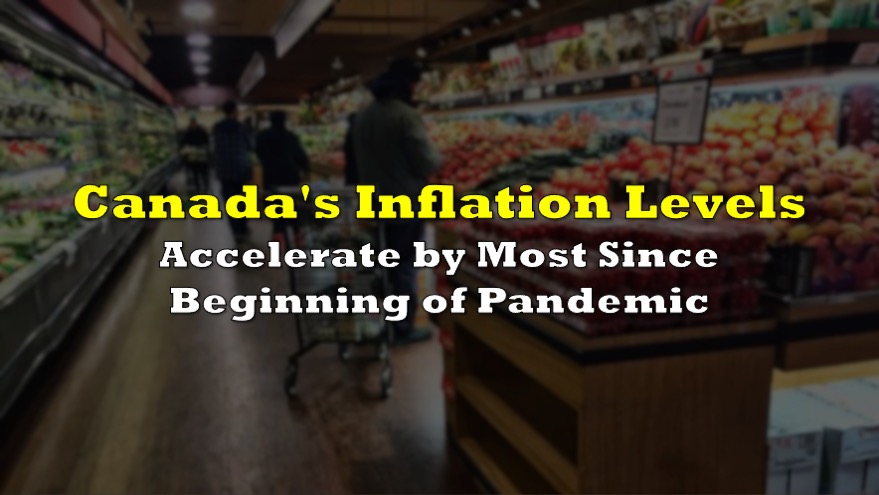

It appears that Canadians are beginning to experience some of the price pressures associated with quantitative easing and government spending, as annual inflation levels for the month of November soared by the most since February.
According to latest data released by Statistics Canada, annual inflation rose by 1% in November, after a modest increase of 0.7% in the prior month. According to economists surveyed by Bloomberg, inflation levels were expected to only rise by 0.8% on an annual basis. Although Canada’s inflation rate still remains below the Bank of Canada’s 2% target, many Canadians have been affected by the recent price pressures, especially with respect to shelter costs. Regionally, prices increased in eight of the ten provinces in November, with the exceptions being Prince Edward Island and New Brunswick.

Shelter costs were the main contributing factor to the rise in inflation, with rent prices increasing by 1.5% on a year-over-year basis in November, and up from 1% in October. Although rent prices in the past 12 months still remain below pre-pandemic levels, the month of November was the fifth month of consecutive increases, with the exception of July.

The homeowners’ replacement cost index, which is related to the price of new homes, increased by 1.1% on a month-over-month basis, which marks the ninth consecutive month of growth. Record low interest rates, coupled with a shift in homebuyer behaviour in favour of single-family homes, has lead to a rise in building material costs and receding inventory levels. This in turn has contributed to the increase in prices for new homes.
 Sponsored · Silver47 Exploration Inc.
In the meantime, despite consumer confidence falling short of pre-pandemic levels, Statistics Canada notes that the increase in consumer spending on household durable goods had lead to price growth for furniture and household appliances – both of which are above pre-pandemic levels. This is likely due to the social distancing and stay-at-home orders that have prompted many Canadians to stay indoors and instead spend money on big ticket items for their home – which is evident given the decline in the savings rate compared to the beginning of the pandemic.
Gasoline prices also continue to remain significantly below pre-pandemic levels, falling by 11.9% on a year-over-year basis in November. The increase in public health restrictions amid a second wave of the pandemic continues to have a downward impact on the global demand for gasoline. Meanwhile, the province of Manitoba saw a considerable price increase on their natural gas bills, with prices rising by 26.7% compared to November 2019. The sudden increase is the result of the removal of temporary price adjustments that were introduced last year.
Information for this briefing was found via Statistics Canada. The author has no securities or affiliations related to this organization. Not a recommendation to buy or sell. Always do additional research and consult a professional before purchasing a security. The author holds no licenses.