
Food costs across Canada have risen substantially since the beginning of the pandemic, but a recent study found that prices are actually significantly higher than what official figures estimate.
According to latest data from Statistics Canada, annual food inflation sat at 2.7% in August, up from July’s 1.7%. However, a recent study from the Agri-Food Analytics Lab at Dalhousie University found that grocery costs are actually a lot higher, with food inflation actually sitting at around 5%.

Researchers at the agri-food lab surveyed over 1`0,000 consumers across Canada about their experience with rising food costs, how they perceive prices, and what they are doing to handle rising grocery bills. The study found that 86% of respondents believe that the price of food is higher compared to six months ago, as a number of staples including meat, dairy, and vegetables have become costlier due to macroeconomic factors and adverse climate conditions.
 Sponsored · Cambria Gold Mines
Almost half of the consumers surveyed revealed they have cut back on meat purchases over the past six months due to elevated prices. Alberta, which is typically known for its significant consumption of steak, has seen 57% of its consumers reduce their meat purchases in response to higher costs. The higher prices for staple items has also forced consumers to adjust their shopping habits, with a larger proportion of shoppers opting for private labels, or house brands. A total of 37.5% of respondents said they are buying more private labels compared to the same period one year ago.

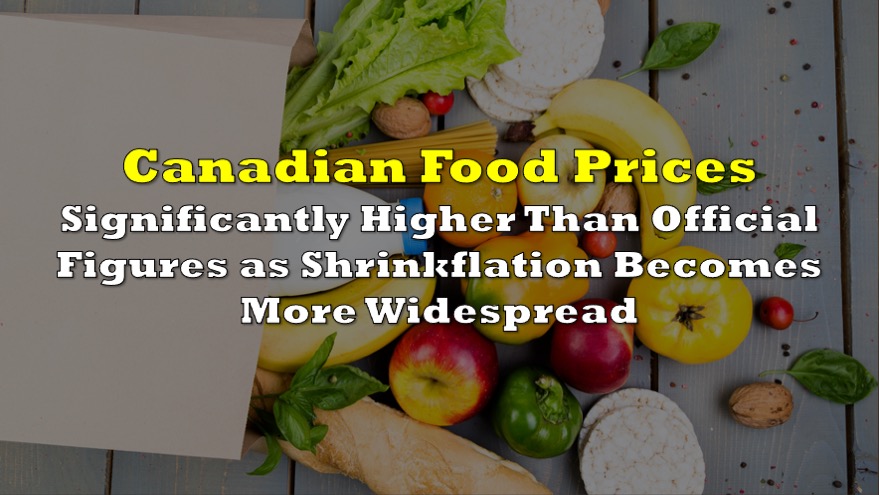
Discounted grocery items have also become increasingly popular over the past year, as 39.6% of Canadians revealed they are buying discounted food with expiry dates nearing purchase. But, the most striking revelation from the agri-food lab’s study was that consumers have become significantly more aware of “shrinkflation,” a phenomenon where the item’s quantity has been cut back but the price remains the same.
Nearly 3 out of 4 Canadian consumers have become aware that some products’ volumes have shrunk, while prices have either remained the same or have increased. “We are aware that many consumers dislike such a strategy, believing it may be dishonest, especially right now,” explained the Agri-Food Analytics Lab director Dr. Sylvain Charlebois. “But on the flipside,
from a food waste perspective, Canadians have historically bought too much food and have wasted a lot at home. Shrinkflation could be getting Canadians to waste less food at home.”

With respect to the sharp increase in food costs, the survey’s researchers attributed it to numerous global macroeconomic shocks, some of which are caused by supply bottlenecks and shipping challenges, as well as adverse shifts in weather patterns.
Information for this briefing was found via Dalhousie University and Statistics Canada. The author has no securities or affiliations related to this organization. Not a recommendation to buy or sell. Always do additional research and consult a professional before purchasing a security. The author holds no licenses.