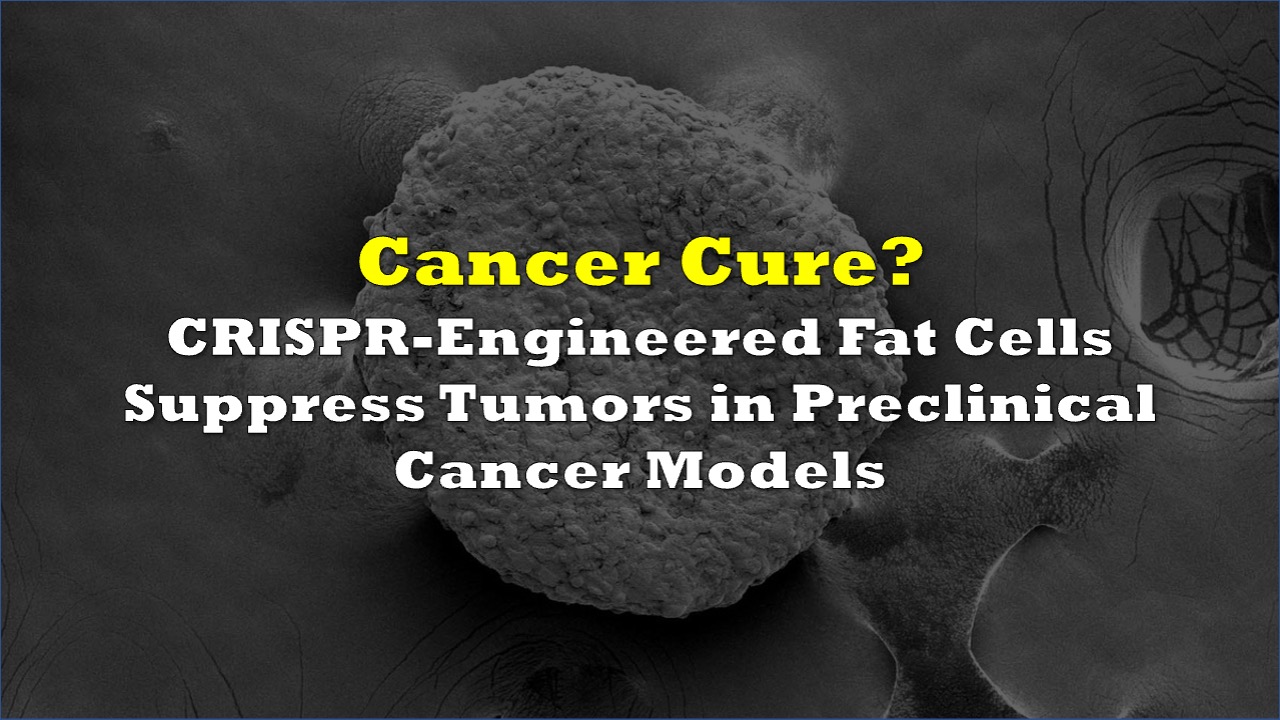

Researchers at the University of California, San Francisco have engineered fat cells that starve cancer tumors by consuming nutrients, according to a study published February 4 in Nature Biotechnology.
The team used CRISPR to convert white fat cells into beige fat cells that burn calories. When implanted near tumors in mice, they suppressed the growth of breast, pancreatic, colon, and prostate cancers — even from distant sites.
“We already routinely remove fat cells with liposuction and put them back via plastic surgery,” said Nadav Ahituv, director of the UCSF Institute for Human Genetics and senior author.
This may be the first experimental cellular therapy to use a patient’s own fat cells, according to the National Cancer Institute. Unlike immune cells used in CAR T-cell therapy, fat cells have a lower immune response and could enable universal treatments.
This is wild! Scientists used liposuction to suck out ordinary white fat cells…then used CRISPR to turn into “beige” fat cells, which voraciously consume calories to make heat.
— Jordan Crowder (@digijordan) December 28, 2025
Then, they implanted them near tumors the way plastic surgeons inject fat from one part of the body… pic.twitter.com/KreqhAkKqB
From cold therapy to engineered cells
Previous studies showed cold exposure suppressed cancer in mice by activating brown fat cells. Ahituv and postdoctoral researcher Hai Nguyen used CRISPR to activate the UCP1 gene in white fat cells, creating similar effects without cold exposure. When Nguyen tested the cells against cancer cells in dishes where both types shared nutrients, few cancer cells survived.
“In our very first trans-well experiment, very few cancer cells survived,” Ahituv said. “We thought we had messed something up — we were sure it was a mistake. So, we repeated it multiple times, and we kept seeing the same effect.”
The team tested fat and cancer cells from the same mastectomy patients. The engineered fat cells outcompeted breast cancer cells in both laboratory dishes and mouse models. Researchers also programmed cells to target specific nutrients—for pancreatic cancers that rely on uridine when glucose becomes scarce.
The approach could prove practical since many mastectomies include reconstructive surgery using the patient’s own tissue.
Limitations and next steps
The treatment worked less effectively in mice fed high-fat or high-glucose diets. Jung Byun of NCI’s Division of Cancer Treatment and Diagnosis said researchers must determine whether the metabolic competition could impact normal cells and noted that effectiveness may vary among patients.
A team led by Tejal Desai at Brown University and UCSF created retrievable scaffolds allowing doctors to pause treatment if complications arise.
Nguyen, the first author, moved to the University of Texas at Austin in January 2024 to start his own laboratory, but died in November before completing the final experiments. The paper is dedicated to him.
“Hai was one of the most amazing post-docs I’ll ever have and a great friend,” Ahituv said. “We are heartbroken. He has left us with this incredible gift of a technology that could truly change lives.”
Information for this story was found via the sources and companies mentioned. The author has no securities or affiliations related to the organizations discussed. Not a recommendation to buy or sell. Always do additional research and consult a professional before purchasing a security. The author holds no licenses.