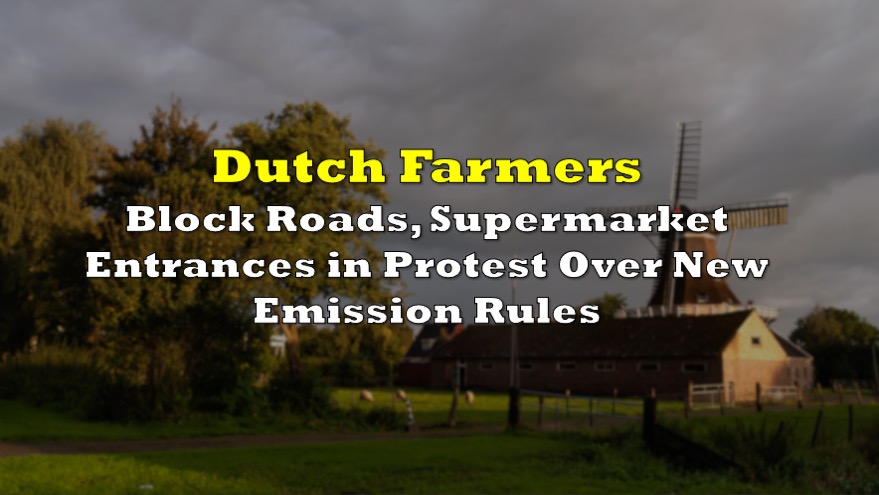

Farmers in the Netherlands are staging protests over the government’s upcoming changes to environmental regulations aimed at substantially reducing pollutant emissions, sparking further fears of food shortages and inflation for the European Union.
Dutch farmers have become fed up with the country’s shift towards substantially more stringent emission rules, and have blocked entrances into food warehouses with hay bales and even roads with tractors and trucks on Monday. Joining them were fishers, who blocked ports preventing ferries from transporting goods to and from the nation’s northern coast in a show of solidarity.
The latest unrest comes after a 2019 court ruling instructed the Dutch government to slash nitrogen oxide and ammonia emissions generated by livestock by 50% come 2030, with provincial governments given one year to enforce the new rules. The environmental reforms would reduce the amount of livestock in the country, with government estimates forecasting that about 30% of the country’s livestock farmers would have to shut down operations as a result. To help reach the new environmental goal, the reforms also include the government purchasing those farms that emit substantial amounts of ammonia.
 Sponsored · Selkirk Copper Mines
The farmers argue the ruling would unfairly target their operations, and erase prospects for their future. As a result, agricultural producers are calling for “the entire country to be paralyzed,” with threats of further protests. In response, the Dutch government brought in a mediator to stage discussions between organizers of the protests and officials responsible for devising the new regulations. However, Dutch Prime Minister Mark Rutte has vowed to refrain from engaging in talks with farmers creating radical protests.
“Blockades of distribution centers hurt the citizens of the Netherlands. Supermarkets do everything they can to keep the stores stocked, but if blockades continue, it could lead to people not being able to do their daily shopping,” warned the country’s Central Bureau for Food Trade.
Information for this briefing was found via Reuters and the sources mentioned. The author has no securities or affiliations related to the organizations discussed. Not a recommendation to buy or sell. Always do additional research and consult a professional before purchasing a security. The author holds no licenses.