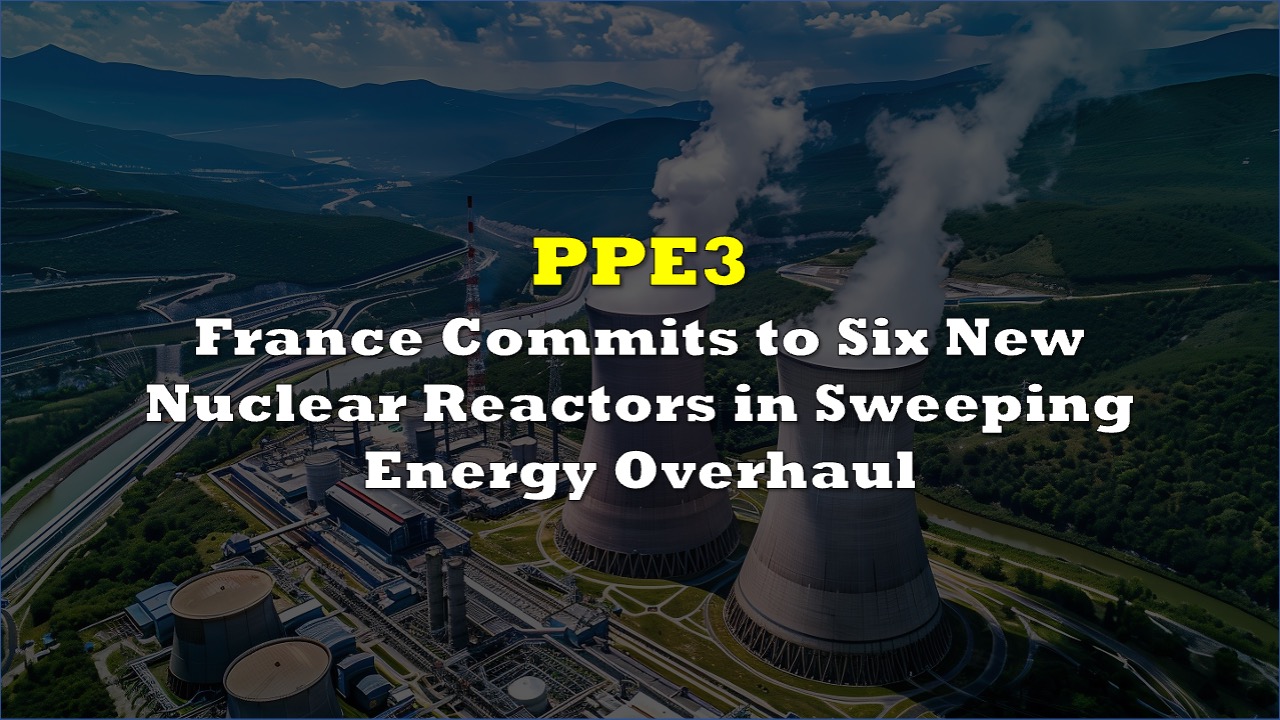

France’s government has published a decade-long energy roadmap that bets heavily on nuclear power while preserving space for renewables, as Paris moves to break its dependence on fossil fuels by 2050.
Prime Minister Sébastien Lecornu unveiled the third Multiannual Energy Programme (PPE3) on February 13, covering 2026 to 2035. The plan targets decarbonised electricity output of between 650 and 693 terawatt-hours by 2035 — up from 458 TWh in 2023 — while cutting fossil fuel consumption from roughly 900 TWh to around 330 TWh over the same period.
“Decarbonising the country requires reviving electricity production,” Lecornu said, citing urgency after nearly three years of political deadlock over the nuclear-renewables balance.
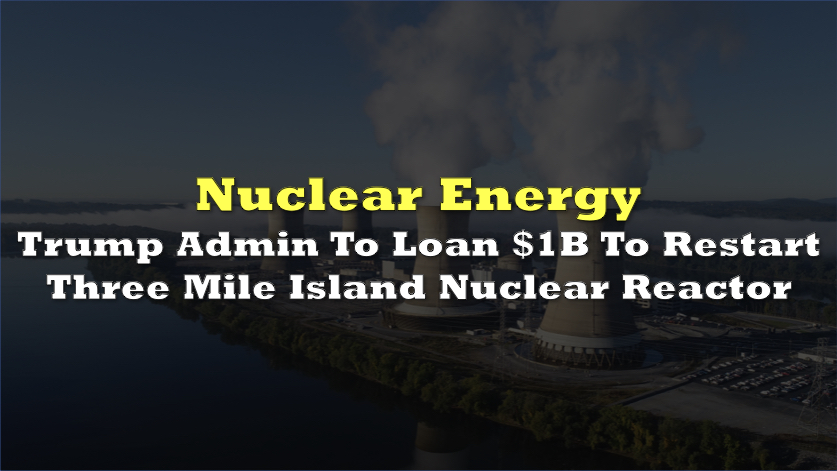
The PPE3 calls for six next-generation EPR2 reactors across three existing sites — Penly in Normandy, Gravelines near Dunkirk, and Bugey near Lyon — alongside a decision as early as 2026 on eight additional reactors, lifetime extensions for the current fleet to 50 or 60 years, and a first small modular reactor by the early 2030s. It also formally scraps a prior plan to shut down 14 reactors, including those at Fessenheim.
France currently generates roughly 70% of its electricity from nuclear — the world’s highest share — but still relies heavily on fossil fuels in transport and industry, which the plan aims to address through a broader electrification push targeting a 60% electric energy mix by 2030.
On renewables, Lecornu rejected any suggestion of a trade-off. “Pitting nuclear against renewables is a dead end,” he said. “The real battle is to get out of carbon and reduce our dependence on imports.” The government confirmed no moratorium on wind and solar, though it acknowledged that slower electrification could trim onshore targets in the coming years.
Execution, however, remains an open question. The first EPR2 reactor will not come online before 2038, France’s Nuclear Policy Council confirmed in March 2025, and projected costs have risen 30% — from €51.7 billion to €79.9 billion — with no final ceiling set. EDF faces a final investment decision pending EU talks in 2026, and the Court of Auditors has urged the government not to proceed until financing is secured.
Information for this story was found via the sources and companies mentioned. The author has no securities or affiliations related to the organizations discussed. Not a recommendation to buy or sell. Always do additional research and consult a professional before purchasing a security. The author holds no licenses.