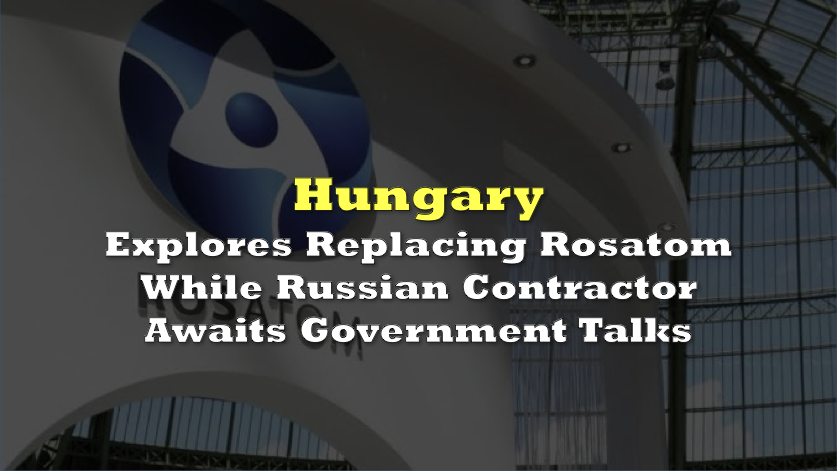

Five days before Hungary was reported to be exploring replacements for its Russian nuclear contractor, the government said substantive contact with international partners would have to wait until it completed a review of the €12.5 billion Paks II project.
Rosatom, meanwhile, says its requests for government-level discussions have gone unanswered, even as construction work continues.
The difference matters in Budapest’s reassessment of the two-reactor expansion. Reuters reported Wednesday, citing two people familiar with the matter, that Hungary had begun sounding out other suppliers. One source said the government was leaning toward proceeding with the expansion without Rosatom.
 Sponsored · Selkirk Copper Mines
On October 16, Hungary’s Economy and Energy Ministry told Hungarian outlet Telex that a legal, financial, and technical examination of Paks II was underway and might not finish before the end of 2026. Any substantive engagement with international partners, the ministry said, depended on first establishing a complete picture of the inherited project.
The same day, Rosatom chief Alexei Likhachev told reporters in Moscow that his company lacked government-level dialogue with Hungary’s new administration, according to Interfax.
He said work with technical counterparts was continuing, including discussions of next year’s production programme, and that Rosatom was receiving contractual payments as work milestones were completed.
Hungary had already spent more than €2 billion on Paks II when the first concrete was poured in February, according to Reuters. About €1.1 billion had been paid to Rosatom.
Terminating its role could create additional contractual liabilities, although no penalty amount has been established.
The construction agreement, awarded without a competitive tender under former Prime Minister Viktor Orbán in 2014, has been amended five times. A proposed sixth amendment remains unsigned, Reuters reported.
There is also an unresolved European regulatory issue. In September 2025, the European Court of Justice annulled the European Commission’s state-aid approval because the Commission had not examined whether the direct award complied with EU procurement rules.
Prime Minister Péter Magyar has questioned the project’s cost without rejecting nuclear expansion. The government is also considering extending the licences of Paks’ four existing reactors, which expire between 2032 and 2037, Reuters reported.