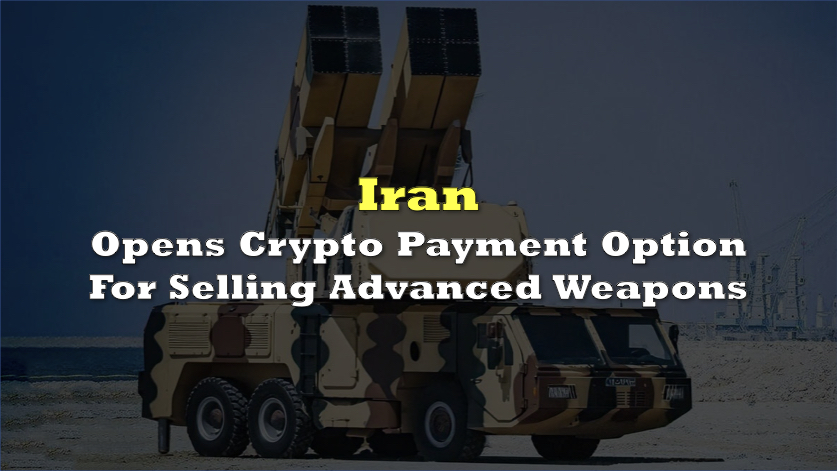

Iran’s Ministry of Defence Export Center, known as Mindex, is offering foreign governments the option to pay for advanced weapons systems using cryptocurrency, alongside barter arrangements and Iranian rials, in a bid to bypass western financial controls.
Introduced over the past year, the offer is notable because it is one of the first publicly known cases of a nation state signaling willingness to accept digital assets for exports of strategic military hardware, rather than limiting crypto use to trade in civilian goods or informal settlement.
Mindex, a state-run body responsible for Iran’s overseas defense sales, advertises relationships with 35 countries and lists a catalogue that includes Emad ballistic missiles, Shahed drones, Shahid Soleimani-class warships, and short-range air defense systems, plus additional listings such as small arms, rockets, and anti-ship cruise missiles.
The sales motion is operationalized through an online portal and a virtual chatbot, including a sanctions-focused FAQ that addresses execution risk and delivery assurances.
In one response, the site says there is “no problem” implementing contracts despite sanctions and that delivery will occur “as soon as possible.”
While prices are not publicly listed, the site indicates payments can be arranged in the destination country and offers in-person inspection in Iran, subject to security approvals, indicating an intent to support deal flow even when cross-border banking access is constrained.
Mindex’s payment terms also include conditions about how weapons would be used “during a war with another country,” while describing the terms as negotiable.
The Financial Times reported it verified the site’s authenticity using archived versions, registration data, and a review of technical infrastructure, and said the hosting sits on an Iranian domestic cloud service that is under US Treasury sanctions and is described by Washington as closely tied to Iranian intelligence services.
The disclosures land amid broader western emphasis on disrupting sanctions evasion using alternative rails, including cryptocurrency, with Washington previously accusing Iran of using digital assets to facilitate oil sales and move “hundreds of millions of dollars” outside the formal banking system.
US Treasury actions cited in the reporting include sanctions imposed in September 2025 targeting individuals linked to Iran’s Revolutionary Guards over a “shadow banking” network that used cryptocurrencies to process payments on Tehran’s behalf.
The move also coincides with renewed multilateral pressure on Iran’s nuclear program, including the E3 triggering the UN “snapback” mechanism in August 2025, increasing the incentive for sanctioned actors to lean on non-bank payment channels where counterparties face fewer immediate chokepoints.
Information for this briefing was found via Financial Times, Reuters, AP, and the sources mentioned. The author has no securities or affiliations related to this organization. Not a recommendation to buy or sell. Always do additional research and consult a professional before purchasing a security. The author holds no licenses.