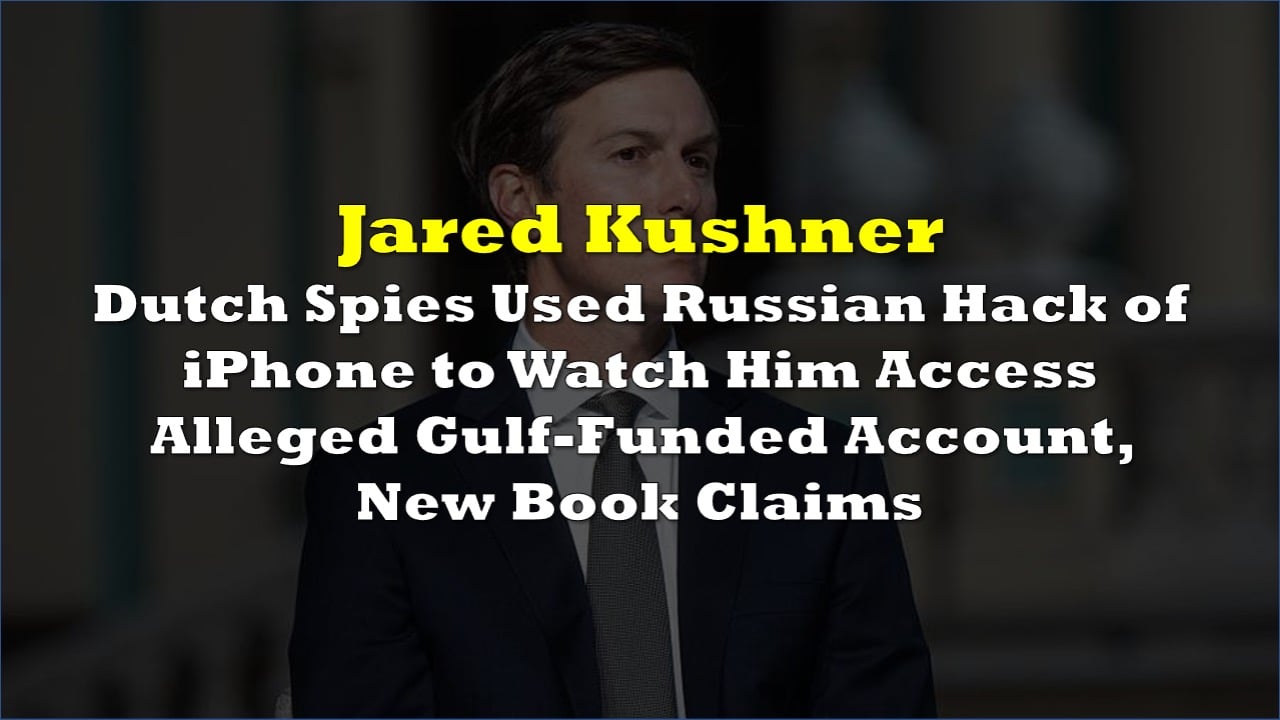

A Russian military hacker landed in England in late 2017 on an espionage mission, and Dutch intelligence officers confronted him with a choice, journalist Matthew Cole says. Work for the Netherlands against his own agency, or face espionage charges from the British. He chose the Netherlands.
The hacker went on to give the Dutch access to a GRU server in Rostov, Russia, that held images captured from the iPhone of Jared Kushner, then a senior adviser in Trump’s first White House and husband of Trump’s daughter Ivanka. From that server, Cole alleges in his new book Princes and Thieves, the Dutch moved on to the phone itself and to what he describes as secret Gulf-funded bank accounts. Kushner and his lawyers deny the accounts exist.
Cole published an excerpt in Vanity Fair on October 22; here are some of the takeaways.
The hack
The Netherlands Defense Intelligence and Security Service, known as MIVD, learned in late 2017 that the hacker, a GRU operative who dealt in stolen banking records, was heading to the United Kingdom, according to Cole. The Dutch asked British authorities for permission to detain him on arrival, and the British agreed. When the hacker landed, he faced a choice between working for the Dutch and a prison term in Britain.
 Sponsored · Granada Gold Mine Inc.
Inside the GRU server, the Dutch found screenshots of Kushner’s iPhone X, the newest model at the time, which Apple released in November 2017. MIVD’s hacking team in The Hague set out to work out how the Russians got in. By early 2018, Cole says, the team had found a vulnerability of its own. It could not switch on the phone’s microphone or camera, but it showed the Dutch Kushner’s screen whenever he used the phone, and they saved every image to their own servers.
The bank account
Soon after, the Dutch watched Kushner sign in to a bank account in the UAE, Cole says. The account held hundreds of millions of dollars wired from an Azerbaijani bank, and the Dutch first read it as tied to that country’s government. Some Azerbaijani banks quietly convert Gulf currencies into dollars for a fee of roughly 6% to 7%, according to Cole, who says auditors cannot easily detect the practice.
The Dutch could not see who owned the account, Cole writes. He says it belonged to the Watani Al Emarat Foundation, a charity funded by the Emirati government, and that Kushner served as a signatory even without owning it. Cole alleges the charity also served as a vehicle for the UAE’s covert overseas military and intelligence financing.
The alleged arrangement
The money came from Saudi and Emirati leaders, Cole alleges. Early in Trump’s first term, he says, Saudi Crown Prince Mohammed bin Salman and Emirati leader Mohamed bin Zayed talked with Kushner about pooling more than $10 billion in a fund to back the White House’s foreign policy goals, including the border wall. That plan fizzled within months, and bin Zayed, at first with bin Salman and then alone, ultimately committed $2 billion or more across at least two accounts meant for Kushner.
The account the Dutch watched, which Cole calls Alpha, sits at First Abu Dhabi Bank and took in roughly $750 million beginning in 2017. A source familiar with the UAE’s deal told Cole that “Jared was looking for shortcuts in his diplomacy” and that Kushner pledged to advance Emirati priorities with President Donald Trump if the UAE joined the fund.
Bin Zayed moved roughly $1 billion more to Israel through Azerbaijan by spring 2018, into what Cole calls the Beta account. One person familiar with it told Cole that Israeli Prime Minister Benjamin Netanyahu urged Kushner to park the funds with Israel’s central bank, where they would look like a state deposit. Kushner passed word of his transactions to Netanyahu through then-US Ambassador David Friedman, Cole says, and a person who helped Kushner shift funds out of Israel said much of it ended up in Cyprus bank accounts.
How Kushner used the money remains unclear, Cole writes, as does whether Dutch intelligence ever saw the Beta account, though a person with knowledge of the funds said they were meant for Kushner’s personal benefit.
The two account figures Cole gives add up to roughly $1.75 billion, and he does not itemize the rest. A source who contacted Cole in 2020 said Kushner appeared to move large sums from a Dubai account to a warlord, a mercenary and a former hit man. Cole cites no second source for that detail.
Legal questions
Four senior officials who served in Trump’s first administration, among them two national security advisers and a former CIA director, told Cole they were unaware that Trump had authorized Kushner to tap a foreign government’s bank account. A former Mueller investigation prosecutor told Cole that any promise Kushner made in exchange for the money, even a pledge to lobby Trump, could have violated federal bribery and foreign agent laws. Federal disclosure rules required Kushner to report any account where he held signatory access.
‘Completely insane’
Kushner called the allegations “completely insane” and said on X that none of the events happened. He also pointed out that Cole’s story has no statements, transfer records, account details, or dates to back the claims. His attorney, Chad Mizelle, called the central claim “categorically false” and said the accounts do not exist.
Mizelle also said he sent publisher Simon & Schuster a 13-page letter denying the allegations before publication, and he threatened to sue. Kushner’s counsel told Cole that Kushner knew of no such account and struck no deal with foreign officials without Trump’s agreement. Friedman told Cole he knows nothing about the allegations and called the claims about his own role false.
The special envoy
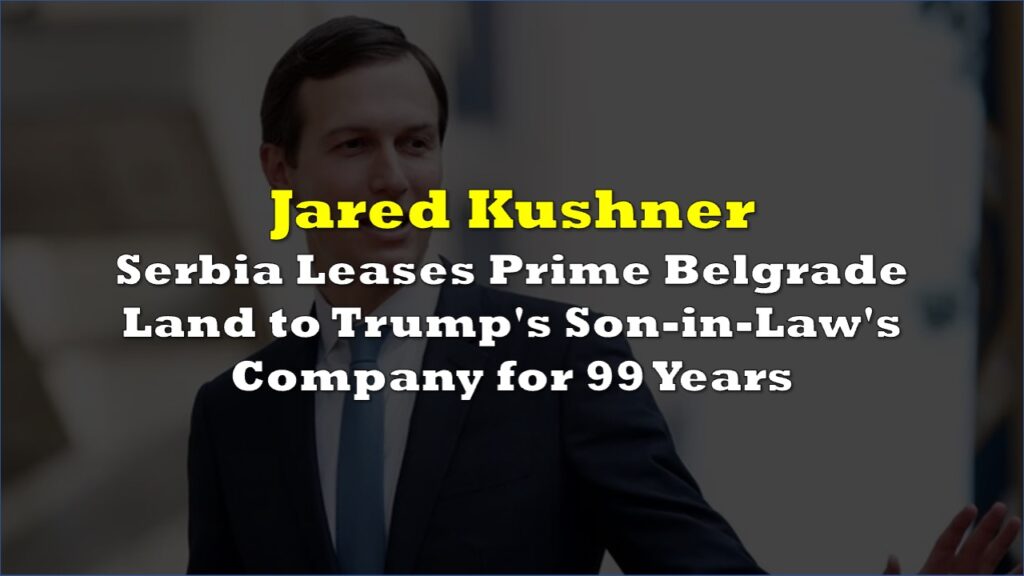
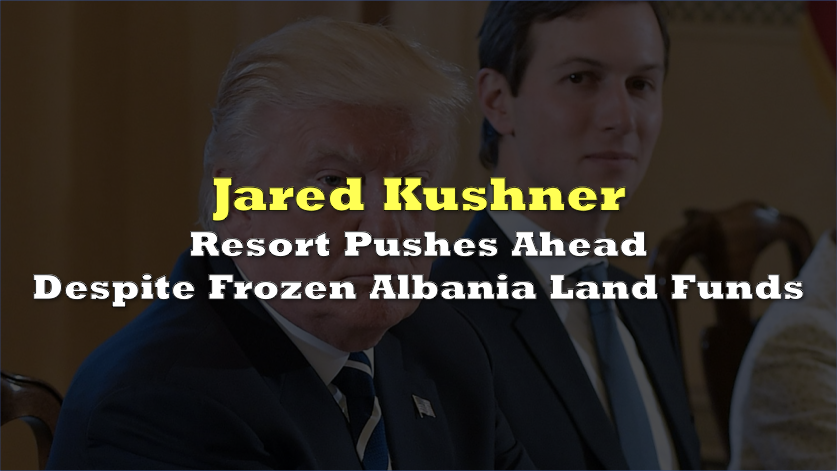
Kushner advised Trump at the White House during his first term, from 2017 until 2021, and he helped broker the 2020 Abraham Accords, which brought the UAE and Bahrain into formal relations with Israel. After that term ended, Kushner founded the private equity firm Affinity Partners, and Saudi Arabia, the UAE, and other foreign governments supplied billions of its funding. Kushner now serves as Trump’s special envoy, a role he took on during Trump’s second term.
Related: Kushner’s Win-Win Pitch In Russia-Ukraine Conflict Draws Flak
Earlier scrutiny
Concerns about Kushner’s Gulf ties predate the book. In 2018, Senator Richard Blumenthal pressed the director of national intelligence on reports that at least four countries had discussed ways to manipulate Kushner, including through his family’s financial difficulties.
In December 2020, Senator Ron Wyden and Representative Joaquin Castro opened an investigation into Kushner’s conflicts of interest and influence on US foreign policy. Senate Democrats launched a probe of foreign payments to Affinity in June 2024, and in March 2026, Representative Robert Garcia and Wyden wrote to the firm about its fundraising. Those inquiries focused on his business dealings and policy role, not on undisclosed personal accounts.