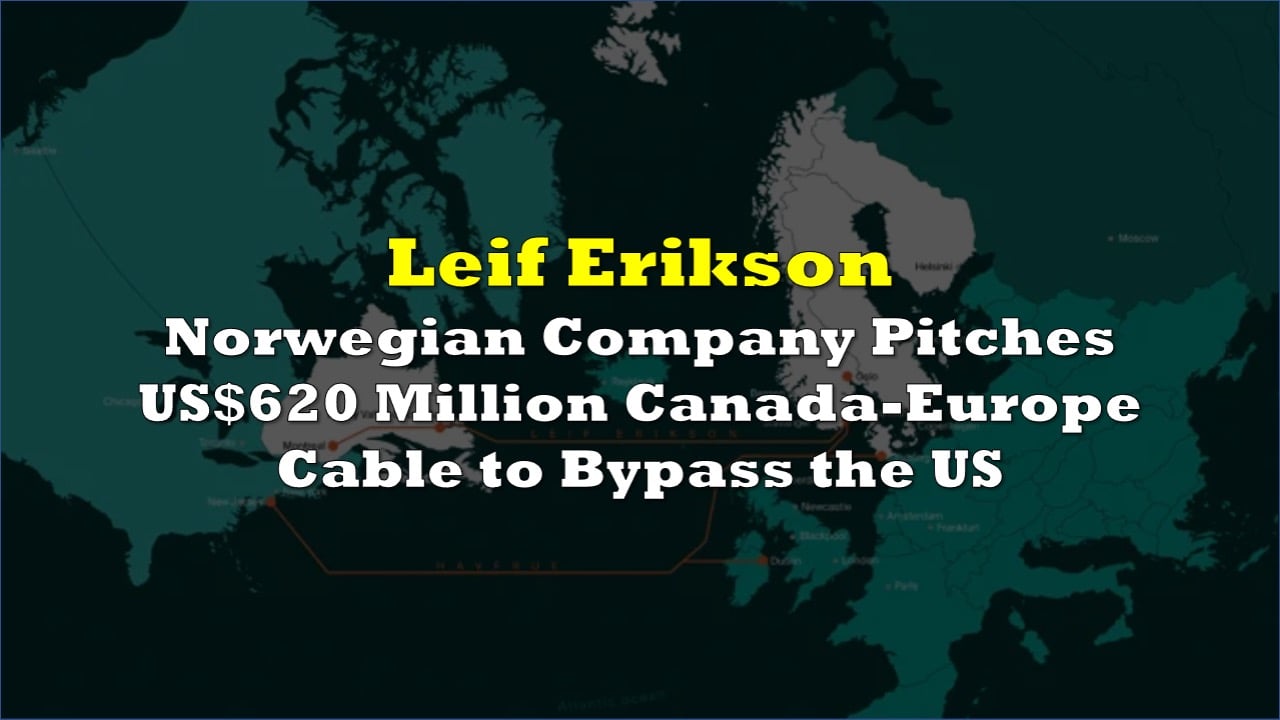

A Norwegian infrastructure company is courting a Canadian majority owner for a proposed undersea data link that would carry traffic from Europe to Canada without touching US networks, reports say. The project, called Leif Erikson, would cost more than US$620 million.
Canada has few undersea routes that avoid the US, and a Canadian company owns none of them. Google‘s Topaz cable links Canada and Japan. Meanwhile, a large share of the country’s phone and internet traffic runs through US networks, and Prime Minister Mark Carney’s government has reviewed that exposure amid tensions with Washington.
Bulk founder Peder Nærbø said the project must be “a Canadian sovereign cable system.” Sun Life Financial‘s BGO unit holds roughly 65% of Bulk across two funds, reports say.
 Sponsored · Selkirk Copper Mines
In all, the route would stretch roughly 6,500 kilometers (4,000 miles). Its undersea portion, about 4,600 kilometers (2,860 miles), would leave southern Norway and reach Canada at Happy Valley-Goose Bay in Newfoundland and Labrador. A buried segment of about 1,900 kilometers would then carry the traffic across Quebec to Montreal.
Bulk first announced Leif Erikson in 2021, when it brought in the consultancy WFN Strategies for a feasibility study. Vendors are on board, but the company has no customers or funding lined up, and the EU and Canada have yet to back route studies. Crossing Quebec requires permits and the cooperation of Indigenous communities.
Interest has come from Ottawa and the private sector, Nærbø said, naming the Major Projects Office, government investment bodies and large telecom companies, although BCE and the office of Industry Minister Melanie Joly have yet to comment.