
A road reaching one of the world’s most significant critical mineral deposits is set to draw $1 billion from the federal government over three years, matching the amount Ontario has already pledged toward the Ring of Fire project.
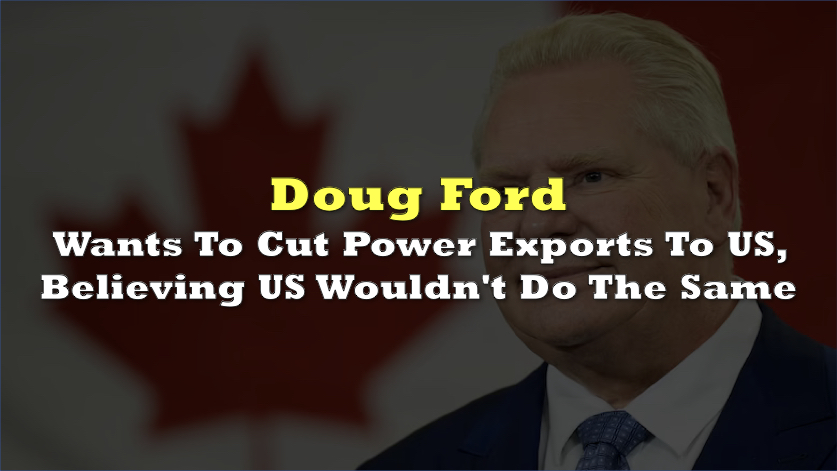
That commitment sits inside a larger $8.7 billion support package covering the steel, critical mineral and auto sectors, which Prime Minister Mark Carney unveiled alongside Ontario Premier Doug Ford on Wednesday. The two leaders framed the money as a shield for Ontario workers at a time when U.S. tariffs continue to pressure key provincial industries.
Carney said the combined investments across the Ring of Fire, steel and auto could protect up to 290,000 jobs across Ontario.
 Sponsored · Selkirk Copper Mines
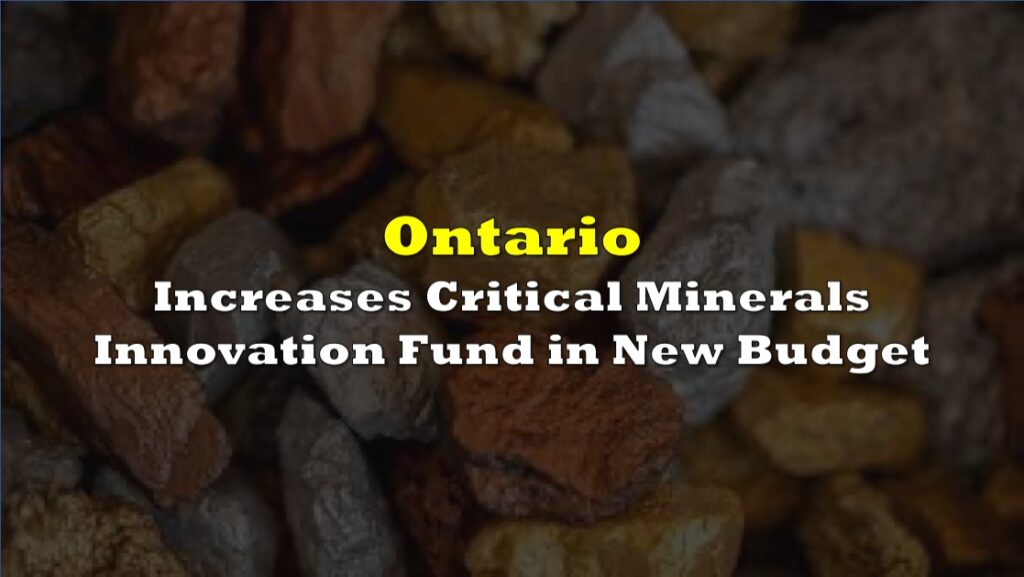
About 500 kilometres north of Thunder Bay, the Ring of Fire is said to hold nickel, chromite, copper and gold. Carney cast the road as a way to secure Canada’s critical mineral supply chain, feeding domestic production of electric vehicles, batteries, defence technologies and advanced manufacturing.
For some time Ford has pushed Ottawa to match the province’s own $1 billion investment, describing critical minerals in the region as an “ace in the hole” that could give Canada leverage against American tariffs. By the province’s estimate, unlocking the area could create 70,000 jobs and add $22 billion to Ontario’s economy.
Work on the roads that will eventually tie the provincial highway system to the mining area began earlier this year, with the province saying construction is running five years ahead of schedule.
Carney also said Ottawa and Ontario are building a coordinated federal and provincial permitting process to open mines, a timeline that has historically stretched beyond 15 years in the province.
The auto industry claimed the largest slice of the package, with $2.5 billion earmarked over two years to build what Carney called the “connected and electric vehicles of the future.” Ottawa is providing $1.5 billion of that total, with Ontario covering the remaining $1 billion.
“An integrated North American auto sector will be stronger, more competitive and provide better jobs for our workers,” Carney said. “But we recognize these are not the objectives of the current U.S. administration. Their approach has changed, and so must ours.”
The partnership also launches a $5 billion Joint Steel Action Fund, with $3.55 billion from Ottawa and $1.67 billion from Ontario over five years, aimed at helping mills upgrade machinery and expand into markets beyond the United States.