An extensive investigation by Reuters has unveiled a clandestine campaign by the U.S. military aimed at discrediting China’s Sinovac vaccine during the COVID-19 pandemic. The covert operation, which targeted the Filipino public among others, was a retaliatory measure against China’s attempts to blame the United States for the pandemic’s origins.
At the height of the pandemic, the U.S. military’s psychological operations, through fake social media accounts, propagated anti-vax narratives, undermining confidence in the Sinovac vaccine and other Chinese medical supplies. The hashtag #Chinaangvirus, meaning “China is the virus” in Tagalog, was central to this misinformation campaign.
“COVID came from China and the VACCINE also came from China, don’t trust China!” read one typical tweet, accompanied by a photo of a syringe beside a Chinese flag and a soaring infection chart.
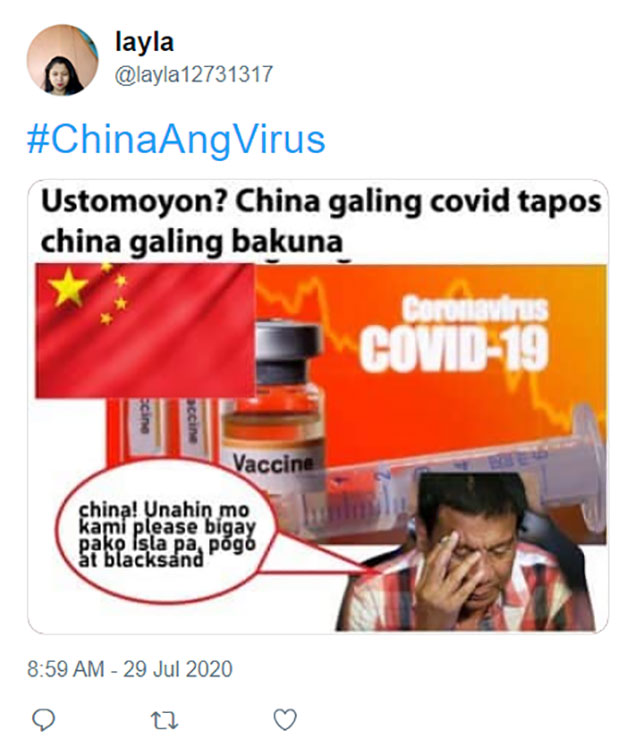
Health experts have condemned the campaign, stating it jeopardized innocent lives for geopolitical purposes.
 Sponsored · Cambria Gold Mines
The campaign, which began in the spring of 2020 and ended in mid-2021, was not limited to the Philippines but extended across Central Asia and the Middle East. It included false claims that the Chinese vaccine contained pork gelatin, making it haram for Muslims.
“I don’t think it’s defensible. I’m extremely dismayed, disappointed and disillusioned to hear that the U.S. government would do that,” said Daniel Lucey, an infectious disease specialist at Dartmouth’s Geisel School of Medicine.
The Pentagon’s effort began under then-President Donald Trump and continued into the Biden administration, despite warnings from social media companies about the spread of misinformation. The Biden administration eventually ordered the program’s termination, and the Pentagon initiated an internal review.
A Pentagon spokeswoman stated that the military uses various platforms to counter “malign influence attacks” but did not provide details on the anti-vax campaign. China, on the other hand, accused the U.S. of manipulating social media and spreading misinformation.
The fallout in the Philippines was significant. Then-President Rodrigo Duterte, frustrated with low vaccination rates, threatened to jail those who refused inoculation. At the time, the country had one of the worst inoculation rates in Southeast Asia, contributing to a high death toll.
“We don’t have our own vaccine capacity,” said Dr. Nina Castillo-Carandang, a former adviser to the World Health Organization and the Philippines government. “The U.S. propaganda effort contributed even more salt into the wound.”
The campaign not only exploited existing fears but also capitalized on longstanding suspicions of China due to geopolitical tensions in the South China Sea.
Greg Treverton, former chairman of the U.S. National Intelligence Council, criticized the operation, stating, “What the Pentagon did crosses a line.”
Despite social media companies’ efforts to remove the fake accounts, the damage was done. The operation risked undermining trust in all vaccines, not just Sinovac, according to health experts.
China’s aggressive COVID diplomacy, including vaccine distribution to developing countries, spurred the U.S. military’s covert efforts. Beijing’s global assistance programs, contrasting with Washington’s America First policy, highlighted the geopolitical stakes.
U.S. military leaders, particularly those in Southeast Asia, pushed for the propaganda campaign to counter China’s influence. Despite objections from State Department officials, the Pentagon proceeded, prioritizing geopolitical rivalry over public health concerns.
The military’s use of psychological operations, historically a tool for battlefield advantage, has evolved into broader efforts to influence public opinion. The COVID anti-vax campaign, however, represents a darker turn, leveraging global health crises for strategic gain.
Although the anti-vax campaign has ceased, the Pentagon’s use of clandestine propaganda continues. A recent $493 million contract awarded to General Dynamics IT, the military’s primary contractor handling the campaign, indicates the ongoing nature of these operations, underscoring the persistent shadow of psychological warfare in modern conflicts.
Information for this story was found via Reuters and the sources mentioned. The author has no securities or affiliations related to this organization. Not a recommendation to buy or sell. Always do additional research and consult a professional before purchasing a security. The author holds no licenses.