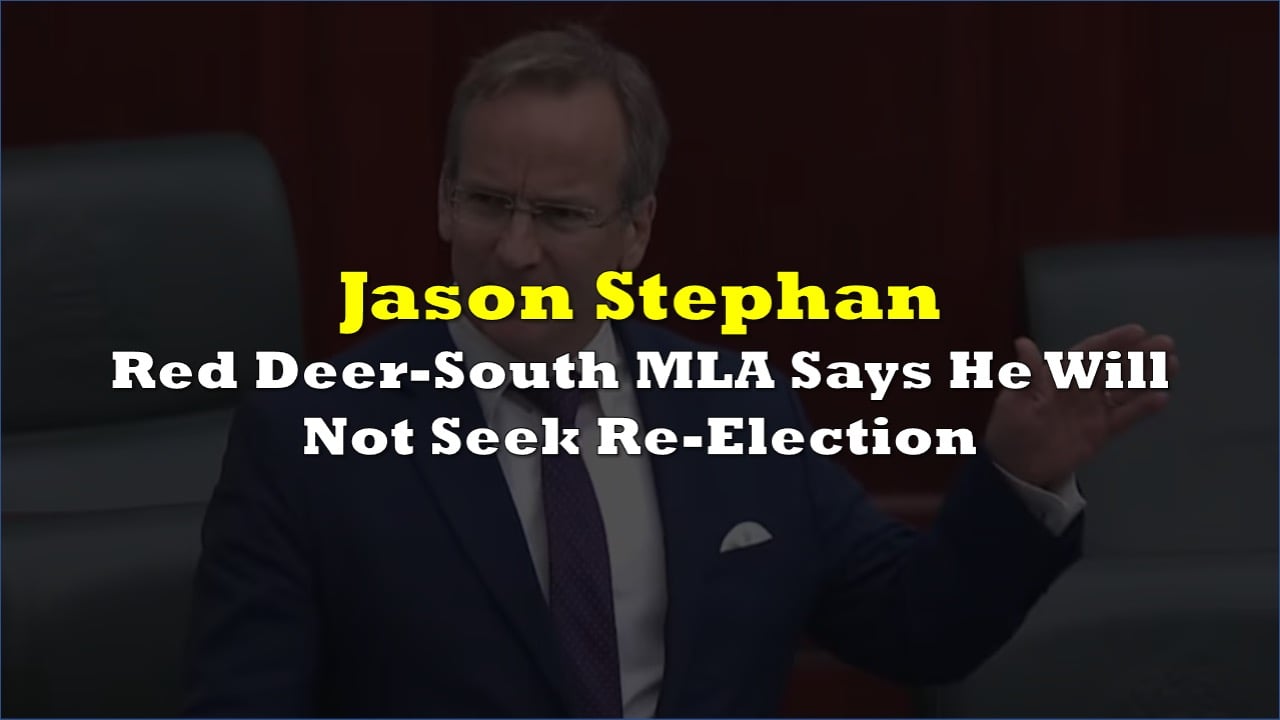

Jason Stephan, the United Conservative MLA for Red Deer-South, said on Monday he will not run again, ending a tenure that began in 2019.
“It is time to step back. I will not be seeking re-election,” Stephan wrote in a letter dated October 19. He will have served more than eight years by the next provincial election, which falls on October 18, 2027.
The letter’s date was also referendum day. Albertans rejected separation, with about 76% choosing to remain in Canada rather than start the process toward a binding separation vote, according to results projected early Tuesday.
 Sponsored · Selkirk Copper Mines
Stephan has said he voted for the other option, diverging publicly from Alberta Premier Danielle Smith, who has said Albertans should vote to stay in Canada. He did not mention the referendum or separation in the letter.
In March, he urged Albertans to back a petition for a referendum on leaving Canada, then stepped down as Smith’s constitutional affairs adviser. In May, Smith’s office called him a “valued member of caucus.”
He pointed to a $1.8 billion expansion of Red Deer’s hospital, the college’s change into Red Deer Polytechnic, an addiction recovery community and the phase-out of a supervised consumption site as achievements of his time in office.
Stephan wrote that Canada has the potential to be the freest and most prosperous country in the world but is not. He said Texas has an economy about half a trillion dollars larger than Canada’s despite having about 10 million fewer people. Texas’s economy stood near US$2.9 trillion in 2025 and Canada’s near US$2.3 trillion, by rough estimates, with populations of 31.7 million and 41.7 million.
He added that the OECD forecasts Canada will rank last among its 38 members for growth in GDP per person. The OECD projects Canada will post the slowest per-person growth among advanced economies from 2030 to 2060, at about 0.8% a year.
Without naming a preferred successor, he wrote that competitive party nomination races for his seat, run fairly and respectfully, build unity and public trust.