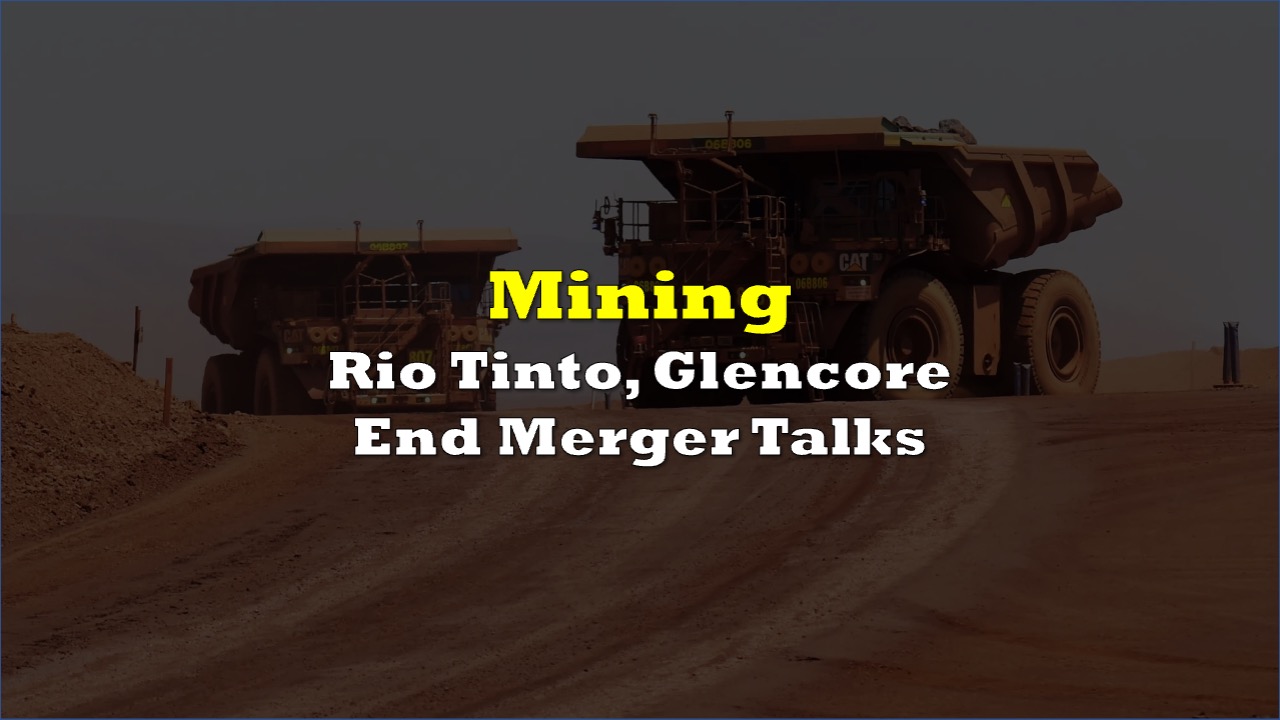

Mining giants Rio Tinto (ASX: RIO) and Glencore (LON: GLEN) ended talks Thursday on what would have created the world’s largest mining company, with both sides unable to reach agreement on valuation and governance.
Rio Tinto announced it concluded negotiations after determining the proposed terms would not create sufficient shareholder value. The announcement arrived just hours before a February 5 deadline that required Rio Tinto to either make a formal offer or withdraw under UK takeover regulations.
The companies have now failed to merge five times since first attempting a combination in 2008. Each attempt has collapsed over valuation disagreements.
Glencore and Rio Tinto have now tried to merge five times — starting with a first attempt in 2008. All of them have failed on valuation.
— Javier Blas (@JavierBlas) February 5, 2026
My understanding is this time the valuation gap was in the $10 billion rage (with Glencore demanding a higher premium to cede control). https://t.co/KTTRbe41Li
Glencore said in a statement that Rio Tinto’s proposed terms significantly undervalued its contribution to a combined group. The Swiss miner objected to Rio Tinto retaining both the chairman and chief executive roles while delivering an ownership structure that, in Glencore’s view, failed to adequately value its copper business and growth pipeline.
Markets reacted negatively to the announcement. Glencore shares fell 7% in London trading, closing at 475.25 pence. Rio Tinto declined 1.7%, finishing at 6,884 pence.
The failed deal would have created a combined entity valued at approximately $260 billion with dominant positions in iron ore, copper, and coal. The merged company would have accounted for roughly 7% of global copper production.
Rio Tinto and Glencore resumed preliminary discussions in early January after talks collapsed in late 2024 over valuation concerns and differences in corporate culture. The companies faced challenges reconciling Rio Tinto’s exit from coal assets with Glencore’s decision to retain its coal business.
Rio Tinto CEO Simon Trott, who assumed the role in August 2025, had signaled greater openness to large acquisitions than his predecessor. The company evaluated the opportunity using criteria established at its Capital Markets Day in December 2025, focusing on long-term value and shareholder returns.
Glencore emphasized its standalone investment case remains strong, citing its diversified commodity portfolio and marketing operations. The company highlighted its pathway to become one of the world’s largest copper producers over the next decade through its portfolio of copper projects.
The collapse follows other recent consolidation attempts in the mining sector. Australian giant BHP ended an attempt to acquire British rival Anglo American last year, while Anglo American and Canada’s Teck Resources agreed to a $66 billion merger in September 2025.
Read: Anglo Teck Merger Secures Government Approval, Commits To $4.5B Canadian Spending
Information for this story was found via the sources and companies mentioned. The author has no securities or affiliations related to the organizations discussed. Not a recommendation to buy or sell. Always do additional research and consult a professional before purchasing a security. The author holds no licenses.