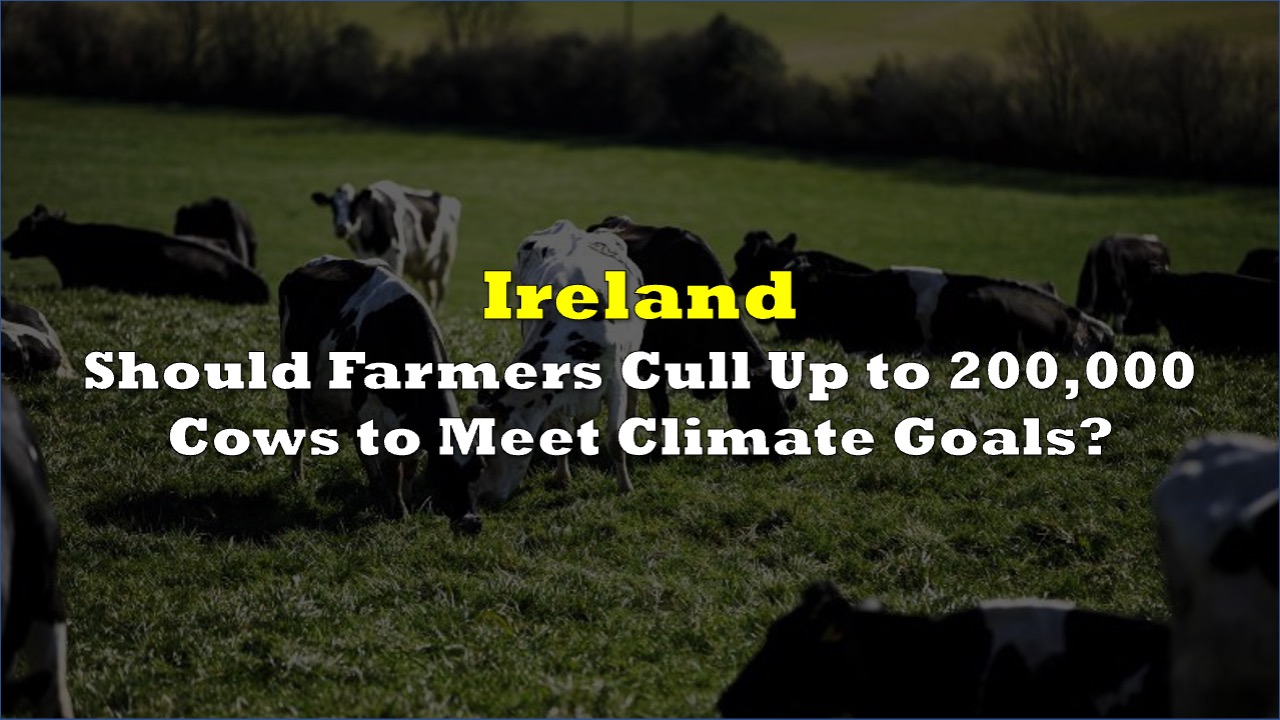

In an effort to combat its significant climate challenges, Ireland is considering a drastic plan that could see almost 200,000 dairy cows culled over the next three years.
The country’s agricultural sector, particularly dairy farming, has come under scrutiny for its contribution to greenhouse gas emissions. Ireland’s cows, responsible for emitting methane, a potent greenhouse gas, are a major factor in the nation’s struggle to meet ambitious climate targets.
The Financial Times recently wrote about one such farmer, Gearóid Maher, who has taken innovative steps to reduce emissions on his 210-acre farm in County Limerick. Maher has intentionally planted a mix of chicory, plantain, brassica, kale leaves, and clover to mitigate his farm’s environmental impact. He has also cut back on nitrogen fertilizers and eliminated pesticide use.
However, despite these efforts, Maher and fellow dairy farmers feel unfairly singled out and blamed for Ireland’s emissions dilemma.
The Irish government aims to achieve a 25% reduction in agricultural emissions by 2030, a challenging target given the country’s recent spike in greenhouse gas emissions. Ireland experienced the largest increase in emissions within the EU during the last quarter of 2022. These statistics have prompted calls for urgent action from the Climate Change Advisory Council.
Farming constitutes a significant portion of Ireland’s emissions, with the industry accounting for nearly 40% of the country’s total. While the dairy sector is a cornerstone of the Irish economy, worth €13.1 billion (US$14.3 billion) annually and providing thousands of jobs, it also presents a major obstacle in the nation’s efforts to reach its goal of net-zero emissions by 2050.
Some propose a voluntary reduction scheme for dairy herds, which could offer financial incentives to farmers who agree to cull their cows. However, this proposal remains uncertain, and debates over its feasibility persist. Alternatives such as earlier slaughter for beef production are also being considered as potential solutions.
Experts from the Agriculture and Food Development Authority (Teagasc) suggest that reductions in nitrogen fertilizer usage have significantly driven down emissions, indicating that the adoption of new methods could be crucial in meeting emissions targets. Moreover, predictions show that cattle numbers may naturally decrease, further aiding emissions reduction efforts.
Information for this story was found via the sources and companies mentioned. The author has no securities or affiliations related to the organizations discussed. Not a recommendation to buy or sell. Always do additional research and consult a professional before purchasing a security. The author holds no licenses.