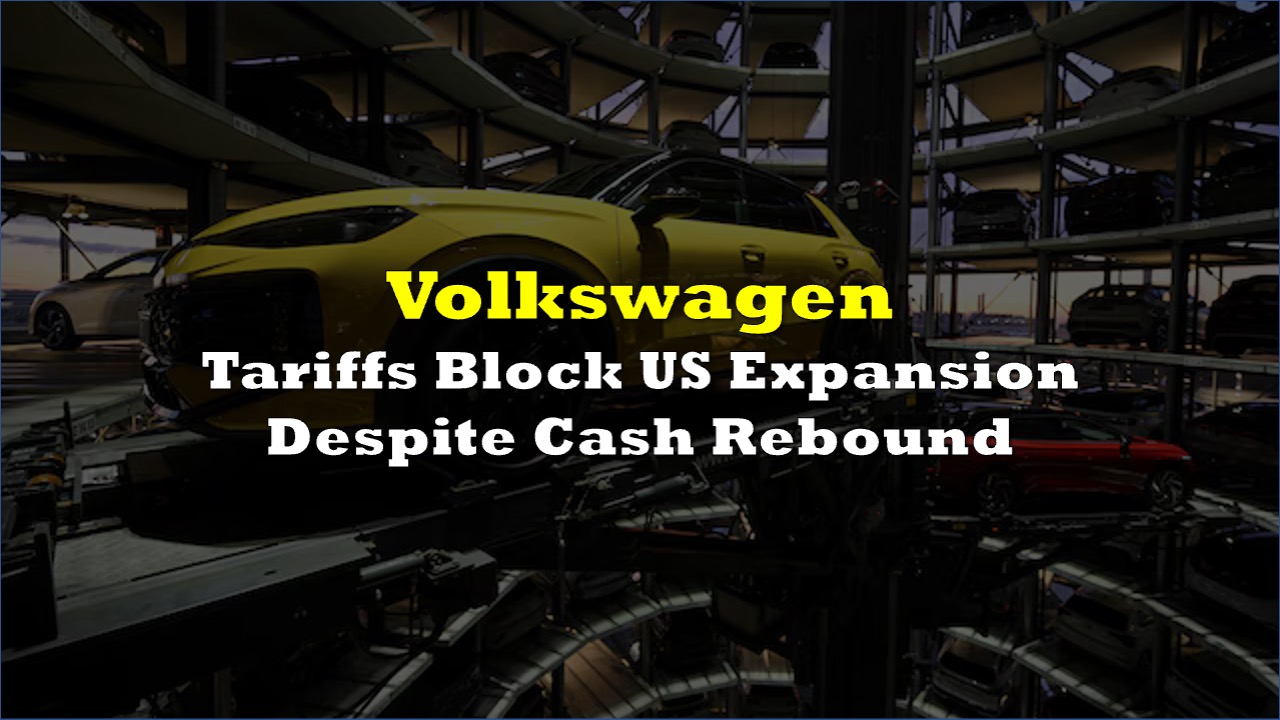

German automaker Volkswagen (ETR: VOW3) exceeded cash flow expectations for 2025 as the company slashes costs to address a projected €11 billion shortfall, but canceled plans for a US Audi factory due to tariff pressures.
The automotive division generated roughly €6 billion ($7.04 billion) in net cash flow last year, compared with €5 billion in 2024, according to preliminary figures released January 21. The company had forecast breakeven cash flow for the year.
Net liquidity in the automotive division reached more than €34 billion by year-end, above the company’s €30 billion projection.
The positive results stem from reduced spending on equipment, tooling and research and development, along with delayed supplier payments. Investment ratios dropped to approximately 12% of revenue from 14.3% in 2024.
Volkswagen faces mounting financial pressure after internal reviews in October flagged a potential €11 billion cash shortfall for 2026 investment plans. The supervisory board delayed approving the multi-billion-euro investment package, freezing decisions on future models and factory upgrades across nearly 100 facilities worldwide.
The automaker implemented a salary freeze for core brand employees starting January 1 this year, with no raises, promotions or reclassifications through the end of 2026. Board members forfeited roughly 11% of cash compensation for 2025 and 2026.
Volkswagen announced a management restructuring on Friday, aimed at saving approximately €1 billion by 2030. The company consolidated oversight of its Brand Group Core, which includes Volkswagen Passenger Cars, Škoda, SEAT & CUPRA, and Volkswagen Commercial Vehicles, under a single management team.
The investment freeze affects product development timelines across the group. While Volkswagen confirmed its 2026 model lineup for the US market, several next-generation electric vehicle programs face potential delays.
Chief Financial Officer Arno Antlitz plans further investment reductions in coming years as the company navigates weak sales in China, US tariff pressures and difficulties at luxury brand Porsche. Volkswagen will not proceed with plans for an Audi factory in the US unless automotive tariffs decline, CEO Oliver Blume told German newspaper Handelsblatt on January 26.
An example of the de-industrializing effect of tariffs. Building a factory in the US is now more expensive, because the gear/inputs to run the factory are now more expensive. https://t.co/dTy486OdN4
— Joe Weisenthal (@TheStalwart) January 26, 2026
Tariffs cost the automaker €2.1 billion ($2.5 billion) in the first nine months of 2025. Blume said talks with President Donald Trump and Commerce Secretary Howard Lutnick have not produced the required results. The company had explored US production sites including Tennessee and South Carolina since 2023.
The company releases consolidated financial statements for 2025 on March 10.
Information for this story was found via Bloomberg, and the sources and companies mentioned. The author has no securities or affiliations related to the organizations discussed. Not a recommendation to buy or sell. Always do additional research and consult a professional before purchasing a security. The author holds no licenses.