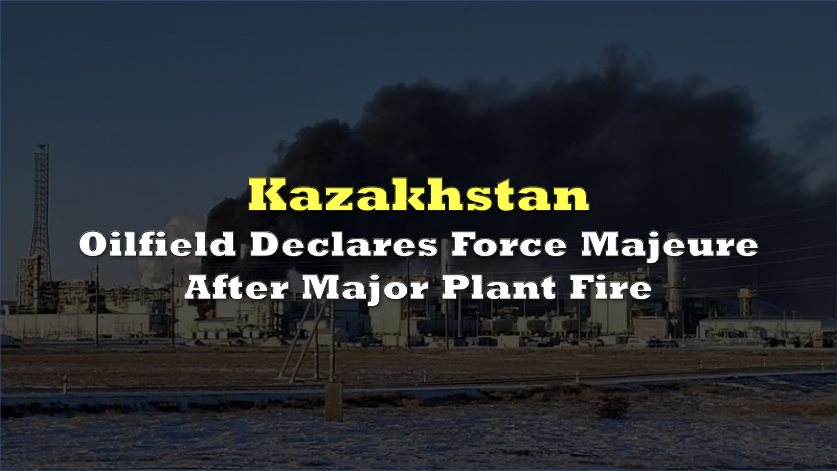

Kazakhstan’s Tengizchevroil (known as TCO), operator of the Tengiz and Korolevskoye oilfields and led by Chevron, shut in production after a power-related fire and then declared force majeure on CPC Blend supplies, saying it could not specify how long the disruption might last.
The country’s energy ministry said a special commission is investigating the causes of a January 18 incident that forced the shutdown of the vast Tengiz oil field, citing a “technological violation” tied to the shutdown of gas turbine installations and saying production was halted to protect personnel and equipment.
Operational details described by KazMunayGas point to a Jan. 19 shutdown after a fire at two turbine transformers at the GTES-4 power station, which disrupted power supply and triggered a precautionary production halt at Tengiz and Korolevskoye.
TCO confirmed output was temporarily suspended but did not provide a restart date or detail the cause of the fire, while separate reporting cited industry expectations that the outage could extend 7–10 days.
OPERATOR OF KAZAKHSTAN'S TENGIZ OILFIELD, TCO, DECLARES FORCE MAJEURE, UNABLE TO SAY HOW LONG IT MIGHT LAST -TCO LETTER SEEN BY REUTERS #OOTT
— Amena Bakr (@Amena__Bakr) January 21, 2026
Industry sources said TCO canceled five export cargoes of CPC Blend scheduled for shipment in January and February, totaling an estimated 600,000 to 700,000 metric tons.
Most of Kazakhstan’s oil exports move via the Caspian Pipeline Consortium route to the Black Sea terminal at Yuzhnaya Ozereyevka near Novorossiisk.
Sources also said that after the fire and subsequent power outage, TCO issued force majeure on CPC Blend supplies, tightening contractual flexibility for buyers and shippers while timelines remain undefined.
Operational data cited in reporting showed crude production in the first 12 days of January fell about 35% versus average daily output in December, attributed largely to CPC export restrictions, before rebounding as other fields increased production.
Reuters calculations based on industry data put Kashagan at about 197,000 barrels per day on average for Jan. 1–19, up 28% from the first half of the month, while Karachaganak averaged about 156,000 bpd over Jan. 1–19, up 21%.
Over the same Jan. 1–19 period, Tengiz averaged about 360,000 bpd.
Industry sources warned that if the Tengiz shutdown persists, CPC may begin reducing pipeline throughput in coming days even with higher output from Kashagan and Karachaganak.
Kazakhstan has already redirected some crude away from CPC due to earlier damage at the Black Sea terminal, sending volumes via the Baku-Tbilisi-Ceyhan pipeline and to Germany through the Druzhba pipeline, but the Tengiz outage increases the strain on alternative routes.
Information for this story was found via Reuters, The Astana Times, and the sources and companies mentioned. The author has no securities or affiliations related to the organizations discussed. Not a recommendation to buy or sell. Always do additional research and consult a professional before purchasing a security. The author holds no licenses.