

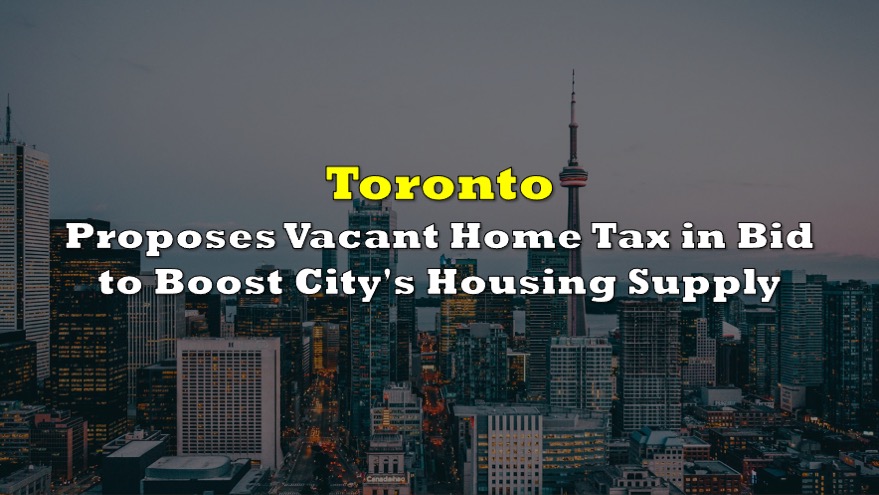

As the exodus out of major downtown city areas begins to gain traction in Canada, the City of Toronto is proposing an unconventional method of incentivizing the city’s rental market.
According to a recent policy analysis that is being proposed by City of Toronto staff, the city should implement a tax on vacant homes in an effort to increase the housing supply and raise revenue levels by as much as $55 million to $66 million. Although the report does not specifically outline how many properties are sitting vacant across the city, it does estimate there could be anywhere between 9,000 to 27,000 unit – meaning that a tax would encourage owners to not leave their homes uninhabited.
The proposal is expected to go up for consideration by Mayor John Tory’s executive committee next week, and if accepted, could be implemented as early as 2022 with startup costs ranging anywhere between $10 to $13 million. The goal of the policy is to free up rental housing in Canada’s tightest market, with the revenue generated used to create affordable housing. The policy recommends that the vacant home tax should be implemented via a “universal declaration” approach, where property owners would be required to each year declare whether or not their property is “occupied, vacant or vacant with exemption.”
 Sponsored · Selkirk Copper Mines
The policy does outline several scenarios where an exemption to the tax would be granted, such as in the event that the property owner is undergoing renovations in the housing unit, or the unit’s resident has either been committed to a long-term care home or is recently deceased. The proposal follows the framework of a similar tax that was implemented in Vancouver back in 2017, with Tory noting that such a measure would also deem positive results in Toronto.
Indeed, there have been some pandemic-related shortfalls in housing across Canada, with the real estate market performing exceptionally well amid a surge in home-buying behaviour. This in turn has pushed average home prices to record-highs, and priced some consumers out of the housing market entirely. The proposal in Toronto follows Prime Minister Justin Trudeau’s earlier statement, noting that the government would impose a tax in 2021 on the “unproductive use” of dwellings owned by non-resident foreign individuals.

Information for this briefing was found via the City of Toronto. The author has no securities or affiliations related to this organization. Not a recommendation to buy or sell. Always do additional research and consult a professional before purchasing a security. The author holds no licenses.





One Response
Toronto has the best bids when it comes to vacant home taxes and this kind of city housing supply boosting activities are done often.