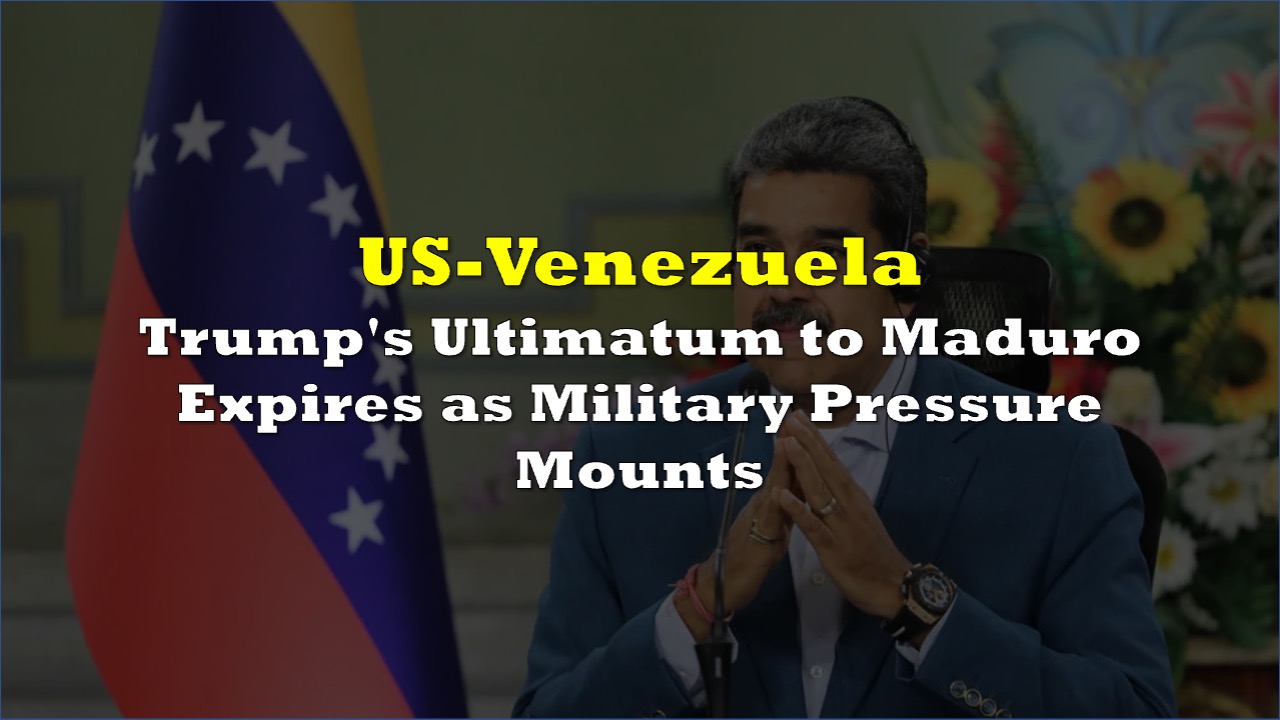

President Donald Trump gave Venezuelan President Nicolás Maduro one week to leave the country during a November 21 phone call, setting a Friday deadline that expired without compliance, according to sources familiar with the conversation, as questions mount over US interest in Venezuela’s massive petroleum reserves.
The ultimatum, delivered in a conversation lasting less than 15 minutes, expired on November 28. Trump declared that Venezuelan airspace should be considered closed the following day. On Sunday, Maduro made his first public appearance in days, stating he would never leave Venezuela.
🚨BREAKING: Maduro said he will NEVER leave Venezuela. https://t.co/lyJqlo2Pb6
— Spencer Hakimian (@SpencerHakimian) December 1, 2025
During the call, Maduro proposed several conditions for his departure: full amnesty for himself and family members, sanctions relief affecting more than 100 Venezuelan officials, and permission for Vice President Delcy Rodríguez to lead an interim government pending new elections. Trump rejected most of these requests and gave Maduro one week to depart with his family for any destination.
The Trump administration has positioned more than 15,000 troops in the Caribbean region and deployed the aircraft carrier USS Gerald R. Ford since September. American forces have struck more than 20 vessels at sea, resulting in at least 83 deaths in operations Washington characterizes as counternarcotic efforts. The administration has not provided evidence supporting claims that the targeted vessels transported drugs.
The administration also designated the Cartel de los Soles as a foreign terrorist organization, alleging Maduro leads the group. Venezuela rejected the designation as “ridiculous,” saying no such cartel exists.
Related: Venezuela Mobilizes 200,000 Troops as US Labels Cartel Terrorist Group
Defense Secretary Pete Hegseth said the terrorist designation provides “a whole bunch of new options” for dealing with Venezuela. Trump has authorized covert CIA operations inside Venezuela and stated that land-based military strikes could occur “very soon.”
Venezuela holds 303 billion barrels of proven oil reserves — the world’s largest — about one-fifth of global supplies, according to the US Energy Information Administration. Colombian President Gustavo Petro told CNN: “Oil is at the heart of the matter. I believe that is Trump’s logic.”
Maduro, in correspondence to OPEC, accused Washington of attempting to seize Venezuelan petroleum resources through force.
The Trump administration does not recognize Maduro as Venezuela’s legitimate president following the disputed July 2024 election. Western governments and independent monitors determined that opposition candidate Edmundo González won decisively, though Maduro claimed victory.
While the US produces more oil than any other nation, it still imports Venezuelan crude because the countries produce different types. The US specializes in light, sweet crude suitable for gasoline production, while Venezuela’s heavy, sour crude is essential for diesel, asphalt and industrial fuels. Gulf Coast refineries specialize in processing Venezuelan heavy crude and operate more efficiently with it than with domestic oil.
Energy analysts note that if Maduro’s government falls and a Western-friendly administration takes power, increased Venezuelan oil production could benefit US refineries, stabilize global energy prices and potentially weaken Russia’s economy by providing alternative supplies to countries currently dependent on Russian petroleum.
Venezuela has staged repeated military exercises in recent weeks and announced large-scale defense mobilizations. Six airlines have halted flights to the country.
Asked about the call Sunday, Trump told reporters aboard Air Force One: “I wouldn’t say it went well or badly. It was a phone call.”
The White House claims its military presence in the region targets drug trafficking operations, though officials have indicated regime change remains a possibility under consideration.
Information for this story was found via the sources and companies mentioned. The author has no securities or affiliations related to the organizations discussed. Not a recommendation to buy or sell. Always do additional research and consult a professional before purchasing a security. The author holds no licenses.