

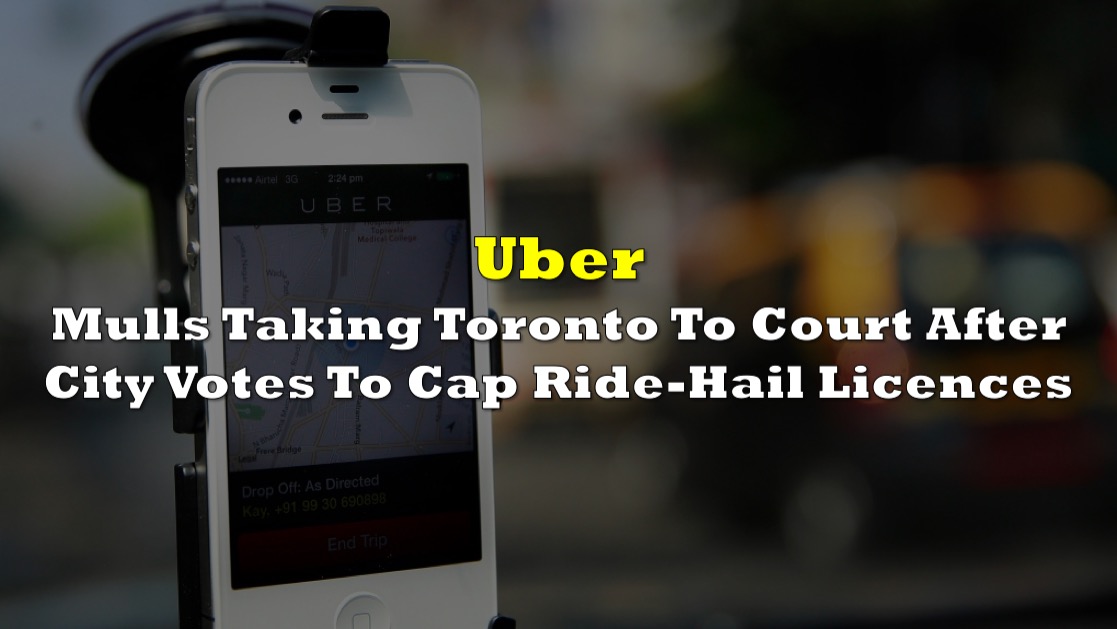

Toronto’s battle with its congested road network’s contribution to climate change has led to a new policy passed by local officials, generating a mixed response from various stakeholders.
On Wednesday, city councillors voted in favor of freezing the registration of new ride-hail drivers, including those working for companies like Uber (NYSE: UBER) and Lyft (NASDAQ: LYFT). This policy mandates that the number of drivers cannot surpass its current level unless they are operating zero-emissions vehicles.
The news was met with a warm welcome from local taxi companies and advocates, who see it as a much-needed step towards leveling the playing field in an industry they believe has favored app-based companies for over a decade.
 Sponsored · Cambria Gold Mines
However, Uber swiftly responded with concerns, arguing that this move could lead to increased costs and longer wait times for users. The ride-hailing giant even hinted at potential legal action, stating they were “reviewing all legal options.” Uber stressed that this cap would “hurt the diverse group of Torontonians who rely on rideshare as part of their transportation mix and those who drive rideshare for additional income.”
On the other hand, transit advocates saw the decision as a step in the right direction, believing it could help revive ridership on Toronto’s public transit system, which has been struggling to recover since the COVID-19 pandemic.
Shelagh Pizey-Allen from the advocacy group TTC Riders noted, “We need to make sure ride-hailing complements public transit rather than replacing it. This pause ensures we won’t repeat the mistakes of the past while work on a balanced framework for the sector moves forward.”
The cap on new drivers could remain in place for up to a year while city officials evaluate the best way forward. City councillors have requested a comprehensive report on the ride-sharing and taxi industry, along with their emissions impact, to be completed by the end of 2024. Until the report is finished, the number of drivers will be capped at its current level as of October 12, 2023.
 Sponsored · McLaren Resources Inc.
Toronto’s latest decision to restrict the number of Uber and Lyft vehicles on its streets garnered support from Mayor Olivia Chow, who believes it will benefit ride-hail drivers and reduce emissions. However, critics fear it may lead to higher trip prices and potential legal battles from the powerful ride-hailing companies.
The vote, with the mayor’s backing, was approved 16-7. It temporarily suspends the issuance of new licenses to “private transportation companies” at current levels, estimated at around 52,000. The motion specifies that the limit will stay in place until city staff present a report on regulating the industry by the end of 2024, although opponents worry it could become permanent.
Despite these concerns, supporters of the decision highlight the potential benefits, including improved wages for drivers, particularly low-income individuals, people of color, and newcomers. It is also seen as a step toward reducing pollution caused by the transportation sector, which accounts for 4%-6% of Toronto’s greenhouse gas emissions.
Ride-hailing advocates and drivers argue that limiting the number of ride-sharing vehicles on the road, similar to policies enacted in cities like New York in 2018, is an effective and equitable strategy for reducing emissions, as opposed to requiring drivers to purchase expensive new cars.
“We need to put a really good framework, a good system in place so that drivers can make a living, and that we will have a good system without contributing too much on congestion and greenhouse gas emissions,” Chow said.
Information for this briefing was found via Global News, Toronto Star, and the sources mentioned. The author has no securities or affiliations related to this organization. Not a recommendation to buy or sell. Always do additional research and consult a professional before purchasing a security. The author holds no licenses.





Market Moving: The Elements of the Venture Exchange’s Ongoing Resurgence
The TSX Venture Exchange is the largest regulated venture-stage equities exchange in the world. Those...