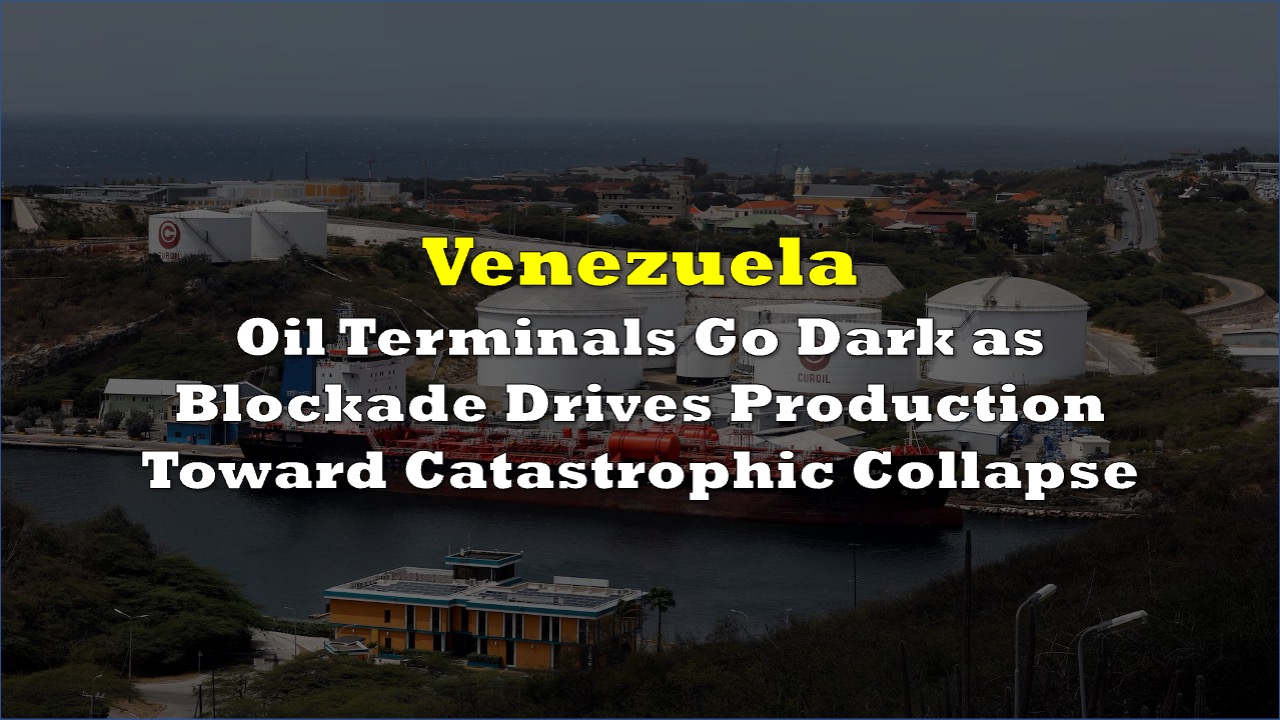

Venezuela’s main oil export terminals have delivered virtually no crude for shipment in five days, except to the lone American company still permitted to operate in the country, as a US naval blockade drives the OPEC member toward economic catastrophe.
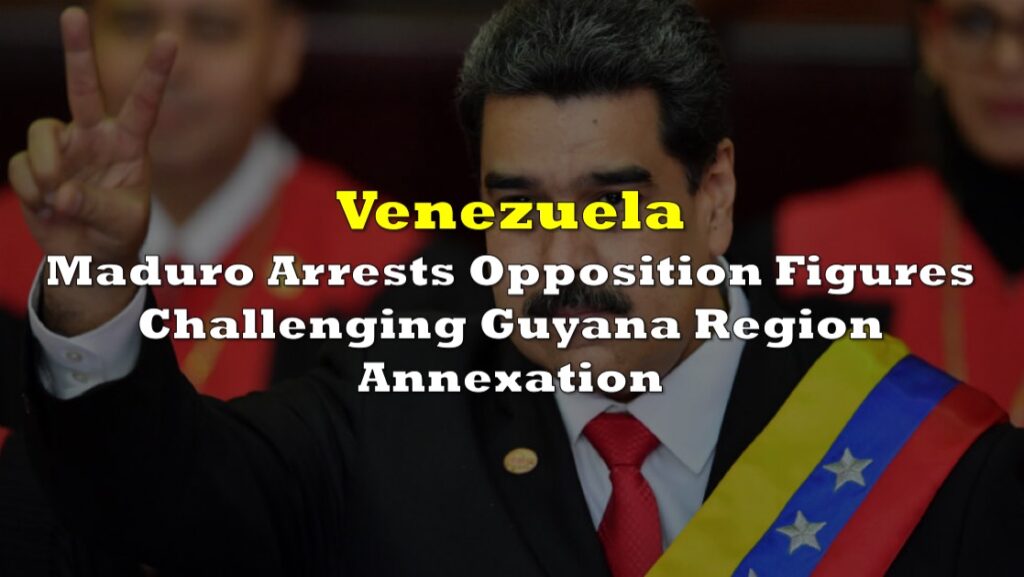
The state oil company PDVSA has stopped authorizing exports since Nicolás Maduro’s capture on Saturday. The only oil leaving Venezuelan ports belongs to Chevron, which operates under a special Treasury Department license.
Read: Trump Promised to Ramp Up Venezuela Oil — Instead, Production Is Being Cut
Internal projections compiled before Maduro’s ouster showed national oil output could plummet from roughly 1.2 million barrels per day in late 2025 to under 300,000 barrels daily later this year if the blockade continues — a 75% drop that would eliminate the government’s primary revenue source, according to people briefed on the forecasts. Those people spoke on condition of anonymity because they were not authorized to discuss the projections publicly.
OIL MARKET: According to internal Venezuelan gov documents reviewed by the NYT, Caracas fear that its oil output could plunge to 300,000 b/d in 2026 unless the US government lifts the blockade (aka, quarantine). https://t.co/av0s1OU6tP
— Javier Blas (@JavierBlas) January 6, 2026
PDVSA hasn’t stopped pumping — it has nowhere left to put what it produces. Since mid-December, Venezuela has been redirecting crude into onshore tanks and loading vessels that sit idle in port. TankerTrackers estimated the country had enough spare capacity through January. After that, wells shut.
More than 7.3 million barrels now sit trapped in tankers off Venezuela’s coast, according to Kpler and Bloomberg. In November, that figure was zero.
December exports fell to a 17-month low of 423,000 barrels per day, with more than half never leaving Venezuelan waters.
Production at PDVSA’s joint ventures dropped 25% from mid-December to year-end, according to internal company data. The state firm has asked partners to reduce output. Sinovensa, the Chinese joint venture, is prepared to disconnect up to 10 well clusters on Sunday, sources told Reuters.
Tankers Attempt Coordinated Escape
At least 16 oil tankers attempted a coordinated escape over the weekend, according to The New York Times. The vessels — 15 already under US sanctions — scattered in different directions, turning off transponders or transmitting false locations. Sources told the Times the ships were controlled by sanctioned traders close to Maduro, including Alex Saab and Ramón Carretero, carrying an estimated 12 million barrels.
Read: Sanctioned Tankers Make Mass Run to Break Venezuela Blockade
Secretary of State Marco Rubio made clear Sunday that the blockade stays in place regardless of Maduro’s removal. “That remains in place, and that’s a tremendous amount of leverage that will continue to be in place until we see changes, not just to further the national interest of the United States, which is No. 1, but also that lead to a better future for the people of Venezuela,” he said on CBS‘s “Face the Nation.”
Trump Announces Oil Transfer, Rodríguez Pushes Back
Trafigura Group, one of the world’s largest oil traders, said Monday it would hold talks with US officials about returning to Venezuelan crude purchases.
Trump announced Tuesday that Venezuela’s “interim authorities” would turn over 30 to 50 million barrels of sanctioned oil to the United States — barrels that likely accumulated during the blockade. The oil would be sold at market prices with proceeds controlled by him “to ensure it is used to benefit the people of Venezuela and the United States.”
Rodríguez did not explicitly deny the oil transfer but pushed back forcefully against Trump’s threats.
“Personally, to those who threaten me: My destiny is not determined by them, but by God,” she told government officials Tuesday, declaring seven days of national mourning for Venezuelans killed in the operation.
Trump’s Oil Focus
Trump has been explicit that oil is central to the operation. “We’re going to have our very large United States oil companies go in, spend billions of dollars, fix the badly broken infrastructure,” Trump said Saturday. “We built Venezuela’s oil industry with American talent, drive, and skill and the socialist regime stole it from us.”
Venezuela sits atop 300 billion barrels of proven reserves — about 17% of the global total. Current production stands around 900,000 to 1 million barrels per day, down from a peak of 3.5 million barrels daily in the late 1990s. Oil exports fund approximately 40% of Venezuela’s public revenue, according to Francisco Rodríguez, an economist at the University of Denver.
Read: Does Venezuela Really Have 300 Billion Barrels of Oil?
What Happens Next
If the 16 tankers escape, Venezuela buys time. If they’re intercepted, the timeline to catastrophic production cuts accelerates.
The question is whether Rodríguez will concede to US demands before wells start shutting — or whether she’s betting oil market disruption will force Washington to blink first. Venezuela faces either capitulation or a return to economic freefall that could dwarf the catastrophic contraction of 2013-2020, when GDP collapsed 75%.
The stakes may be existential for Venezuelans. The country has seen 94% of its population fall into poverty, with chronic shortages driving more than 7 million people to flee.
Information for this story was found via Bloomberg, The New York Times, and the sources and companies mentioned. The author has no securities or affiliations related to the organizations discussed. Not a recommendation to buy or sell. Always do additional research and consult a professional before purchasing a security. The author holds no licenses.