
Talking about energy pipelines for the province, Alberta Premier Danielle Smith said her “first preference” is still a new West Coast pipeline through northern BC, but she is willing to look across the border if progress stalls.
The alternative she pointed to is a Pacific route through the northwestern US, running via Montana, Idaho, and then either Washington or Oregon.
“Anytime you can get to the West Coast, it opens up markets to get to Asia,” Smith said, framing the point of the exercise as Indo-Pacific market access.
Smith has argued the demand backdrop can support a new million-barrel-per-day export line, tying the strategic prize to Indo-Pacific market access rather than incremental North American optimization.
The near-term catalyst for the “go through the US” framing is not oil, but potash: Nutrien announced plans for a $1-billion export terminal at Washington State’s Port of Longview after weighing BC alternatives, triggering criticism from BC Premier David Eby and federal Transport Minister Steve MacKinnon as a hit to national interest.
Smith separated the logistics, stressing that fertilizer can move by rail on existing infrastructure, while new heavy-oil pipeline capacity is “always complicated,” which keeps the focus on routes that minimize greenfield friction. 
Her near-term emphasis is “existing rights of way,” pointing to the shelved Northern Gateway concept as a template for corridor reuse rather than a fully novel alignment. 
On the practical side, Tim McMillan of Garrison Strategy said a proponent for the US route would not be starting from scratch because a completed segment of the stalled Keystone XL line already runs through Montana and reaches toward the border.
Brilliant. Scrap this whole tying carbon capture to output, bypass the west coast and build an export terminal through the US. Find a way to prevent any revenue from this going to Ottawa and cut them out altogether. https://t.co/NoJoiI0rPy
— Martin Pelletier (@MPelletierCIO) December 16, 2025
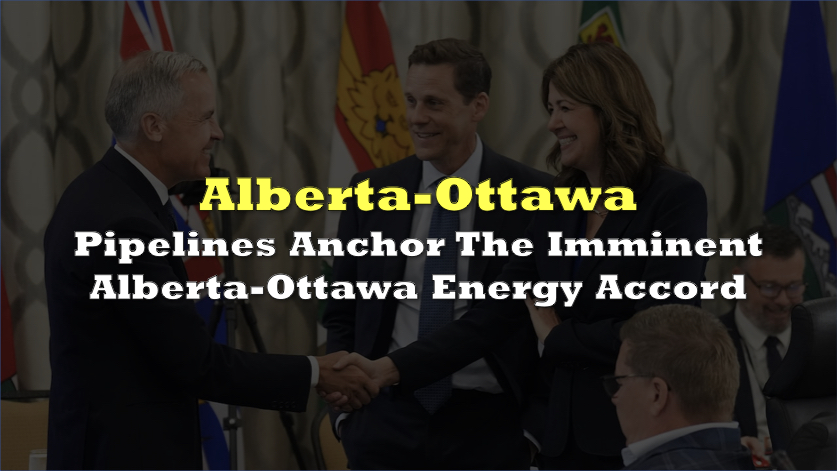
Smith, meanwhile, is still working the inside track. She last said she is encouraged by Eby’s support for enhancements adding roughly 360,000 barrels a day to the existing Trans Mountain system, while also noting she signed an energy memorandum of understanding with Prime Minister Mark Carney last month that “opens the door” to a new pipeline and a carve-out of the federal tanker ban off BC’s coast.
Execution now pivots to timing and submission, with Smith saying she wants to take a pipeline proposal to Canada’s new major projects office by May 2026.
Information for this story was found via National Post and the sources and companies mentioned. The author has no securities or affiliations related to the organizations discussed. Not a recommendation to buy or sell. Always do additional research and consult a professional before purchasing a security. The author holds no licenses.