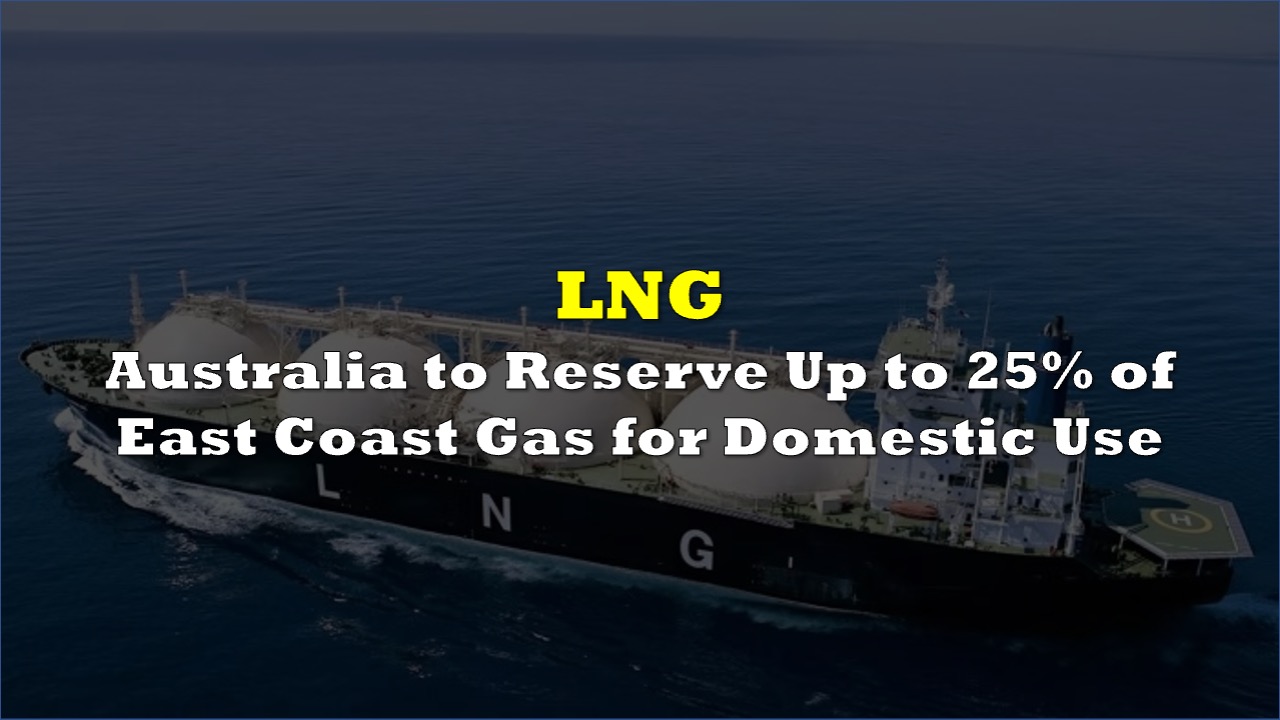

Australia will require liquefied natural gas exporters to reserve up to 25% of east coast production for domestic use starting in 2027, a policy shift that could strengthen Canada’s position in Asian energy markets.
The Australian government announced the reservation scheme on December 22, following a comprehensive gas market review. Energy Minister Chris Bowen said the policy addresses forecast shortages on the country’s heavily populated east coast while maintaining export commitments to regional partners.
Australia will make exporters of LNG from the country's east coast keep up to a quarter of their output for domestic use under a scheme to curb price spikes and help fill a long-forecast supply gap.
— Heather Exner-Pirot (@ExnerPirot) December 22, 2025
This is another reason Canadian LNG is so competitive https://t.co/3HHdYtLQkH
The reservation requirement will apply only to new supply contracts negotiated after the announcement. Existing agreements with overseas buyers remain unaffected.
Australia ranks as the world’s third-largest LNG exporter but faces a domestic supply paradox. The country ships far more gas overseas than it consumes at home, yet the Australian Competition and Consumer Commission projects southern states will require an additional 26 petajoules of gas during the second quarter of 2026 as Bass Strait production declines.
The policy will affect three LNG plants in Queensland, particularly Gladstone LNG, which is backed by Santos, Korea Gas Corp., TotalEnergies, and Petronas.
JY Chew, who leads Asia-Pacific upstream research at Welligence Energy Analytics, told Reuters that Australia’s reservation measure could prompt LNG buyers negotiating new long-term contracts from 2027 to diversify their supplier base more actively.
The timing benefits Canadian LNG projects entering the global market. LNG Canada’s Kitimat facility shipped its first cargo in June 2025 and is ramping toward full capacity of approximately 1.9 billion cubic feet per day for Asian markets.
Canadian projects hold geographic advantages over competitors. Natural Resources Canada data shows west coast facilities can deliver to Asian markets in approximately 10 days, while US Gulf Coast terminals require roughly 20 days due to Panama Canal transit requirements.
Canadian LNG also benefits from lower liquefaction costs due to colder ambient temperatures and access to hydroelectric power for facility operations. These factors produce lower carbon intensity compared to other major exporters. The proximity advantage translates to reduced transportation costs for Asian buyers.
Western Australia has maintained a 15% domestic reservation requirement since 2006. The new east coast policy follows similar principles but may extend to Northern Territory projects, potentially affecting Japanese investments in the Barossa and Ichthys developments.
The Australian government plans to begin formal consultation on implementation details in 2026, with final reservation percentages to be determined through stakeholder input.
Information for this story was found via the sources and companies mentioned. The author has no securities or affiliations related to the organizations discussed. Not a recommendation to buy or sell. Always do additional research and consult a professional before purchasing a security. The author holds no licenses.