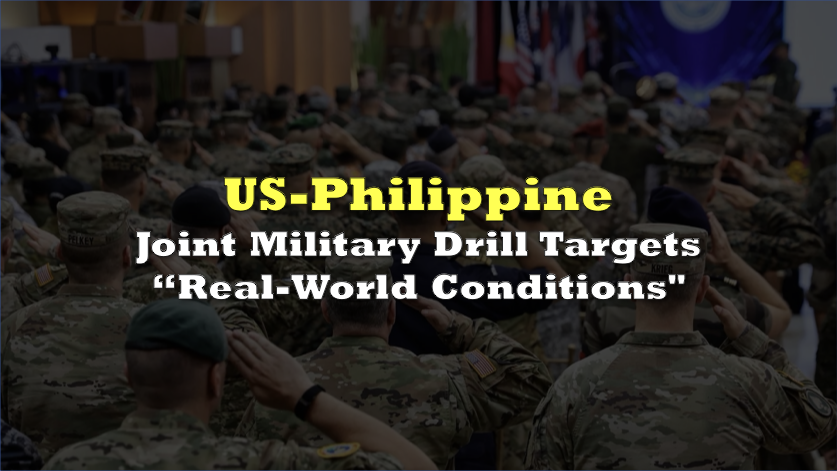

The Philippines and the US opened Balikatan 2026 on Monday with their broadest and most multinational iteration yet, turning this year’s exercise into a test of whether allied forces can operate under what Manila called “real-world conditions” across the archipelago’s most strategically exposed zones.
The drills run through May 8 and bring together more than 17,000 troops, including about 10,000 from the US.
This year’s expansion is most visible in the country lineup: Australia is back, while Canada, France, Japan, and New Zealand are participating as active partners for the first time, making Balikatan 2026 the largest yet by number of participating countries. Seventeen additional nations are attending as observers.
 Sponsored · Silver47 Exploration Inc.
The exercise design is built around precision strike and interdiction in Philippine coastal waters, integrated air and missile defense, multinational maritime operations, and counter-landing live-fire drills. Organizers also said training spans land, sea, air, space, cyber, logistics, combined fires, ship-to-shore offloads, and command-and-control integration.
The most closely watched location is Itbayat, the northernmost Philippine island, about 155 kilometers from Taiwan, where Philippine and US forces will hold maritime strike drills for the first time.
The western theater remains central. Counter-landing live-fire drills are set for Zambales on the West Philippine Sea, roughly 230 kilometers from Scarborough Shoal, the China-controlled atoll that has become one of the region’s most persistent maritime flashpoints. AP also reported that Japanese forces will fire missiles from Ilocos Norte in the northwestern Philippines to help sink a mock enemy ship about 40 kilometers offshore, while US forces plan to use an explosive-laden marine drone in the same sinking sequence.
Philippine forces are showcasing the BrahMos missile system, while Japan’s Type 88 anti-ship missile is slated for use in a live-fire sinking drill.
Philippine Armed Forces chief Romeo Brawner framed the drills as both alliance reassurance and readiness validation. His opening message emphasized testing forces “across the breadth of our archipelago” under real-world conditions, while U.S. Marine Lt. Gen. Christian Wortman said the exercise had “no target nation” in mind and argued Washington’s Indo-Pacific commitment remains intact despite simultaneous US military demands in the Middle East.
China’s foreign ministry said the Asia-Pacific needs peace rather than “external forces” that create division and confrontation, and warned that countries deepening security ties risk “backfiring” on themselves.
Information for this story was found via Reuters and the sources and companies mentioned. The author has no securities or affiliations related to the organizations discussed. Not a recommendation to buy or sell. Always do additional research and consult a professional before purchasing a security. The author holds no licenses.