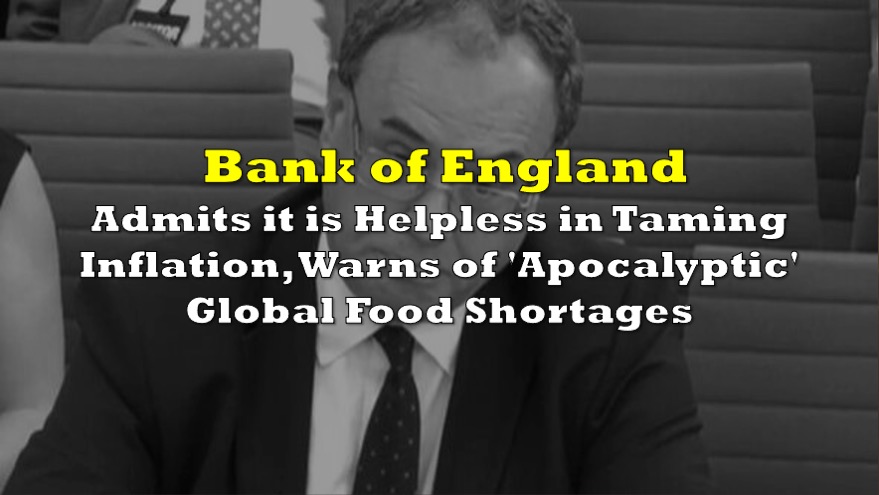

The Bank of England has finally thrown in the towel, admitting defeat in curbing out-of-control inflation that only became exasperated by the conflict in Ukraine.
The central bank’s governor Andrew Bailey revealed his team of policy makers are “helpless” in taming surging price pressures, as skyrocketing food and energy costs driven by geopolitical events and severed supply chains increasingly move beyond the bank’s control. Speaking to MPs during a Treasury Select Committee meeting earlier this week which was later cited by The Telegraph, the governor admitted there is little hope in reigning inflation back to its 2% target, with prices already soaring 7% and additional spikes expected in the coming months.
“It is a very very, more than uncomfortable— I am trying to think of a word that is even more severe than that— it is a very very difficult place to be,” Bailey said to MPs when asked if he felt “helpless” in controlling inflation. “To forecast 10% inflation and to say there is not a lot we can do about 80 percent of it, I can tell you it is an extremely difficult place to be. We have to recognize the reality of the situation we face.”
 Sponsored · Selkirk Copper Mines
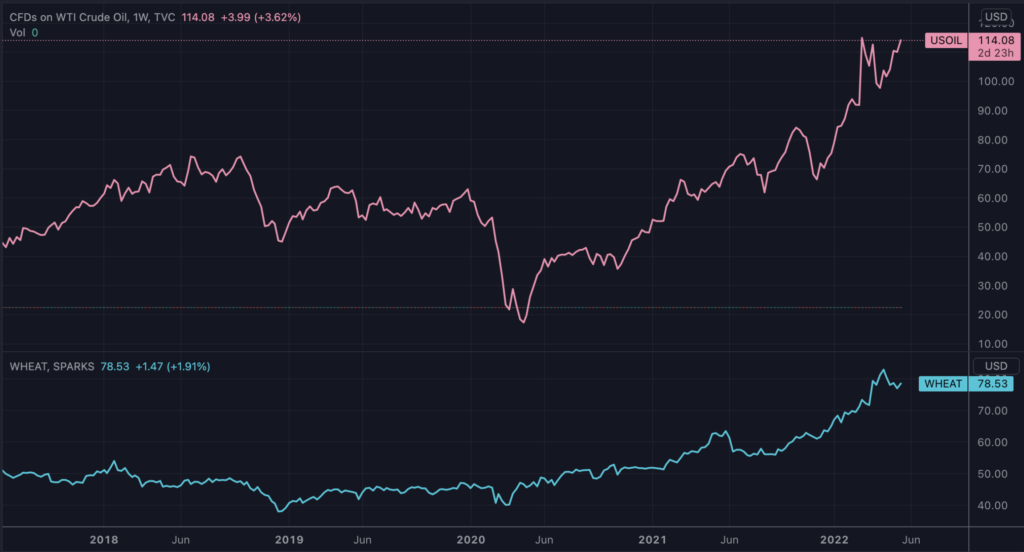
Consumer prices have risen by the sharpest pace in over 30 years, fuelling a catastrophic income shock that is expected to escalate over the summer and spiral into double-digit inflation before the end of the year. Bailey expressed concern over further surges in food prices should Ukraine be unable to export wheat and cooking oils due to Russian military blockades. “That is a major worry. It is not just a major worry for this country, it is a major worry for the developing world,” he told MPs, adding that he discussed the topic with Ukraine’s finance minister and the food situation is “rather apocalyptic.”
Economists condemned the Bank of England for falling asleep at the wheel and not raising interest rates quickly enough in face of price acceleration that took off last year. The bank’s policy makers were also criticized for failing to withdraw their quantitative easing and money-printing scheme that become the main mechanism of conducting monetary policy over the past 10 years. The central bank has only raised borrowing costs from December’s 0.1% to a recent 1% in a Hail Mary attempt to stop the price spikes that are feeding into the broader economy.
Information for this briefing was found via The Telegraph. The author has no securities or affiliations related to this organization. Not a recommendation to buy or sell. Always do additional research and consult a professional before purchasing a security. The author holds no licenses.