
Foreign direct investment from China and Hong Kong in Canada totaled more than $60 billion by the end of 2023, making the two economies the third-largest source of overseas capital in the country, according to Statistics Canada data.
The Globe and Mail reports that Alberta received roughly half of this investment, as the province maintained steady engagement with Chinese and Hong Kong investors even during periods of strained federal relations with Beijing.
China and Hong Kong accounted for more than $60-billion worth of foreign direct investment in Canada last year, the third-biggest source of overseas money, about half of which flowed to Alberta. https://t.co/9iOlEXarSO
— Heather Exner-Pirot (@ExnerPirot) December 26, 2025
The investment stock from China stood at $24.9 billion, while Hong Kong contributed $32.8 billion, trailing only the United States ($618.2 billion) and Europe ($466.6 billion) as sources of foreign capital.
Rick Christiaanse, chief executive of Invest Alberta since October 2021, told The Globe and Mail that federal officials have increased consultations with the provincial agency in recent months as Ottawa works to reset relations with Beijing.
“We’ve had more conversations with the federal government in the last six months than at any time in my tenure,” Christiaanse said during a visit to Hong Kong in December.
The provincial executive made his seventh trip to the region in four years, with plans for another visit to China in January. He described current conditions as “harvest time” for those who persevered through difficult political periods.
Chinese and Hong Kong investors have targeted Alberta’s traditional oil and gas sector, carbon capture projects, green energy initiatives, and tourism development, according to Invest Alberta. China serves as a major customer of the expanding Trans-Mountain pipeline.
Relations between Ottawa and Beijing deteriorated sharply during the Meng Wanzhou extradition case and the detention of two Canadian citizens, which lasted from 2018 to 2021. The federal government attempted to restart ties when then-Foreign Minister Mélanie Joly visited Beijing in July 2024, but Canada’s decision to impose tariffs on Chinese electric vehicles prompted retaliatory levies on Canadian canola.
Flashback: China Offers to Lift Agricultural Tariffs if Canada Drops EV Levies
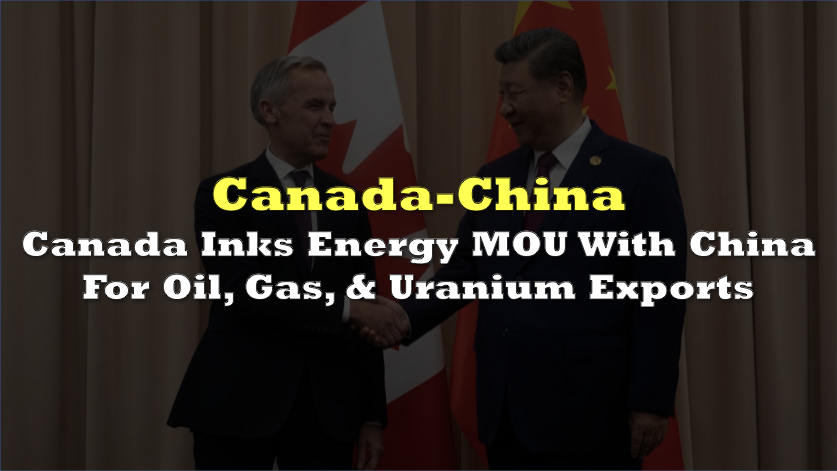
The relationship has shown signs of warming under Prime Minister Mark Carney, who met with Chinese President Xi Jinping in October 2025. Global Affairs officials have traveled to China to prepare for a potential Carney visit in 2026.
Christiaanse acknowledged that Invest Alberta faced less domestic criticism than federal officials when engaging with Chinese counterparts, particularly before the current administration’s pivot toward what he called foreign-policy realism.
“The case for disengaging from China simply does not exist,” Christiaanse said, while noting there was “absolutely” more pushback previously.
The United States remained Canada’s dominant source of foreign direct investment in 2023, accounting for 45.7% of total inward investment. Europe represented 34.3% of foreign capital, while the Asia-Oceania region, led by Japan, Hong Kong, and China, contributed 11.8% of Canada’s foreign investment stock.
Information for this story was found via the sources and companies mentioned. The author has no securities or affiliations related to the organizations discussed. Not a recommendation to buy or sell. Always do additional research and consult a professional before purchasing a security. The author holds no licenses.