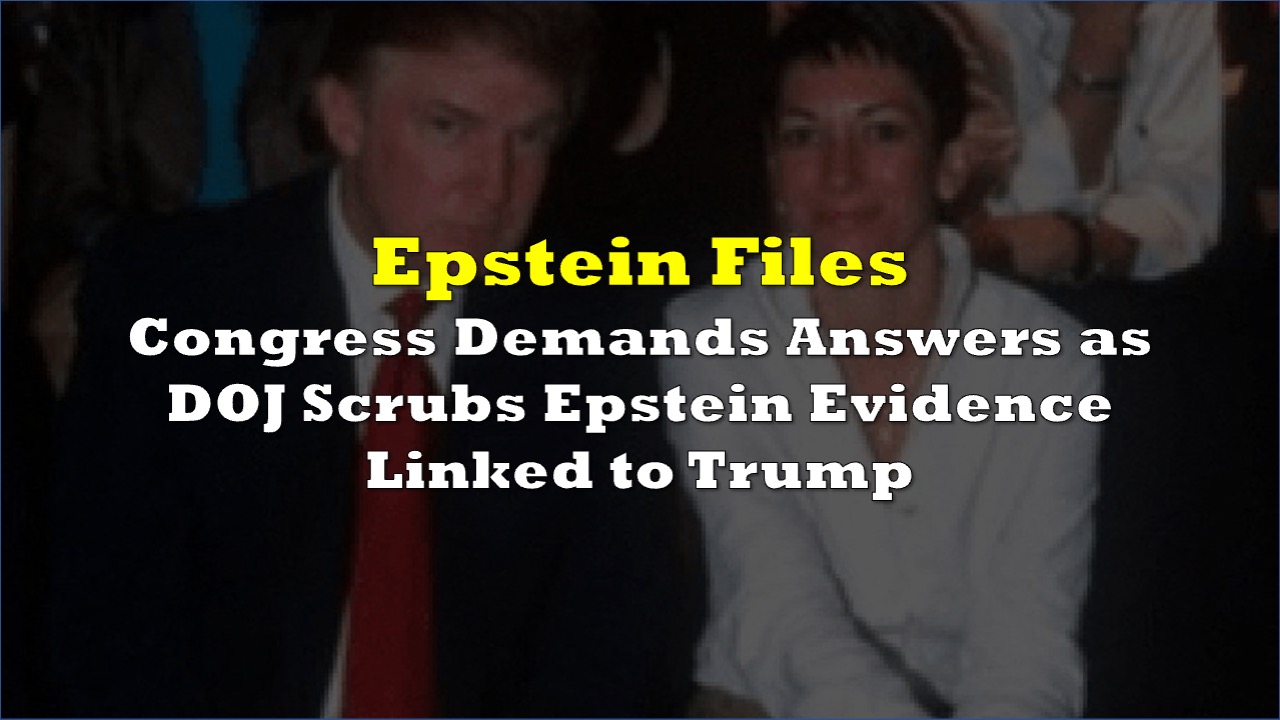

The Department of Justice is under bipartisan congressional scrutiny after investigators determined that dozens of pages from FBI interviews with a woman who accused President Donald Trump of sexual assault are absent from the publicly released Epstein files database.
NPR first reported the missing records on Tuesday, identifying approximately 53 pages of interview documents and accompanying notes that do not appear in the archive the DOJ published on January 30, 2026, under the Epstein Files Transparency Act.
What the files show
The woman, whose identity remains protected, contacted the FBI in July 2019 shortly after Jeffrey Epstein’s arrest. She told agents that Epstein had repeatedly abused her at a South Carolina residence after she responded to a babysitting advertisement, beginning when she was approximately 13 years old. She also accused Trump of sexually assaulting her during the same period.
The FBI interviewed her four times, but only the first session — which documents her allegations against Epstein and does not reference Trump — appears in the DOJ’s public database. The three remaining interview summaries and accompanying notes are absent from the published files, despite appearing in evidence logs from the criminal case against Ghislaine Maxwell.
Congressional response
Rep. Robert Garcia (D-Calif.), ranking member of the House Oversight Committee, reviewed unredacted evidence logs at DOJ offices and said the agency “appears to have illegally withheld FBI interviews with this survivor who accused President Trump of heinous crimes.”
Garcia sent a letter to Attorney General Pam Bondi demanding an explanation for the withholding and asking whether the department maintains an active investigation into the allegations against the president.
House Oversight Committee Chair James Comer (R) joined Garcia in pledging an investigation into the DOJ’s handling of the missing documents — a rare instance of bipartisan alignment on a matter directly implicating the sitting president.
DOJ and White House positions
The DOJ initially denied removing any records, saying documents excluded from the release were either “duplicates, privileged, (or) part of an ongoing federal investigation.” The department did not answer follow-up questions about specific missing files.
By February 25, however, the DOJ reversed course, acknowledging in a post on X that it was reviewing whether the documents had been improperly withheld. “Should any document be found to have been improperly tagged in the review process and is responsive to the Act, the Department will of course publish it, consistent with the law,” the agency said.
As the Department of Justice has consistently said and has done since the January 30, 2026 publication of the Epstein files, if any member of the public, including victims, reported concerns with information in the pages, the Department would review, make any corrections, and…
— DOJ Rapid Response (@DOJRR47) February 25, 2026
The White House dismissed the allegations as “false and sensationalist.” Spokesperson Abigail Jackson told NPR that Trump “has been totally exonerated on anything relating to Epstein,” adding that the president had “done more for Epstein’s victims than anyone before him.”
Lutnick also has a missing photo
Rep. Thomas Massie (R-Ky.) flagged that the agency had quietly removed a photograph from the public Epstein files database.
The image, first surfaced by the Jmail archive, appears to show Commerce Secretary Howard Lutnick alongside Epstein at what looks like a coastal location. The identity of the individual has not been independently confirmed.
Massie posted on X: “I’m sure there’s a good reason for this. DOJ needs to tell Congress who pulled this file down so we can ask them.” The DOJ had previously acknowledged that Lutnick’s ties to Epstein extended well beyond the 2005 break he publicly claimed, including documents showing he sought meetings with Epstein as late as 2012.
I’m sure there’s a good reason for this. DOJ needs to tell Congress who pulled this file down so we can ask them. https://t.co/XrOE0Y4zeW
— Thomas Massie (@RepThomasMassie) February 26, 2026
A tale of two first ladies
The missing records are part of a wider pattern of problems with the DOJ’s Epstein file publication. The January 30 release exposed the personal information of nearly 100 victims through incomplete redactions, including unredacted photographs of young women whose faces were visible. Attorneys representing more than 200 alleged victims called the publication “the single most egregious violation of victim privacy in one day in United States history.”
As of February 2026, Trump and Melania Trump together account for more than 38,000 references across the full Epstein archive — among the highest mention counts of any individuals in the files.
Explain to me why Hillary Clinton is testifying about Epstein while Melania Trump is not. pic.twitter.com/uH3T42pnG8
— PLGC (@PL67712441) February 26, 2026
The scrutiny over the missing records landed in the same week that former Secretary of State Hillary Clinton testified before the House Oversight Committee in a closed-door deposition at Chappaqua, New York.
Clinton denied any knowledge of Epstein’s crimes and turned the hearing into a direct challenge to Comer’s conduct of the investigation. In her opening statement, she accused the committee of compelling her testimony “fully aware that I have no knowledge that would assist your investigation, in order to distract attention from President Trump’s actions and cover them up despite legitimate calls for answers.”
Here is my opening statement to the House Oversight and Government Reform Committee today. pic.twitter.com/NZSF2epcI5
— Hillary Clinton (@HillaryClinton) February 26, 2026
Clinton pushed further, calling on the committee to put Trump under oath. She told the panel: “What is being held back? Who is being protected? And why the cover-up?” Clinton charged that the inquiry amounted to an institutional failure “designed to protect one political party and one public official.”
Comer denied the investigation was partisan and declined to commit to calling Trump before the committee, saying the president had already “answered hundreds, if not thousands of questions” from the press about Epstein.
Garcia countered that Clinton’s appearance set a precedent. “Let’s get President Trump in front of our committee to answer the questions that are being asked across this country from survivors,” Garcia told reporters.
Former President Bill Clinton was scheduled to testify before the committee on February 27 — the first time in over 40 years that a former president has been compelled to appear before Congress.
Information for this story was found via the sources and companies mentioned. The author has no securities or affiliations related to the organizations discussed. Not a recommendation to buy or sell. Always do additional research and consult a professional before purchasing a security. The author holds no licenses.