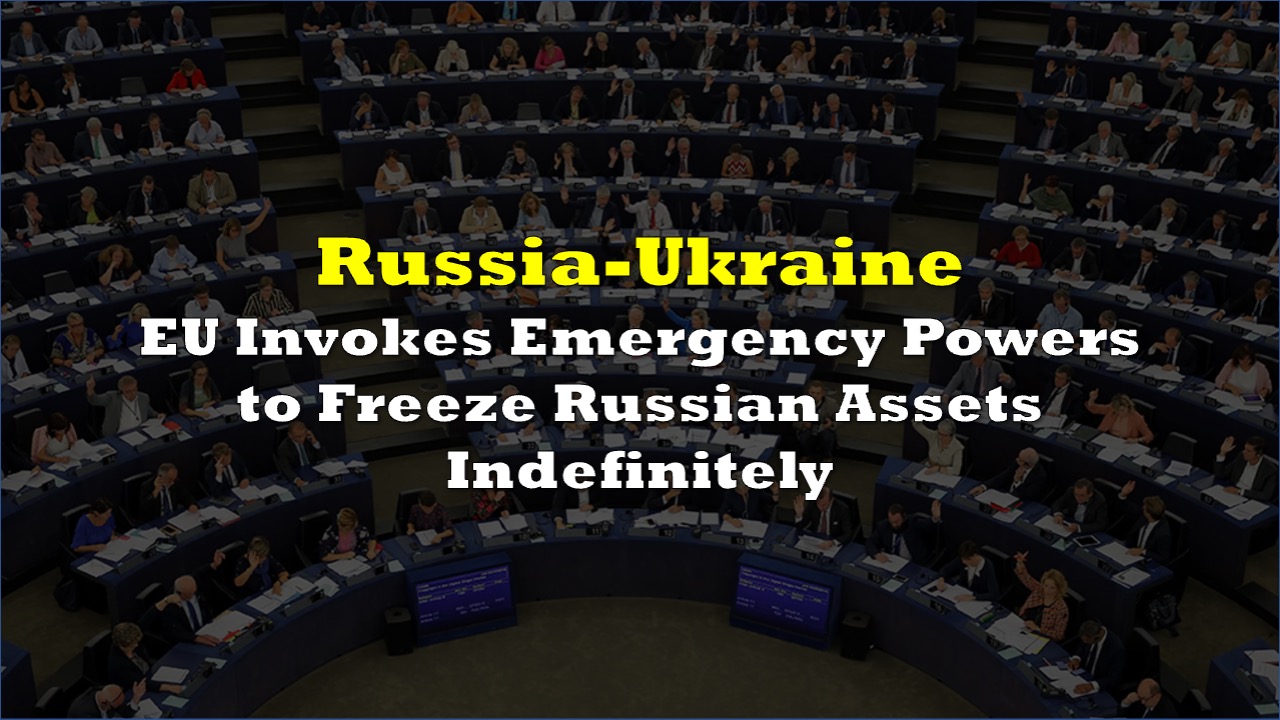

The European Union formally activated emergency powers Thursday to lock down €210 billion in Russian Central Bank assets indefinitely, using Article 122 of the EU treaties to bypass potential member state vetoes. The Council formally adopted the measure on Friday afternoon.
Euroclear, a Brussels-based securities depositary, holds approximately €185 billion of the total, with private banks in France, Germany, Sweden, Cyprus, and Belgium controlling the remaining €25 billion.
Finally! 🇪🇺
— Alberto Alemanno 🇪🇺 (@alemannoEU) December 11, 2025
The EU triggers emergency powers (under Art 122) to permanently immobilize Russian assets to help rebuild what Russia destroyed.
This is European sovereignty in action.
Europe can be decisive when it matters. https://t.co/jNbRtsWr3Y
The emergency clause requires only qualified majority voting rather than unanimous consent, bypassing both member state vetoes and European Parliament involvement. EU officials previously deployed Article 122 during the COVID-19 pandemic and energy crisis.
Belgian Prime Minister Bart De Wever disputed using the provision for this purpose on Wednesday. “It would be like breaking into an embassy, taking out all the furniture, and selling it,” De Wever told reporters at the Belgian parliament, noting Belgium is not at war with Russia.
Hungary and Slovakia opposed the measure while Belgium abstained, but supporters secured the necessary qualified majority. Hungarian Prime Minister Viktor Orban said his government would challenge the decision in court.
EU leaders meet December 18-19 to finalize plans for converting the frozen assets into collateral for a zero-interest loan supporting Ukraine through 2027. The assets will stay frozen until Russia’s actions “objectively cease to pose substantial risks” to European economic stability and Moscow compensates Ukraine for war damages.
The decision shields the EU from pressure by the Trump administration following a 28-point US-Russia proposal leaked in November that suggested using frozen Russian assets for joint US-Russia investment projects. European officials rejected that provision, though negotiations on other aspects of the plan continue.
Legal scholars describe the move as a “paradigm shift” — the EU deploying emergency powers designed for temporary crises to enforce long-term policy decisions.
Information for this story was found via the sources and companies mentioned. The author has no securities or affiliations related to the organizations discussed. Not a recommendation to buy or sell. Always do additional research and consult a professional before purchasing a security. The author holds no licenses.