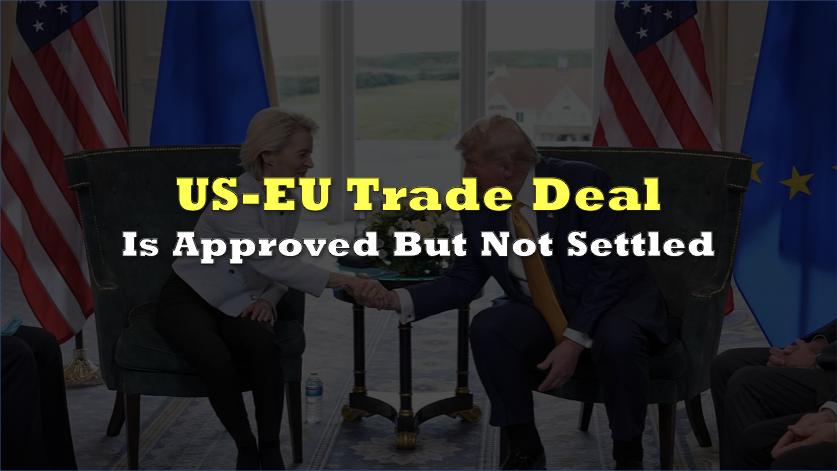

EU lawmakers on Thursday approved legislation to advance the bloc’s side of its long-delayed trade deal with the US despite underscoring that tariff risk from Washington remains unresolved.
The European Parliament backed the legislation by 417 votes to 154, with 71 abstentions, after months of delay tied to President Donald Trump’s tariff threats and shifting legal basis for new import levies. The vote moves forward a package that would eliminate EU import duties on US industrial goods, improve access for US agricultural produce, and continue zero duties on US lobsters first agreed in 2020.
At the core of the arrangement is an asymmetrical tariff structure that has driven criticism inside the bloc since last year. Under the Turnberry Agreement struck in July 2025 in Scotland, the US would impose a 15% tariff ceiling on most EU products, while the EU would grant zero tariffs on US imports covered by the agreement.
Thursday’s vote is significant because Parliament had already delayed ratification once in January 2026 after Trump threatened additional tariffs tied to his push to acquire Greenland. A second major disruption followed in February 2026, when Parliament’s top trade official, Bernd Lange, called for an immediate freeze on ratification after the Trump administration shifted tariff policy again.
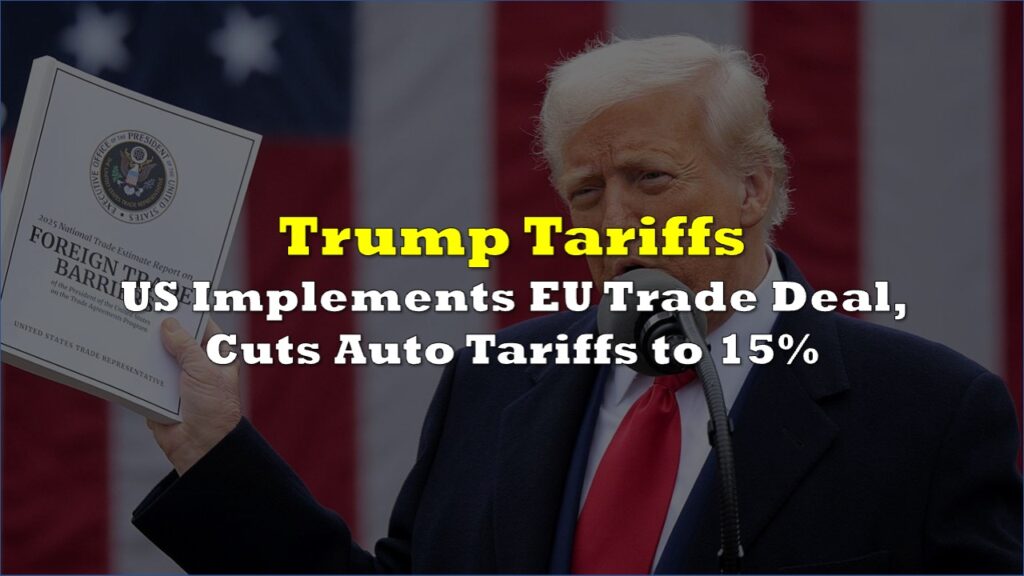
That February shock came after the US Supreme Court ruled 6-3 that Trump’s use of the International Emergency Economic Powers Act to impose sweeping global tariffs was unlawful. Within hours, Trump signed an executive order imposing a new 10% global import duty, then raised the rate to 15%, the statutory ceiling and a rate that can only remain in force for 150 days without congressional approval.
Lange at the time described the US position as “pure tariff chaos” and argued lawmakers could not proceed without a full legal assessment and explicit US commitments. The European Commission also hardened its tone, saying the climate no longer matched the “fair, balanced, and mutually beneficial” transatlantic relationship both sides had outlined in their August 2025 joint statement.
The vote does not finish ratification. Representatives of Parliament and EU governments must now negotiate final texts, after which EU lawmakers must hold a final approval vote not expected until April or May.
Information for this story was found via Bloomberg, Reuters, and the sources and companies mentioned. The author has no securities or affiliations related to the organizations discussed. Not a recommendation to buy or sell. Always do additional research and consult a professional before purchasing a security. The author holds no licenses.