

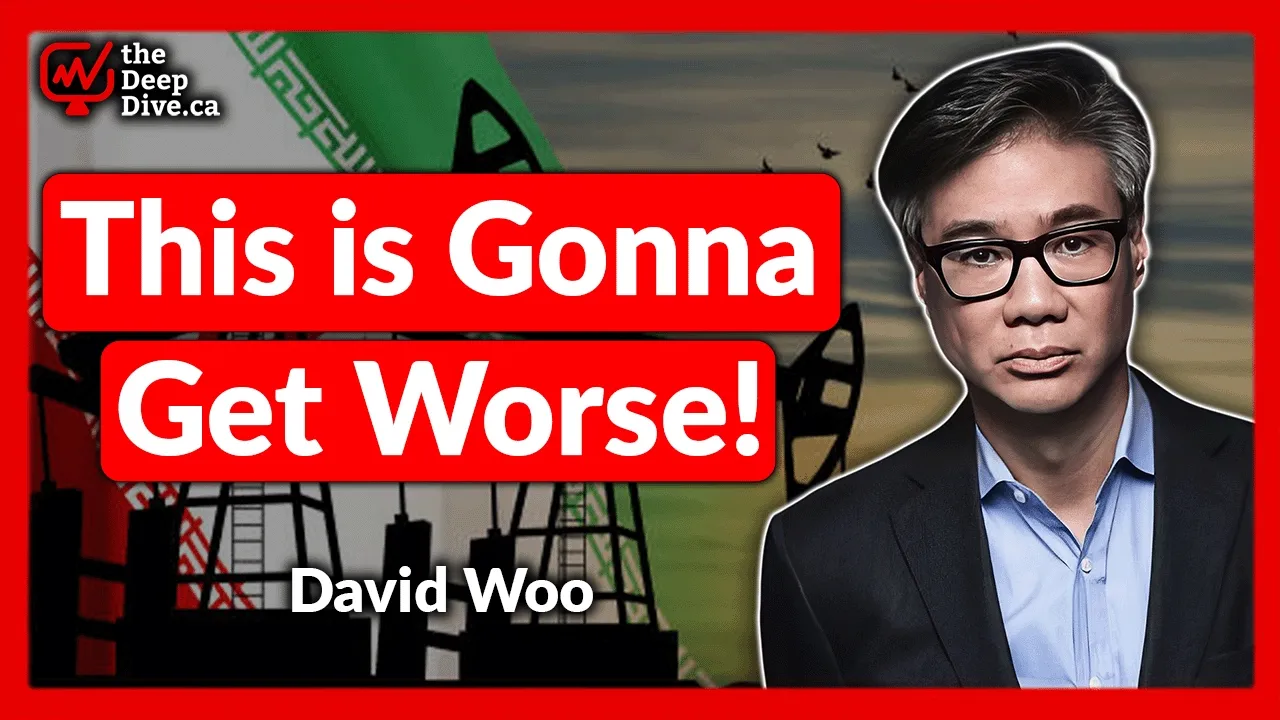

In this conversation with David Woo of David Woo Unbound, we discuss why markets may be misreading the war with Iran, how oil, equities, and bond yields are reacting, and why David believes this conflict could last longer and become messier than many investors expect. He explains why the market is treating this as a temporary inflation shock, why that may be the wrong read, and how Trump, China, and the Strait of Hormuz all factor into the bigger geopolitical picture.
What makes this discussion different is that David does not just offer a surface-level take on the conflict. He lays out how he thinks large investors are positioning, why he believes oil risk is still not fully priced, and what outcomes could matter most for markets from here. We also discuss his upcoming book, a financial thriller built around globalization, political polarization, and the forces that shaped the world investors are navigating today.
Information for this story was found via the sources and companies mentioned. The author has no securities or affiliations related to the organizations discussed. Not a recommendation to buy or sell. Always do additional research and consult a professional before purchasing a security. The author holds no licenses.



One Response
This is the “Black Swan” event I’ve been warning you about for years. While the mainstream media was busy selling you a “soft landing” and “imminent rate cuts,” the foundation was rotting. Now, with the war in Iran, the trap has finally snapped shut.
If you own a home, stop looking at the “estimated value” on your banking app. We are no longer in a “correction”—we are entering a generational wealth destruction event.
1. The “Negative Equity” Nightmare: Owing More Than the Dirt is Worth
This is the scariest part of the equation. In a “slow melt,” you lose paper gains. In a war-driven crash, you lose your shirt.
The Reality: Tens of thousands of homeowners who bought between 2021 and 2023 are now officially underwater. They owe the bank more than the house could sell for today.
The Example: Look at a typical detached home in a GTA suburb like Brampton. If you bought at the peak for $1.3 million with a 10% down payment, your mortgage was roughly $1.17 million. With the current 8.7% to 10% drop in Ontario prices, that home is now worth roughly $1.15 million. After Realtor fees and closing costs, you are -$70,000 in the hole just to walk away. You don’t own a home; you own a debt trap you can’t afford to sell.
2. The Interest Rate “Death Spiral”
The market was banking on big rate cuts to save them. The Iran war just killed that hope.
The Inflation Bomb:With Brent crude oil screaming toward $120 a barrel, inflation is being pumped back into the system. The Bank of Canada cannot cut rates when gas and shipping costs are skyrocketing.
The Rate Spike: Since the conflict began, 5-year bond yields have surged. Fixed mortgage rates have already jumped 0.25% to 0.50%in a matter of weeks. If you are one of the thousands facing a mortgage renewal in 2026, you are walking into a buzzsaw of payments that could be $1,500–$2,000 higher per month.
3. The Ontario “Inventory Tsunami”
While buyers have frozen in fear, sellers are starting to panic.
The Data: In Ontario, active listings have surged to decade highs. CMHC confirms that Ontario is the only province expected to see sustained price declines throughout 2026.
The Freeze: TD Economics has slashed sales forecasts because no one signs a 30-year debt contract when they think World War III is around the corner. When demand evaporates and supply piles up, the “slow melt” turns into a vertical drop.
4. The “Ghost Town” Construction Crisis
The war has caused a 23% spike in project abandonments this year. Between the skyrocketing cost of fuel, steel, and insurance, builders are walking away from half-finished towers. We are looking at a stagnant market where the only thing higher than your mortgage payment is the cost of living.
The Bottom Line:
I’ve been calling this for a long time, and I took heat for it. But the Iran war is the final pin in the bubble. We are moving from a housing crisis into a total equity wipeout. The exit doors are currently being welded shut by global instability and record debt. If you think you’re safe, you aren’t paying attention.
Have a great day
Edward HC Graydon