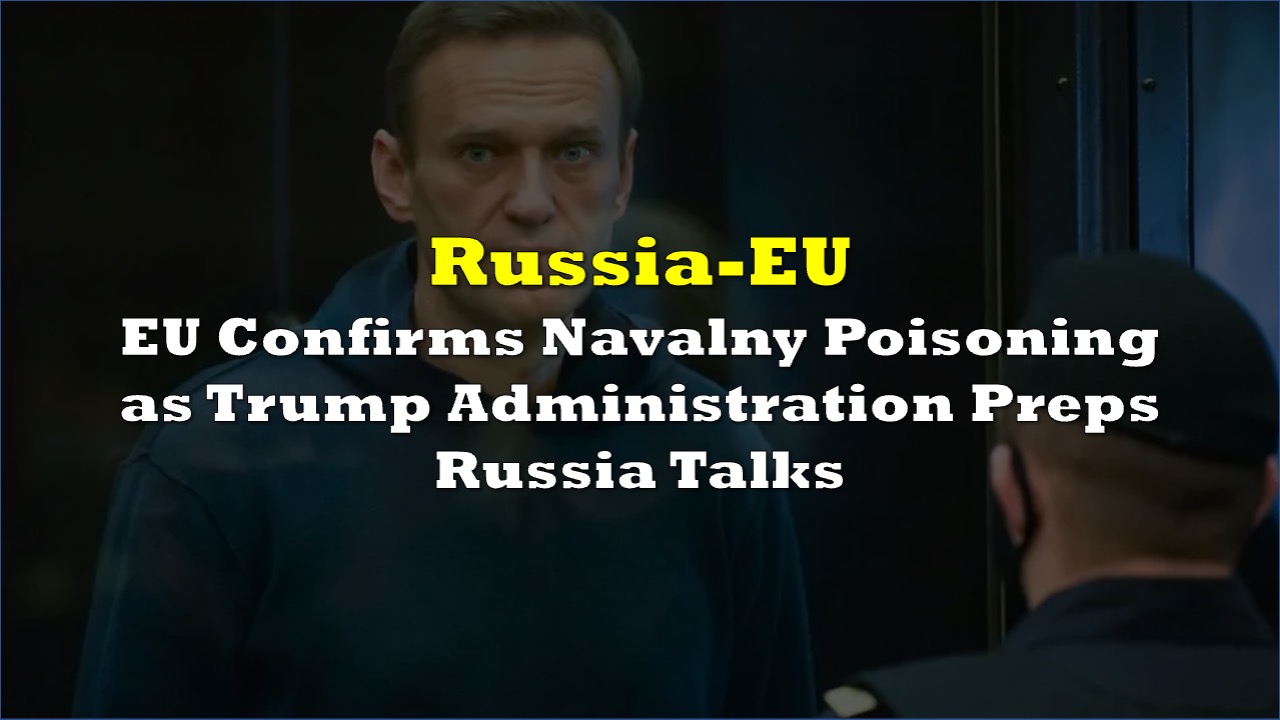

Five European countries announced Saturday that laboratory tests confirmed Russian opposition leader Alexei Navalny died from a rare neurotoxin found in South American poison dart frogs, directly blaming the Kremlin for his death in prison two years ago.
The United Kingdom, France, Germany, Sweden, and the Netherlands said analyses detected epibatidine in samples from Navalny’s body. The toxin is naturally produced by dart frogs in Ecuador and Peru, but does not occur in Russia.
UK Foreign Secretary Yvette Cooper announced at the Munich Security Conference, alongside Navalny’s widow, Yulia Navalnaya, two years after he died in a Russian prison on February 16, 2024.
The UK wants accountability for the killing of Russian political prisoner Alexei Navalny with frog poison, Foreign Secretary Yvette Cooper has told Channel 4 News.
— Channel 4 News (@Channel4News) February 15, 2026
A vocal critic of Russian President Vladimir Putin, Navalny died two years ago, aged 47, while serving a 19 year… pic.twitter.com/yhuatzlVet
Navalny, 47, died at a penal colony above the Arctic Circle while serving more than 30 years on charges his supporters called politically motivated. Russian authorities claimed he died of natural causes.
The five governments reported their findings to the Organisation for the Prohibition of Chemical Weapons, accusing Russia of breaching the Chemical Weapons Convention. Epibatidine is 200 times more potent than morphine.
The neurotoxin attacks the central nervous system, causing muscle paralysis, seizures, respiratory failure, and death. Toxicology experts describe epibatidine poisoning as extremely rare in humans.
Russia’s Foreign Ministry spokeswoman Maria Zakharova dismissed the findings as “propaganda,” according to state news agency TASS. Russia’s embassy in London called the allegations a “political pageant” and compared them to the Skripal case, claiming “strident accusations, media hysteria, zero evidence.”
French Foreign Minister Jean-Noël Barrot said the poisoning shows Putin is “prepared to use biological weapons against his own people to remain in power.”
Also: Another Putin Ally Falls From A Window
Navalnaya said she had been “certain from the first day” her husband was poisoned. “Putin killed Alexei with chemical weapon,” she wrote on social media. “Vladimir Putin is a murderer. He must be held accountable for all his crimes.”
This was not the first incident. Navalny survived Novichok nerve agent poisoning in 2020, received treatment in Germany, and was arrested upon returning to Russia. The UK also accused Russia of using Novichok against former intelligence officer Sergei Skripal in Salisbury, England in 2018.
"I’m certain 100%" Russian President Vladimir Putin poisoned the opposition politician Alexei Navalny says his Chief of Staff Leonid Volkov#Marr https://t.co/iogIIip9CG pic.twitter.com/PFkqaKzSI3
— BBC Politics (@BBCPolitics) September 6, 2020
UK Prime Minister Keir Starmer praised Navalny’s “huge courage,” saying his “determination to expose the truth has left an enduring legacy.” The UK government signaled it is considering new sanctions against Russia in response to the findings.
The announcement increases pressure on the Kremlin as the Trump administration prepares for peace talks with Russia on Ukraine, scheduled for Tuesday in Geneva.
US Secretary of State Marco Rubio said Sunday the United States has “no reason to dispute” the findings and called the report “very troubling” and “very serious.”
Officials did not publicly disclose how European laboratories obtained samples for testing, though sources indicate allies smuggled tissue samples from Navalny’s body before burial. German lawmaker Johann Wadephul said, “no one but Putin’s henchmen will be able to say in detail what happened on February 16, 2024, in the Russian penal colony.”
Ukrainian President Volodymyr Zelensky, asked at the Munich conference whether he feared Putin would use the same toxins against him, said he could not “think about Vladimir Putin, about his poisons or toxins” while Ukrainians continue dying in the war.
Russian authorities detained more than 400 people in the days following Navalny’s death for laying flowers at memorial sites. Thousands attended his Moscow funeral after authorities delayed releasing his body for a week.
Information for this story was found via the sources and companies mentioned. The author has no securities or affiliations related to the organizations discussed. Not a recommendation to buy or sell. Always do additional research and consult a professional before purchasing a security. The author holds no licenses.