
It appears that in the face of the continually evolving geopolitical tensions in Europe, German lawmakers have suddenly had a change of heart – or a hard realization – when it comes to its energy security. Bloomberg this morning has reported that the nations policy stances on a number of key issues have changed rather drastically in just a few short days.
The changes began, as most are already aware, with the country halting the certification of Nord Stream 2, a pipeline from Russia to Germany that runs through the Baltic Sea. The pipeline was intended to be used as a replacement for two aging pipelines that currently serve the country, as the nation’s dependency on Russian natural gas continued to grow, pre-invasion.
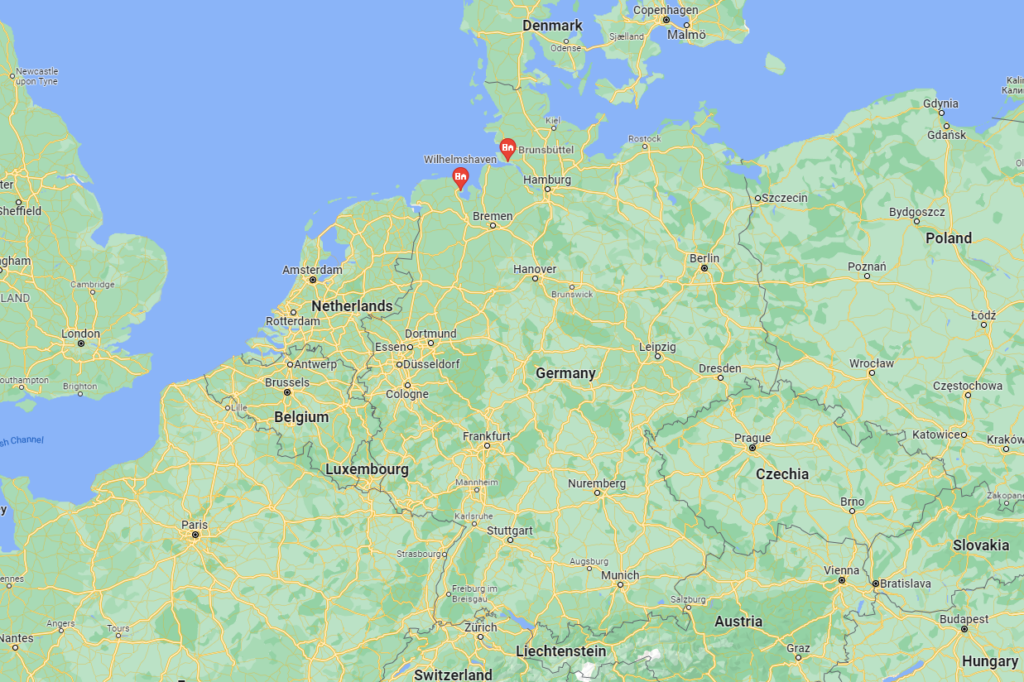
In addition this, it is now being reported that German Chancellor Olaf Scholz has elected to dig deeper into the issue of energy security. The Chancellor announced this morning that the country would build two natural gas terminals in the country, while also increasing the size of its natural gas reserves. The terminals are to be located in Brunsbuettel and Wilhelmshaven.
Current reserves are expected to be increased by 2 billion cubic metres of gas. The country reportedly had up to 24 billion cubic metres of natural gas storage abilities, which are said to be just 30% full currently. The additional gas is to be acquired from world markets, meaning essentially not from Russia.
 Sponsored · Selkirk Copper Mines
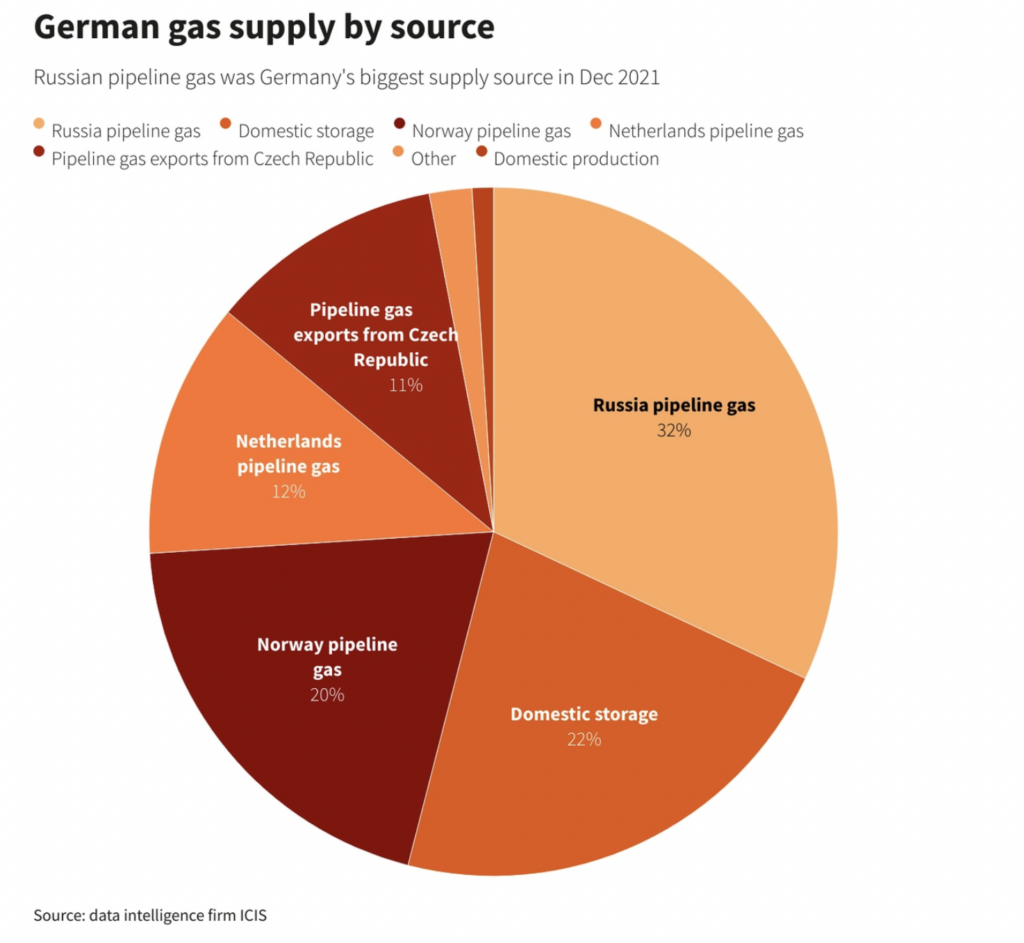
Currently Russian pipeline gas accounts for roughly 32%, or just under a third of all natural gas sourced by Germany, as of December 2021, making the country the largest supplier to German natural gas markets.
Further impacting Germany’s situation is that much of that gas supplied actually runs through pipelines located in Ukraine, with Ukraine collecting revenues from Russia along the way. As can be expected, with conflict ongoing in the region, it could impact the viability of such pipelines – for instance, it appears Russian troops hit a natural gas station just last night.
It was confirmed by Ukraine’s state service of special communications and information protection that natural gas pipeline assets were blown up in Kharkiv by Russian forces. Despite this, the pipeline operator has stated it has not seen a drop in pressure within its system. The downstream impact of the event is not yet known.
Information for this briefing was found via Reuters, Bloomberg and the companies mentioned. The author has no securities or affiliations related to this organization. Not a recommendation to buy or sell. Always do additional research and consult a professional before purchasing a security. The author holds no licenses.