
President Donald Trump has made Israel’s October election part of his argument about America’s military responsibilities toward Iran, saying Benjamin Netanyahu’s continued leadership would prevent Washington from having to take on more of that work.
But one day after Trump endorsed the Israeli prime minister’s reelection, Vice President JD Vance declined to do the same.
In a Truth Social post, Trump offered Netanyahu his “Complete and Total Endorsement.” He argued that replacing Netanyahu would shift more responsibility for confronting Iran onto the US.
 Sponsored · PTX Metals Inc.
“If Israel has the wrong Leader, which would be anyone other than Bibi, America will have to do this work ourselves, and I am not inclined to do so,” Trump wrote.
This comes after American and Israeli forces jointly struck Iran in February, initiating a wider conflict. Washington has already committed military forces to the campaign Trump cited in his endorsement.
Asked by journalist Mark Halperin on 2Way Tonight on Monday whether he supported Netanyahu, Vance said his attention was on US candidates ahead of the November 3 midterms.
“I endorse American candidates, and that’s where I’m focused on in the midterms,” Vance said. He clarified that he was neither endorsing nor opposing Netanyahu.
 Sponsored · Altamira Gold Corp.
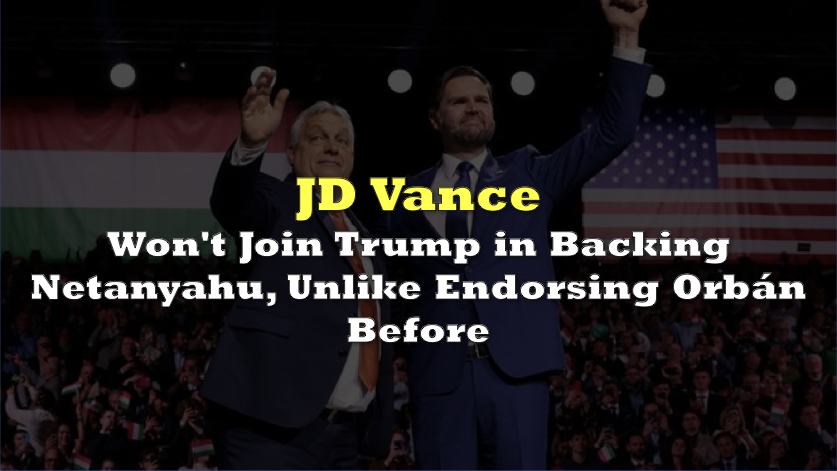
But six months earlier, he traveled to Hungary to campaign for Viktor Orbán five days before the parliamentary vote, publicly urging voters to reelect the then-prime minister.
“We have got to get Viktor Orbán reelected as prime minister of Hungary, don’t we?” Vance told supporters, according to the AP News. Vance also called Trump from the stage, placing the president on speakerphone as he praised the Hungarian leader.
Orbán ultimately lost the April 12 vote to Péter Magyar’s Tisza party, ending his 16-year tenure in power.
His position follows an earlier dispute about how to approach Iran. In July, Vance accused elements of Israel’s government of seeking to influence American opinion against a US-Iran agreement, according to Reuters. Israeli officials cited anonymously by Reuters disputed the agreement’s ability to address their security concerns. The White House said at the time that Trump and Vance were aligned on Iran policy.
Military contact continued through the endorsement dispute. Defense Secretary Pete Hegseth discussed Iran with Netanyahu on Monday during an unannounced visit, Reuters reported, citing three Israeli officials.
The timing extends beyond Israel’s ballot. Trump has said he will not resume strikes on Iran before the US midterms, while Netanyahu has said he is not seeking further attacks before October 27, Reuters reported.
On October 20, Reuters cited three senior Iranian officials and an insider who said Tehran was prolonging negotiations partly to deny Trump a political gain before November 3.
With the Israeli and US elections separated by one week, Trump’s endorsement links Netanyahu’s political future to the allocation of military responsibility for Iran. Vance has declined that electoral intervention without publicly repudiating the administration’s Iran policy.