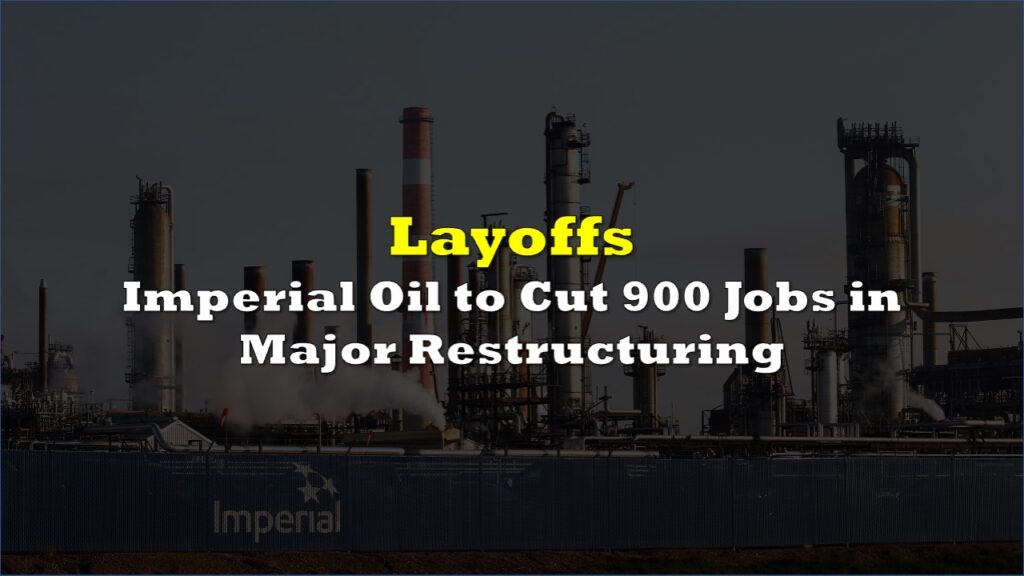

Imperial Oil (TSX: IMO) plans to shut the Norman Wells oil production site in Canada’s Northwest Territories, ending roughly a century of output as the asset’s production base shrinks and shutdown costs crystallize into reported earnings.
The company said the project along the Mackenzie River in the remote Northwest Territories will shut by the end of the third quarter, and the site sits near the Arctic Circle where it has operated since the 1920s under extreme conditions.
A separate account described the shutdown as occurring “by the end of fall,” which is later than the end of the third quarter, so the closure window is either being communicated in seasonal terms or there is a timing mismatch that should be watched for clarified guidance.
Imperial plans to shut the historic Norman Wells oil production site near the Arctic Circle in NWT by the end of fall. It’s been operating since the 1920s.https://t.co/vYPTkW9baO
— Heather Exner-Pirot (@ExnerPirot) February 1, 2026
Production has fallen to just under 4,000 barrels a day as of September, according to provincial data, a steep decline from a peak of about 35,000 barrels a day in 1992.
Imperial recorded a $320 million after-tax charge tied to the shutdown in its fourth-quarter results, putting an explicit earnings number on the closure decision rather than treating it as a slow fade of declining volumes.
Reclamation is scheduled to start some time after 2030, creating a long-dated liability arc that extends beyond the operational stop date and separates “shutdown” from “site restoration” by multiple years.
One explanation circulating alongside the closure is that even at around 4,000 barrels a day, continued operations had been viewed as cheaper than reclamation.
Norman Wells’ operational story includes wartime and postwar logistics that underscore its historical significance, including its role in fuelling Allied defense of the Pacific Coast during the Second World War.
After 1945, the crude was sent to Alberta for domestic use, marking a long-running linkage between a remote northern production site and downstream consumption in Canada’s core energy market.
Northwest Territories Premier RJ Simpson called the decision “disappointing” while also framing it as aligned with facility age and long-term trends.
Information for this story was found via Calgary Herald and the sources and companies mentioned. The author has no securities or affiliations related to the organizations discussed. Not a recommendation to buy or sell. Always do additional research and consult a professional before purchasing a security. The author holds no licenses.