
The defining market move on Thursday was a wholesale repricing toward prolonged conflict, higher energy costs, and stickier inflation after President Donald Trump said the US would intensify military operations against Iran over the next two to three weeks, puncturing hopes that the war was nearing a quick end.
Brent crude jumped 7.6% to $108.81 a barrel, while US West Texas Intermediate rose 7.1% to $107.18.
That shift hit equities immediately. At 6:45 a.m. ET, Dow E-minis were down 499 points, S&P 500 E-minis fell 82.25 points, and Nasdaq 100 E-minis dropped 387 points. Futures tied to the Russell 2000 were also down 1.6%, while the CBOE VIX rose 2.1 points.
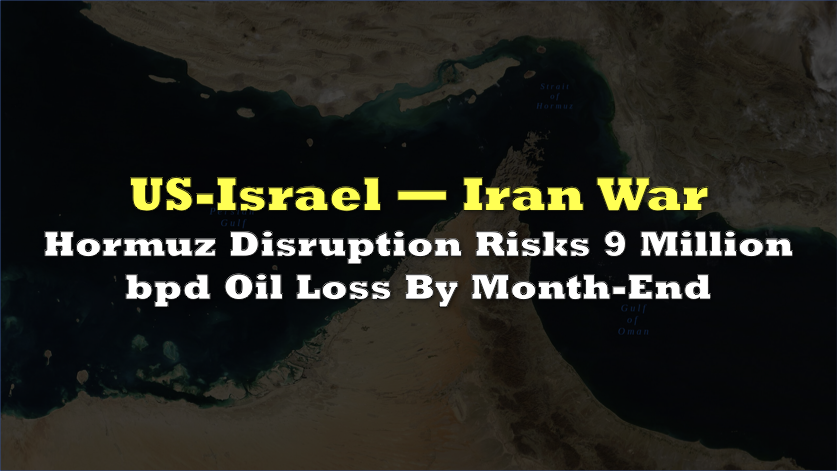
Trump floated the possibility of strikes on Iranian energy infrastructure and gave no concrete indication that the Strait of Hormuz would reopen soon, pushing oil to do the heavy lifting in that repricing. Reuters reported that an oil tanker leased to QatarEnergy was hit by an Iranian cruise missile in Qatari waters on Wednesday, while some traders have stopped dealing in cargoes priced off the Dubai benchmark because ports inside the strait cannot be used.
Nearly a fifth of global crude supply is normally valued off Dubai benchmark, and about a fifth of global oil and liquefied natural gas shipments move through Hormuz.
The inflation channel is now clearer and more aggressive than it looked even 24 hours earlier. Government bond yields rose again as traders moved from pricing easier central-bank policy toward assuming policymakers may need to stay on hold longer, or even tighten if energy-led price pressure broadens. Ten-year US Treasury yields climbed 5 basis points to 4.376%, and Reuters reported money markets were pricing in no Fed easing this year, compared with expectations for two cuts before the war began.
In currency markets, the dollar index climbed 0.53% to 100.09 as investors dumped risk assets and returned to the dollar as the preferred haven. The euro fell 0.51% to $1.1531, sterling slid 0.68% to $1.3216, the Australian dollar dropped 0.69% to $0.6881, and the yen weakened 0.5% to 159.64 per dollar, close to the 160 threshold seen as sensitive for possible Japanese intervention.
Energy stocks moved the other way, with Exxon Mobil up 3.1% in premarket trading and Chevron up 2.6%, while broader index futures sold off, painting a narrative of a profit transfer from consumers and rate-sensitive sectors toward producers and defensive dollar assets.
The longer-horizon implication is that the oil shock is no longer theoretical. Reuters reported Brent is already up nearly 90% this year, and Germany’s leading economic institutes cut their 2026 growth forecast to 0.6% from 1.3% and their 2027 forecast to 0.9% from 1.4% while raising inflation projections as the war lifts oil and gas prices. Europe’s economy is expected to begin feeling actual supply disruption effects in April as pre-war contracted cargoes roll off. 
That leaves markets trapped between a war premium and a policy premium. Earlier optimism that the conflict might fade quickly had pushed traders back toward risk, lower oil, and eventual rate cuts. Thursday erased much of that move in one session. The market is now trading a conflict that lasts longer, keeps Brent around or above $108, pressures inflation expectations higher, and narrows the Fed’s room to ease even as growth expectations deteriorate.
Information for this story was found via Reuters and the sources and companies mentioned. The author has no securities or affiliations related to the organizations discussed. Not a recommendation to buy or sell. Always do additional research and consult a professional before purchasing a security. The author holds no licenses.