
More tariffs are now being built through two channels: a new blanket import duty and a separate push to launch national-security tariffs across multiple industrial categories.
The Supreme Court’s recent ruling held that the International Emergency Economic Powers Act does not authorize President Donald Trump to impose tariffs, cutting off the legal foundation for the administration’s prior emergency-based levies.
But this doesn’t seem to deter the Trump administration in weaponizing the economic measure, even short of mulling with the possibility of a trade embargo.
US Customs and Border Protection implemented a 10% tariff on most imports effective Tuesday, using Section 122 authority that allows duties for up to 150 days to address severe trade imbalances.
Trump discussed a higher 15% figure, while CBP’s order kept the initial levy at 10%, and reporting cited a White House official saying 15% could still be applied later.
HOUSE SPEAKER MIKE JOHNSON SAID CONGRESS IS UNLIKELY TO CODIFY DONALD TRUMP’S 15% GLOBAL TARIFFS AFTER THE SUPREME COURT STRUCK DOWN EARLIER LEVIES, WITH SENIOR REPUBLICANS PRIVATELY SIGNALING THERE ISN’T ENOUGH SUPPORT TO EXTEND THEM BEYOND THEIR 150-DAY WINDOW, ACCORDING TO…
— First Squawk (@FirstSquawk) February 23, 2026
In parallel, the White House is weighing new national-security tariffs under Section 232 of the Trade Expansion Act of 1962, a tool not affected by the Supreme Court’s IEEPA ruling.
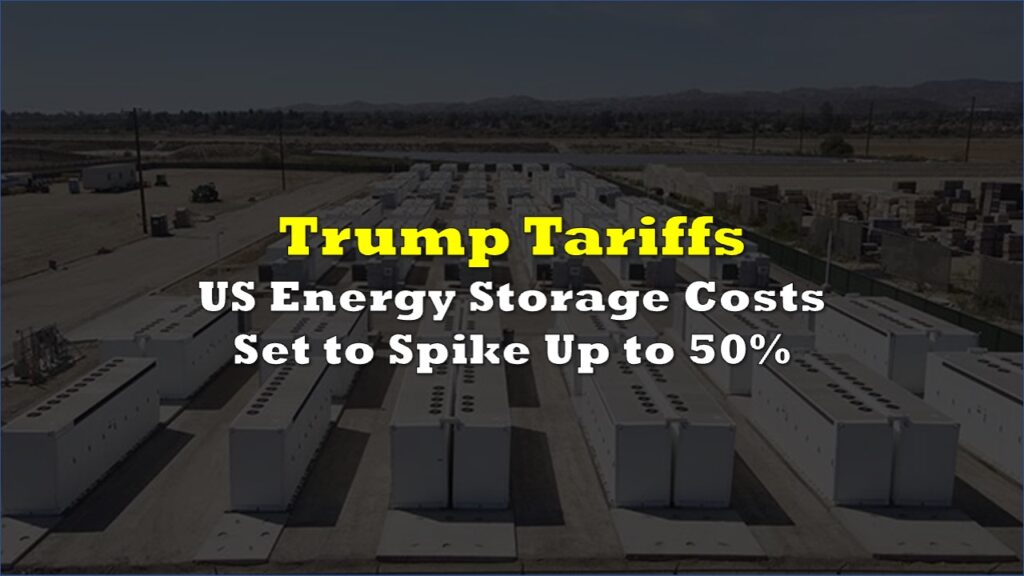
The measure includes a target list spanning roughly half a dozen industries, including large-scale batteries, industrial chemicals, plastic piping, cast iron and iron fittings, plus power-grid and telecom equipment.
https://t.co/4gdHN7830L pic.twitter.com/yVnglWmBxL
— Joey Politano 🏳️🌈 (@JosephPolitano) February 23, 2026
Section 232 tariffs are typically preceded by Commerce Department investigations, and the next wave is being queued even as the short-term global levy runs on its 150-day clock.
The current Section 232 tariffs already cover steel, aluminum, copper, and autos.
On Capitol Hill, House Speaker Mike Johnson suggest Congress is unlikely to codify Trump’s tariff program, with senior Republicans privately signaling insufficient support to extend a global-tariff framework beyond a 150-day window.
Separately, Senate Democrats introduced legislation on Monday to require refunds, with interest, of more than $175.0 billion collected under the IEEPA tariff regime the Court deemed unauthorized, while CBP was expected to stop collecting those IEEPA tariffs starting Tuesday.
Information for this story was found via the sources and companies mentioned. The author has no securities or affiliations related to the organizations discussed. Not a recommendation to buy or sell. Always do additional research and consult a professional before purchasing a security. The author holds no licenses.