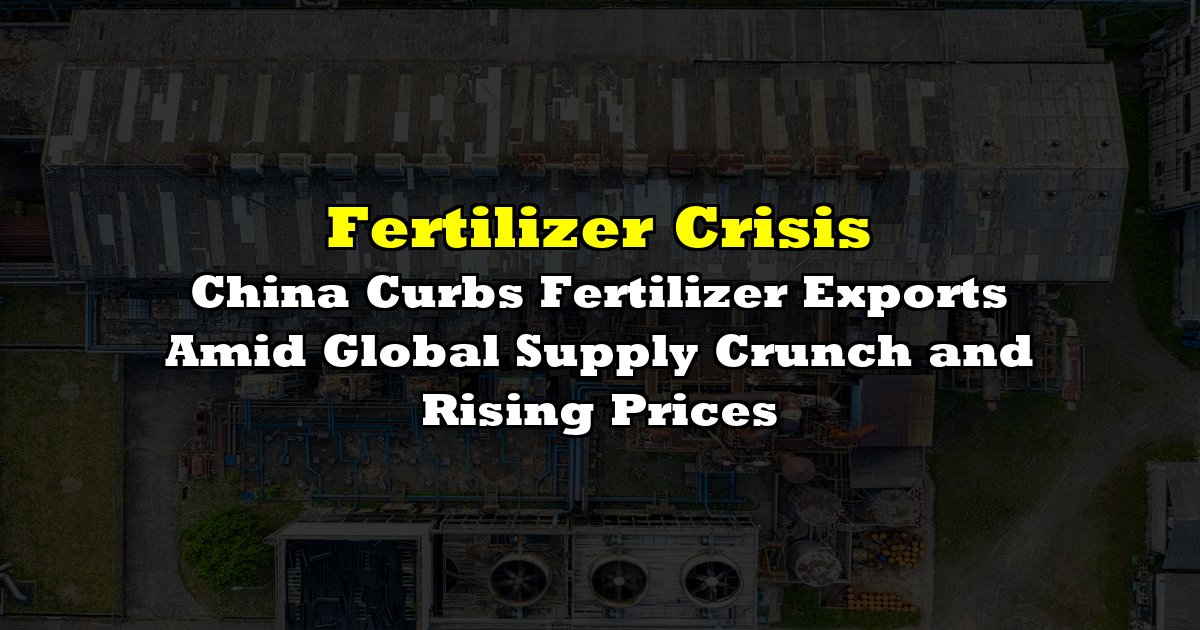

China has tightened controls on fertilizer exports as global prices soar amid geopolitical tensions and supply disruptions, exacerbating challenges for farmers worldwide. The country has reportedly asked exporters to halt outbound shipments of nitrogen-potassium fertilizer blends. The move comes as the country prioritizes domestic supply to safeguard its agricultural sector.
The restrictions follow a sharp rise in fertilizer costs, driven by the ongoing war and related energy market volatility, which have strained production inputs like natural gas. China’s decision to limit shipments is a blow to international markets already grappling with constrained supply chains. Major agricultural producers in regions like North America and Latin America, heavily reliant on imported fertilizers, now face heightened uncertainty as they approach critical planting seasons.
Compounding the issue, the closure of the Strait of Hormuz has disrupted key shipping routes, further tightening global availability. China, one of the world’s largest producers of urea and phosphate fertilizers, has also begun tapping into its strategic reserves to stabilize domestic prices and ensure food security for its population. This dual approach—curbing exports while releasing reserves—signals Beijing’s focus on insulating its economy from external shocks.
 Sponsored · Selkirk Copper Mines
Farmers in importing nations are bracing for higher input costs, with some industry estimates suggesting fertilizer prices could climb an additional 15-20% by mid-2026 if supply constraints persist. Smaller agricultural economies, particularly in Africa and South Asia, risk being priced out entirely, potentially deepening food insecurity in vulnerable regions.
On the flip side, China’s export curbs could spur opportunities for alternative suppliers, though ramping up production elsewhere will take time. Countries like Russia and Canada, significant players in the fertilizer market, may see increased demand, but logistical hurdles and energy costs remain barriers to filling the gap quickly.
The timing of China’s policy shift adds another layer of complexity to an already fragile global agricultural outlook. With planting cycles looming, the ripple effects of higher costs and limited supply are likely to impact crop yields later in 2026, potentially driving food prices higher. Current market data shows urea futures trading at their highest levels in over a decade, with no immediate relief in sight.
Global fertilizer trade flows are now under intense scrutiny as stakeholders scramble to adapt. The export restrictions from China, paired with ongoing geopolitical disruptions, have locked in a supply deficit that could persist through the year. As of mid-March, spot prices for key fertilizers like diammonium phosphate have spiked by 25% year-over-year, a stark indicator of the mounting pressure on the sector.
Information for this story was found via the sources and companies mentioned. The author has no securities or affiliations related to the organizations discussed. Not a recommendation to buy or sell. Always do additional research and consult a professional before purchasing a security. The author holds no licenses.