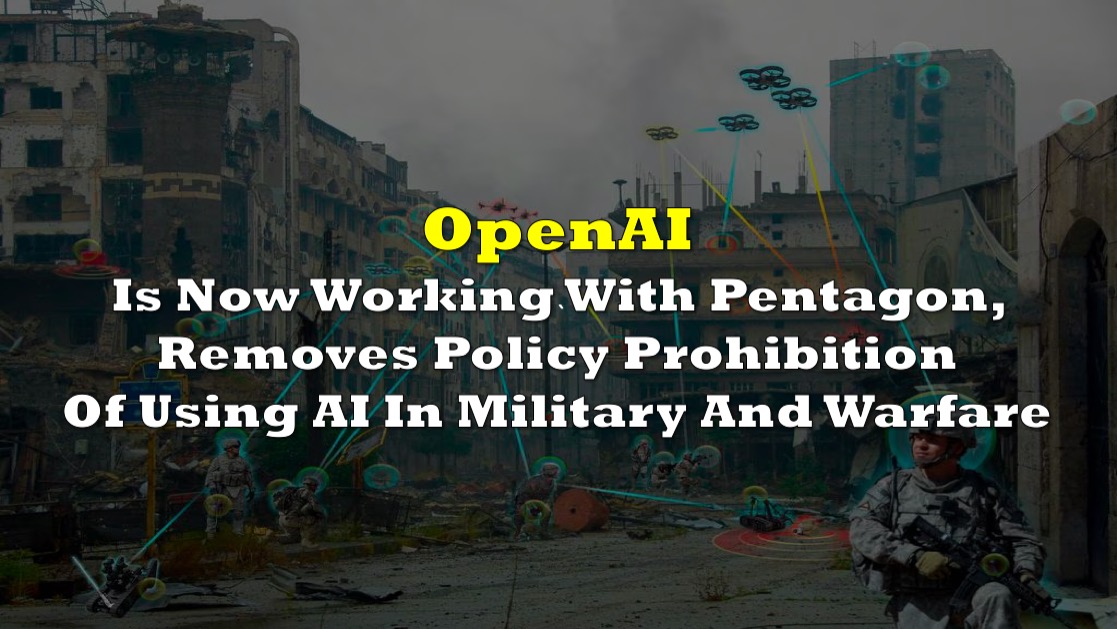

OpenAI has announced a collaboration with the Pentagon on various software projects, with a focus on cybersecurity capabilities, a significant departure from its previous stance.
The company’s vice president of global affairs, Anna Makanju, disclosed this information at the World Economic Forum, stating that OpenAI is actively engaged with the U.S. Defense Department on open-source cybersecurity software, including participation in the AI Cyber Challenge initiated by DARPA.
Furthermore, Makanju revealed that OpenAI is in preliminary discussions with the U.S. government regarding the development of tools to address the pressing issue of veteran suicides. Despite this shift in focus, she emphasized that OpenAI remains committed to its policy against developing weapons, ensuring a clear boundary between its technology and militaristic applications.
 Sponsored · Selkirk Copper Mines
The company recently attracted attention when it removed language from its usage policy that previously prohibited the use of its AI in “military and warfare” applications. Makanju clarified that this modification was part of a broader update to accommodate evolving use cases for ChatGPT and other tools. She noted, “Because we previously had what was essentially a blanket prohibition on military, many people thought that would prohibit many of these use cases, which people think are very much aligned with what we want to see in the world.”

This strategic shift aligns with the broader trend in Silicon Valley, where resistance to collaboration with the U.S. military has softened in recent years. In 2018, Google faced internal protests over a Pentagon project, but since then, major tech companies, including Google, have secured substantial defense contracts.
The evolving landscape of U.S.-China tensions and the conflict in Ukraine has played a role in reshaping attitudes towards military collaboration. Reed Albergotti, technology editor at Semafor, noted, “What’s emerged lately is a kind of techno-patriotism in Silicon Valley.”
Former Google CEO Eric Schmidt, now a prominent figure in the defense industry, drew parallels between the impact of AI and the advent of nuclear weapons. He highlighted the transformative potential of AI-powered autonomy and decentralized systems, comparing it to the profound changes brought about by nuclear technology.
 Sponsored · Silver47 Exploration Inc.
While defense experts express optimism about the transformative impact of AI on the military, advocacy groups caution against the integration of AI into warfare due to potential risks. Concerns include AI’s tendency to “hallucinate,” generating false information with potentially severe consequences if integrated into command and control systems.
OpenAI’s revised policy may allow it to provide AI software to the Department of Defense for purposes such as data analysis and coding assistance. However, the blurred lines between data-related activities and warfare, as evidenced by Ukraine’s use of software for rapid target identification, raise questions about the potential consequences and ethical considerations.
As OpenAI navigates this new direction, there are concerns that the policy change could reignite debates over AI safety, reminiscent of the issues that led to Sam Altman’s brief departure as CEO. The Information warned that this shift might prompt a revisitation of the ethical implications associated with AI applications, especially in the context of military collaboration.
In addition to its collaboration with the Pentagon, OpenAI highlighted its commitment to election security, pledging resources to prevent the misuse of its generative AI tools for political disinformation. Sam Altman, OpenAI’s CEO, emphasized the significance of addressing election security concerns, recognizing the importance of safeguarding democratic processes.
Microsoft Corp., OpenAI’s largest investor, also plays a role in the broader landscape of tech companies providing software contracts to the U.S. armed forces and government branches.
Information for this briefing was found via Semafor, Bloomberg, and the sources mentioned. The author has no securities or affiliations related to this organization. Not a recommendation to buy or sell. Always do additional research and consult a professional before purchasing a security. The author holds no licenses.