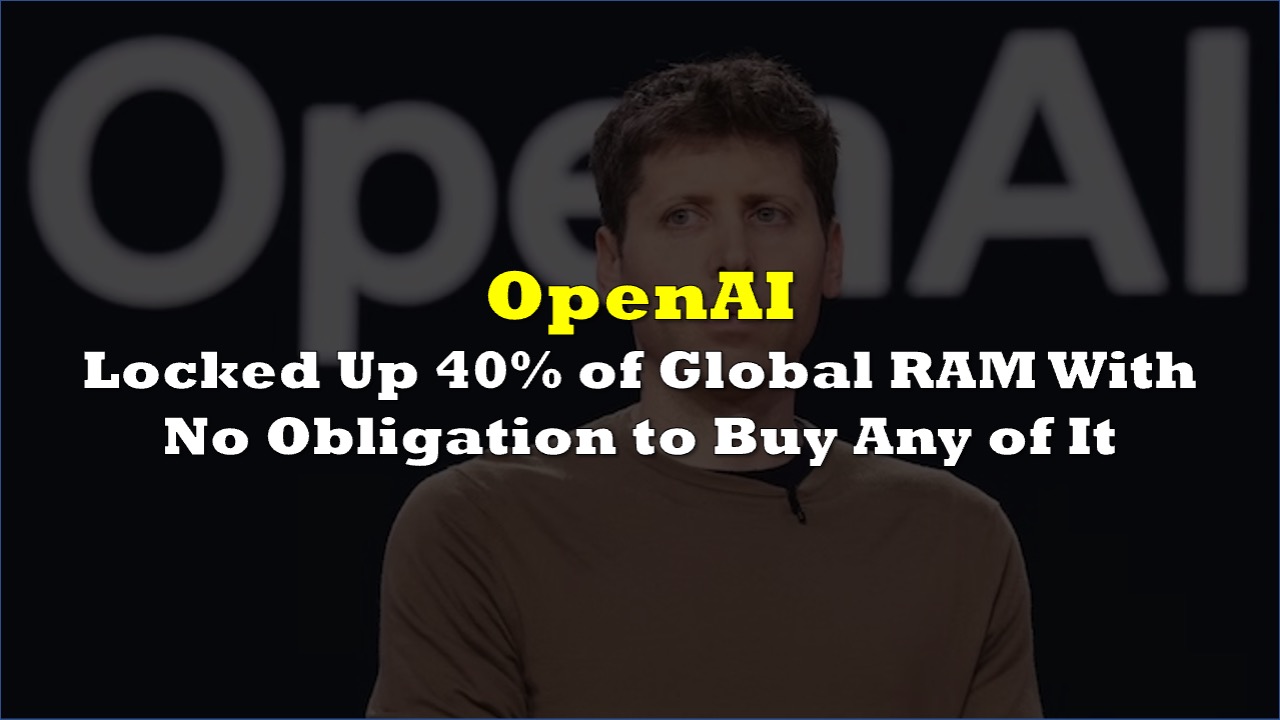

In October 2025, OpenAI CEO Sam Altman flew to Seoul and signed letters of intent with Samsung Electronics and SK Hynix — the world’s two largest memory chipmakers — targeting 900,000 DRAM wafer starts per month. Analysts estimated that volume at roughly 40% of global supply. South Korean President Lee Jae-myung stood alongside the chipmakers and OpenAI at the announcement. Contract DRAM prices surged in the aftermath.
Both agreements were letters of intent — preliminary expressions of interest carrying no enforceable purchase obligation and no requirement to deliver or receive a single chip.
The market did not read them that way. Micron shuttered Crucial, its 29-year-old consumer memory brand, in December 2025, citing AI-driven demand and redirecting its entire wafer allocation toward enterprise and data center customers. Other manufacturers tightened supply. Consumers and hardware builders faced price increases across the board, with fewer options and no timeline for relief.
The timeline on this is genuinely insane.
— Aakash Gupta (@aakashgupta) March 31, 2026
October 2025: Sam Altman flies to Seoul and signs simultaneous deals with Samsung and SK Hynix for 900,000 DRAM wafers per month. That's 40% of global supply. Neither company knew the other was signing a near-identical commitment at the… https://t.co/HqQTKjoCqR
Five months after the Seoul signing, the demand signal those agreements created is unraveling. In March 2026, Oracle and OpenAI scrapped plans to expand their flagship Stargate data center campus in Abilene, Texas, after the two companies failed to reach agreement on financing terms and OpenAI revised its capacity requirements multiple times. The Abilene expansion would have grown the site from 1.2 gigawatts to 2 gigawatts of capacity — the same buildout the memory agreements were designed to serve.
Micron shares are in free fall this week.
— Grummz (@Grummz) March 30, 2026
– Be Micron.
– Get excited about Sam Altman singing letters “intending” to buy 40% of DRAM.
– Close your entire Crucial consumer memory division so you can sell gamer RAM to OpenAI.
– Sam Altman loses investors, never buys the RAM he… pic.twitter.com/SNcSSVaIr6
OpenAI has pulled back on other major commitments in parallel. The company also closed Sora, its Disney-backed AI video platform, as it moved to bring escalating costs under control. Investor scrutiny over OpenAI’s spending trajectory has intensified as projected costs continue to climb.
Samsung and SK Hynix together control roughly 78% of global DRAM production. A demand signal at that scale — even non-binding — reshaped manufacturer priorities, supply allocations, and pricing across the entire memory chain. Micron’s exit from consumer memory reflected how seriously the industry internalized the commitment.
An analyst cited by The Telegraph cautioned that if OpenAI’s contracts go unfulfilled and the company scales back investment, memory prices will ease — a development that would benefit consumers but would also expose how much of the recent shortage rested on demand that never fully materialized.
Information for this story was found via the sources and companies mentioned. The author has no securities or affiliations related to the organizations discussed. Not a recommendation to buy or sell. Always do additional research and consult a professional before purchasing a security. The author holds no licenses.