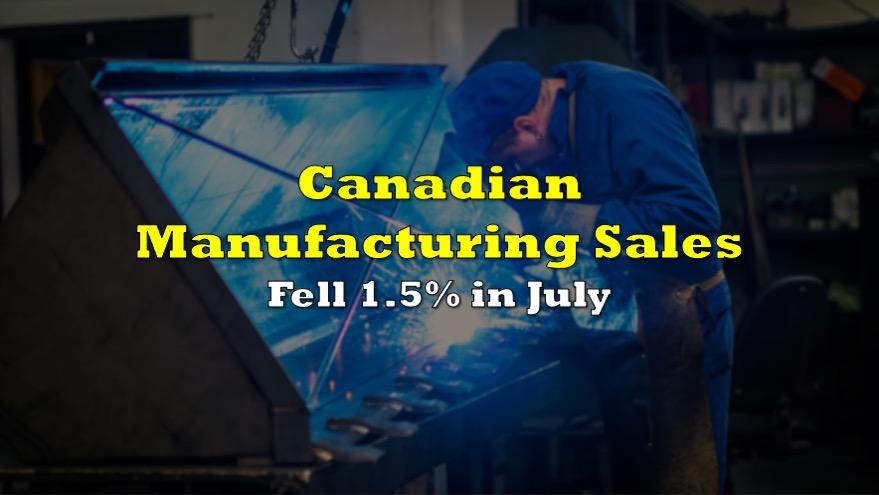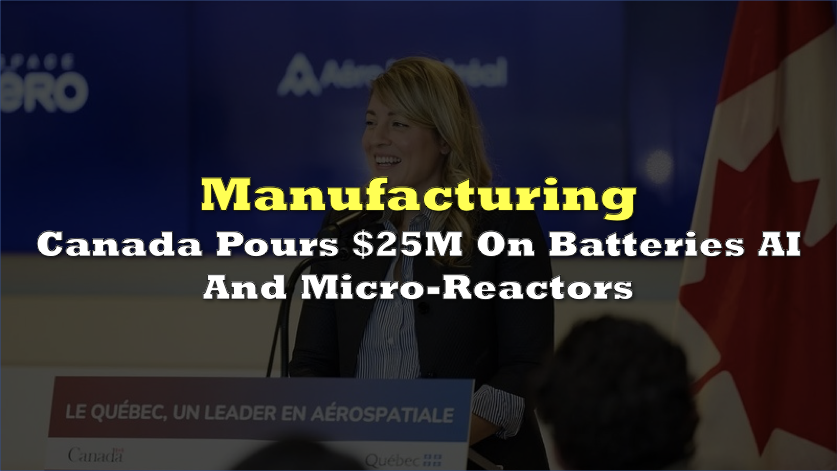

Ottawa is putting nearly $25 million behind 14 advanced manufacturing projects, with industry adding $38 million, for a combined investment of more than $62.7 million as the federal government pushes to turn industrial R&D into exportable commercial output.
The package spans battery materials, AI-driven packaging, automation, satellites, healthcare manufacturing, quantum photonics, and rare-earth processing. Among the named projects are lithium brine-to-battery chemicals manufacturing led by Saltworks Technologies, rapid quality assurance and sorting for grid-scale batteries led by Pulsenics, and AI-powered cosmetics packaging work led by Materia Bioworks.
Other funded work includes automated manufacturing for nuclear micro-reactors led by Canadian Strategic Missions Corporation, methane-to-energy-storage applications led by MakeSens Battery Technologies, AI-enabled next-generation satellite production led by MDA Corporation, and automated packaging for quantum computers and lidars led by AEPONYX Enterprises.
 Sponsored · Silver47 Exploration Inc.
The project slate also includes additive manufacturing in healthcare, viral vector manufacturing, advanced robotics with digital twins, and pilot-scale production of nano-alumina doped with rare earth elements.
The funding is being delivered through Next Generation Manufacturing Canada, or NGen, and is being announced at Hannover Messe in Germany on April 20.
Industry Minister Mélanie Joly framed the announcement around commercialization and international reach, saying Canada is showcasing how it turns innovation into commercialization. NGen Chief Executive Jayson Myers said the goal is to help Canadian companies scale faster, compete internationally, and strengthen the domestic high-value manufacturing ecosystem.
The Germany setting is part of the point. Ottawa said Hannover Messe 2026 is a platform to showcase Canadian advanced manufacturing, deepen ties with international partners, and identify growth opportunities through global market access. NGen said the Canadian delegation will bring more than 100 companies in AI, robotics, advanced materials, and defence-related manufacturing processes to the fair.
The government is also using the trip to widen the industrial conversation beyond this funding round. Ottawa said Joly’s meetings in Germany will focus on aerospace and defence, electric vehicles, critical minerals, and batteries, building on a February 2026 Canada-Germany joint declaration on cooperation in the auto and battery supply chain.
Ottawa said Canadian participation at Hannover Messe has driven more than $336 million in trade and investment over the past two years. The government also said bilateral trade in goods and services between Canada and Germany exceeded $38 billion in 2025, making Germany Canada’s largest export market in the EU.
Information for this story was found via The Globe And Mail and the sources and companies mentioned. The author has no securities or affiliations related to the organizations discussed. Not a recommendation to buy or sell. Always do additional research and consult a professional before purchasing a security. The author holds no licenses.