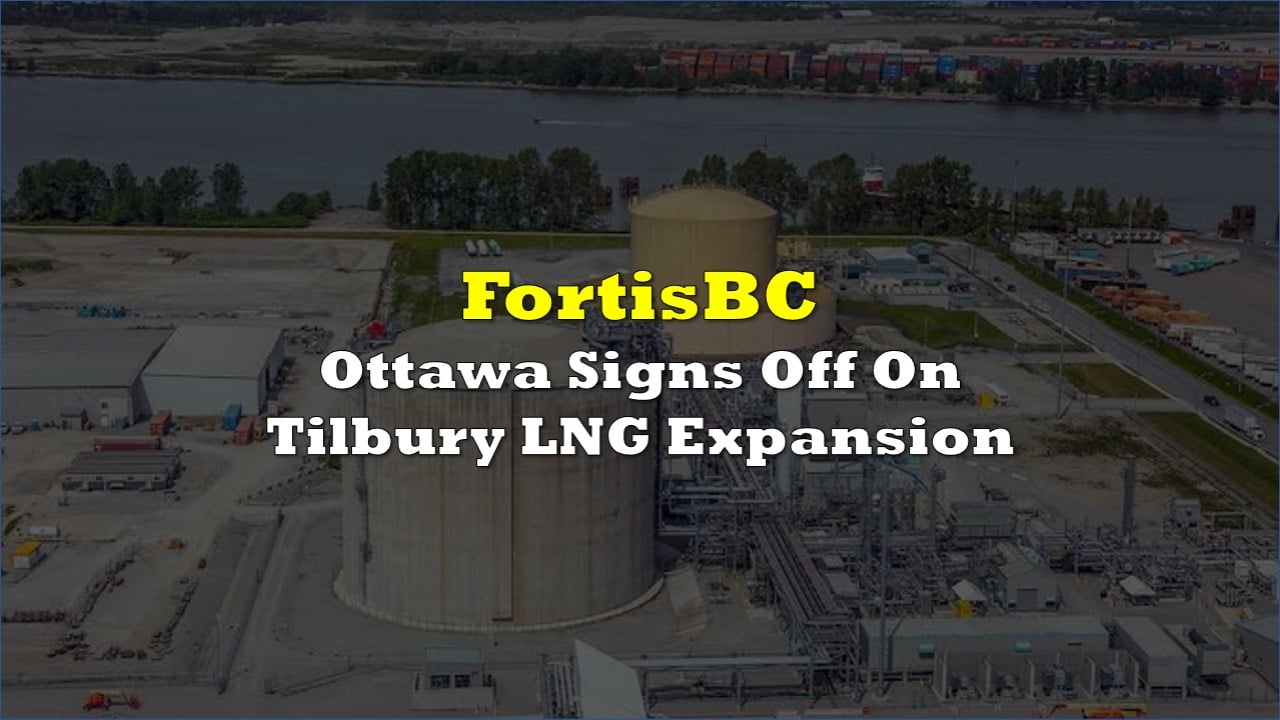

FortisBC‘s Tilbury LNG expansion in Delta, BC has federal approval as of Monday, following right behind the province’s own environmental assessment certificate under the new “one project, one review” framework.
The project’s centerpiece is a sizeable new storage tank, pushing daily capacity up by as much as 7,700 tonnes — a boost the province says will help meet growing appetite for LNG shipped from Vancouver’s port, while giving coastal and trans-Pacific vessels better fuel access.
Federal Energy Minister Tim Hodgson said the approval would “power BC Ferries with cleaner fuel, strengthen Canada’s energy security.”
The province is pitching this as a major jobs win — up to $1.7 billion added to provincial GDP during construction, 100 permanent positions once running, and construction work totaling 6,200 full-time-equivalent years. Federal Environment Minister Julie Dabrusin, in a statement, called it proof you can “create jobs and grow the economy while protecting the environment and advancing reconciliation.”
 Sponsored · Selkirk Copper Mines
The certificate includes what BC called “18 legally binding conditions” on air quality, wildlife and emissions, plus ongoing monitoring tied to First Nations, following outreach that sought consensus with 12 Indigenous nations directly and kept 13 more updated on key milestones.
The review itself dates back to February 2020, before the pandemic pushed it off track; FortisBC filed a revised application this past February.
In July, BC Minister of Emergency Management and Climate Readiness Kelly Greene said she was “disappointed with FortisBC’s decision,” citing safety concerns from her constituents. Premier David Eby responded by describing his government as a “big tent” with room for that kind of internal dissent.