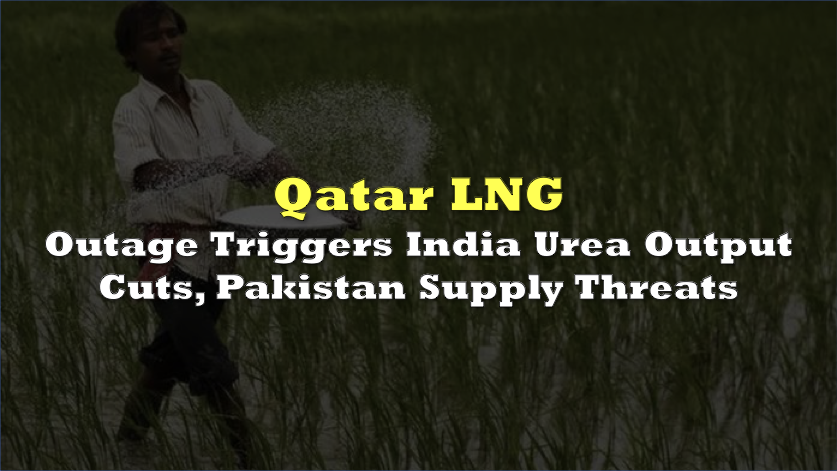

India’s fertilizer producers have begun cutting urea output after supplies of liquefied natural gas from Qatar were suspended amid hostilities in the Middle East.
Some manufacturers, including Indian Farmers Fertiliser Cooperative, have started reducing production at certain urea plants, according to people familiar with the matter, who said a prolonged disruption could compel full facility shutdowns.
LNG is the primary feedstock for urea, functioning both as the energy source and as a key input in the manufacturing process of the most widely used fertilize. The risk is compounding because prices of other fertilizer inputs, including ammonia and sulfur, are also rising.
In Pakistan, Sui Northern Gas Pipelines notified customers that it will be unable to supply regasified LNG to their fertilizer plants because of the Middle East conflict, according to a company notice, with the suspension taking effect from midnight Wednesday.
 Sponsored · Silver47 Exploration Inc.
Pakistan receives most of its LNG from Qatar, concentrating supply risk into a single corridor, and turning a Qatari export outage into a direct operational constraint for domestic fertilizer plants.
In India, a senior fertilizer ministry official said the geopolitical situation is being continuously monitored and that there is no current shortage in gas supplies, while not commenting on the reported urea cutbacks.
Industry officials pointed to buffer capacity, with Fertiliser Association of India director general Suresh Kumar Chaudhari saying there are enough stockpiles to meet near-term demand, but warning that a longer conflict would become a concern.
If the cuts persist, India may have to increase imports ahead of the monsoon season that begins in June, when fertilizer demand typically rises, and when supply gaps become more expensive to patch quickly.
Higher-cost imports would complicate New Delhi’s effort to rein in nutrient subsidies for farmers, at a time when the government is trying to trim its fiscal deficit target to 4.3% of gross domestic product next fiscal year, from a goal of 4.4% in 2025–26.
Information for this story was found via Bloomberg and the sources and companies mentioned. The author has no securities or affiliations related to the organizations discussed. Not a recommendation to buy or sell. Always do additional research and consult a professional before purchasing a security. The author holds no licenses.