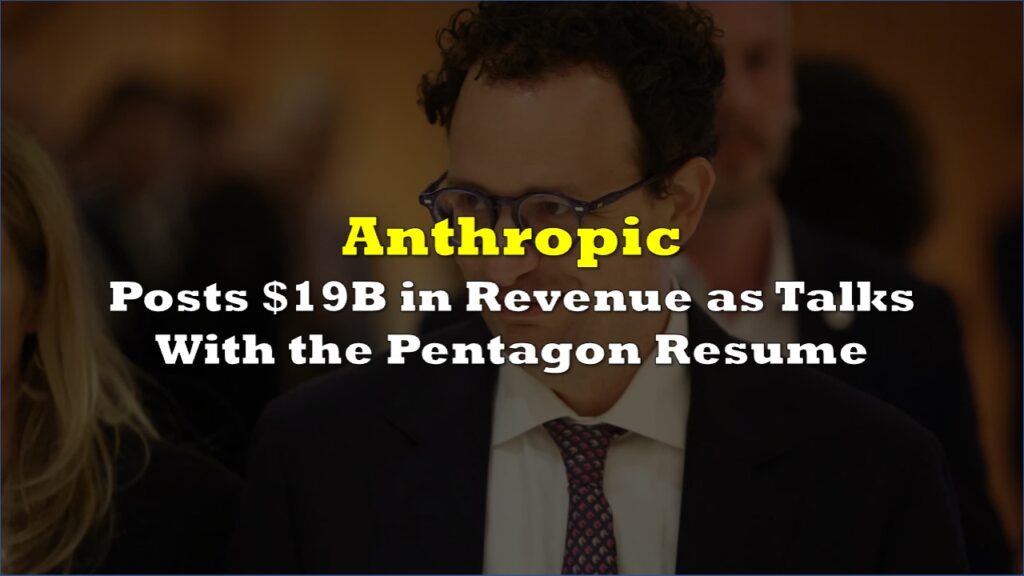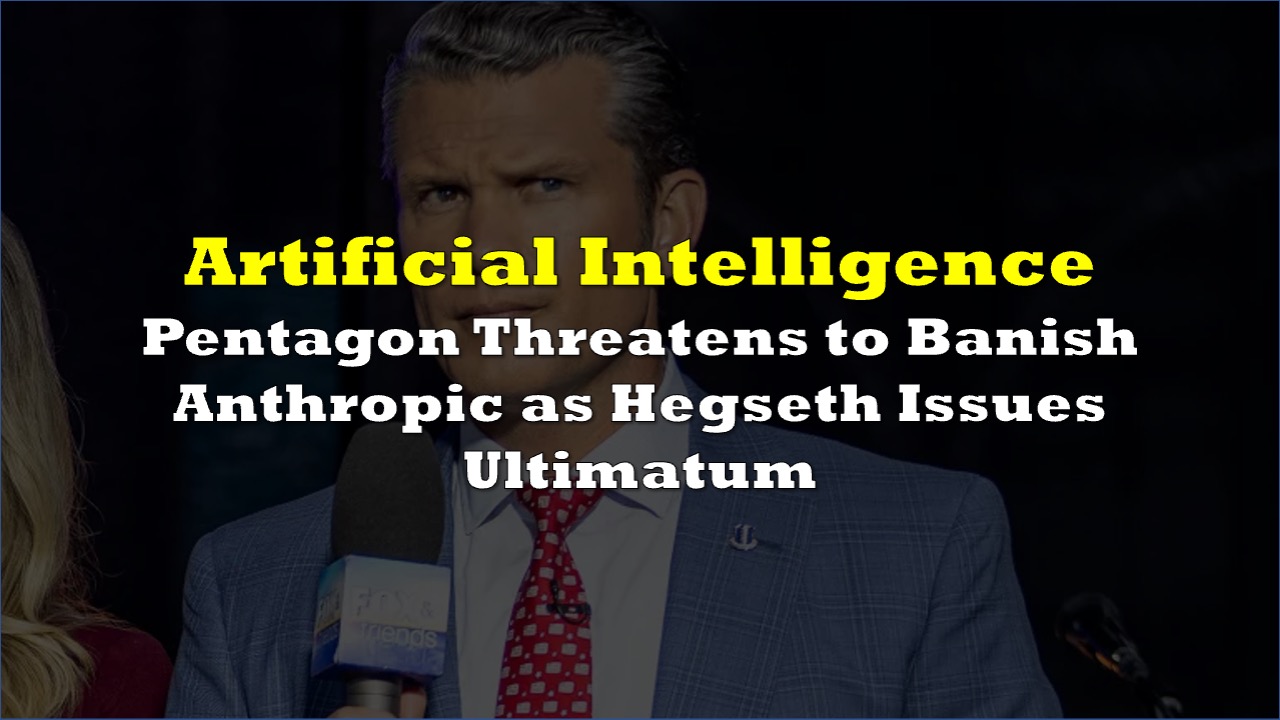

Defense Secretary Pete Hegseth summoned Anthropic CEO Dario Amodei to the Pentagon on Tuesday for what sources describe as a make-or-break confrontation over the military’s use of the company’s Claude artificial intelligence model — until very recently the only AI cleared for use on the US military’s classified networks.
The meeting caps months of deteriorating negotiations between the Pentagon and the San Francisco-based AI company. Axios first reported it, citing a senior Defense official who characterized it in blunt terms: “This is not a get-to-know-you meeting. This is not a friendly meeting. This is a sh*t-or-get-off-the-pot meeting.”
Via @Axios Scoop: Hegseth to meet Anthropic CEO and issue ultimatum as Pentagon threatens banishment.
— Jennifer Griffin (@JenGriffinFNC) February 23, 2026
BUT
“Claude is the only AI model available in the military's classified systems, and the most capable model for sensitive defense and intelligence work. The Pentagon doesn't want…
Hegseth plans to present Amodei with an ultimatum — agree to the Pentagon’s terms or face designation as a “supply chain risk,” a label typically reserved for foreign adversaries. That designation would void Anthropic’s contract with the Department of Defense, currently valued at up to $200 million, and compel other Pentagon contractors to stop using Claude in their own operations.
Anthropic, for its part, projects calm. “We are having productive conversations, in good faith,” a company spokesperson said. Pentagon officials tell a different story, saying negotiations have shown no progress and are on the verge of collapse.
What the Pentagon Wants — and What Anthropic Won’t Give
At the heart of the dispute is a question of control. The Pentagon insists it should be able to deploy Claude for “all lawful purposes” without seeking Anthropic’s approval on a case-by-case basis. Anthropic says it will loosen certain usage restrictions but refuses to lift two specific guardrails: it will not allow Claude to support the mass surveillance of Americans, and it will not permit the model’s use in developing weapons that fire without direct human involvement.
A source familiar with Anthropic’s negotiating position, reported by The Hill, that the company’s stance is not ideological but is grounded in technical caution — the view that AI systems are not yet reliable enough for lethal autonomous decisions and that the technology fundamentally changes what domestic surveillance can accomplish.
The stakes for the Pentagon are complicated by its own dependency on Claude. Axios reported last week that replacing Anthropic would be “massively disruptive” — Claude operates in the classified domain through the company’s partnership with defense contractor Palantir, while competing models from OpenAI, Google, and xAI remain limited to unclassified systems. One senior Pentagon official put it plainly: “We’re dead serious” about the threat to cut off Anthropic, while another acknowledged the practical costs: “It will be an enormous pain in the ass to disentangle.”
The designation Hegseth is threatening — typically reserved for foreign adversaries like Huawei — would also ensnare far more than Anthropic. Eight of the 10 largest US companies by revenue use Claude, meaning a blacklist would compel a massive swath of corporate America to cut ties with the model just to keep doing business with the Pentagon.
Claude and the Maduro Raid
Tensions between the two sides sharpened in January after reports emerged that the Pentagon used Claude — via the Palantir platform — during the special operations raid that led to the capture of Venezuelan President Nicolás Maduro on January 3.
The operation put a live example on the table of exactly the kind of high-stakes, classified use that Anthropic says it wants oversight over. The Pentagon maintains that an Anthropic executive raised concerns after the raid; Anthropic disputes that characterization.
Hegseth’s Troubled Tenure at the Pentagon
Tuesday’s confrontation with Anthropic is the latest in a series of high-profile controversies that have dogged Hegseth since his contested Senate confirmation in January 2025.
In March 2025, Hegseth shared sensitive details about imminent US airstrikes on Houthi targets in Yemen through the Signal messaging app — a chat that accidentally included a journalist.
A Pentagon Inspector General report released in December concluded that his decision to transmit military operational information over an unsecured, commercially available platform on a personal cell phone “could have jeopardized the safety of American servicemembers and the mission.” The report found that the information he shared matched material classified as SECRET//NOFORN by US Central Command.
Hegseth declined to cooperate with the IG investigation and later claimed “total exoneration” — a characterization the watchdog’s own findings do not support. The Pentagon also declined to conduct a standard damage assessment to determine whether the breach compromised sources, methods, or ongoing operations.
The Signal episode is one of several controversies that have shadowed his tenure. NPR reported a second Signal chat — this one sharing classified Yemen strike details with his wife, brother, and personal lawyer — prompted a separate IG inquiry. Caribbean boat strikes that killed at least 87 people drew bipartisan calls for accountability. And a sweeping purge of senior military leadership prompted five former defense secretaries, including retired Gen. Jim Mattis, to publicly condemn the dismissals as “reckless.”
What Happens Next
Both sides have signaled they may still reach an agreement, and senior officials on both sides have privately acknowledged the disruption a full break would cause.
The outcome carries implications beyond the Anthropic contract. The Pentagon has now secured a classified-network deal with xAI, and is in advanced talks with Google, while OpenAI remains further behind. Hegseth enters Tuesday’s meeting with more alternatives in hand than he had a week ago — and officials have acknowledged that the fight with Anthropic has served, in part, as a warning shot to those companies about the terms the Defense Department expects.
Information for this story was found via the sources and companies mentioned. The author has no securities or affiliations related to the organizations discussed. Not a recommendation to buy or sell. Always do additional research and consult a professional before purchasing a security. The author holds no licenses.