
PMET Resources (TSX: PMET) has released an updated feasibility study for the CV5 deposit at its Shaakichiuwaanaan project. The update adds tantalum as a co-product and more than triples the project’s after-tax value compared with the lithium-only study released last October.
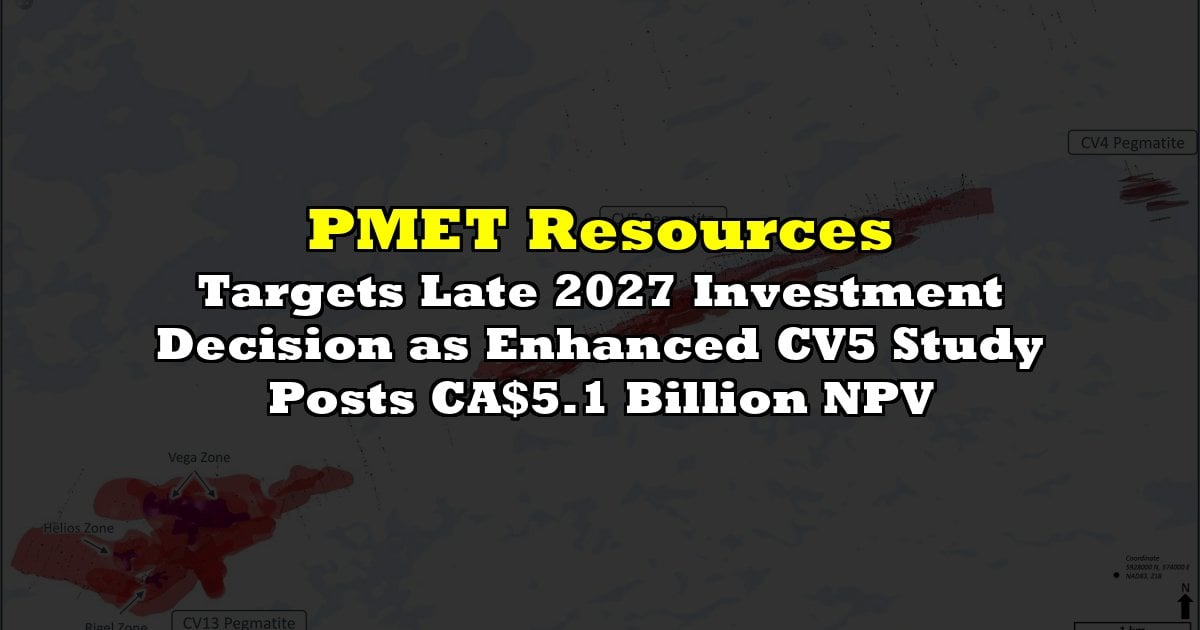
The enhanced study puts CV5’s after-tax net present value at CA$5.1 billion at an 8% discount rate. The after-tax internal rate of return is 40.4%, with a 2.7-year payback. Those figures assume a long term spodumene concentrate price of US$1,788 per tonne and a tantalum price of US$120 per pound of contained tantalum pentoxide.
The October 2025 study for comparison delivered an after-tax NPV of CA$1.59 billion and an IRR of 18.1%, using US$1,221 per tonne spodumene.
 Sponsored · Cambria Gold Mines
The higher lithium price deck accounts for much of that gap. At roughly US$1,400 per tonne, which PMET describes as near broker consensus, after-tax NPV falls to about CA$3.29 billion. Holding the 2025 price and exchange rate constant, the company attributes CA$519 million of added value to tantalum and CA$180 million to mine plan changes.
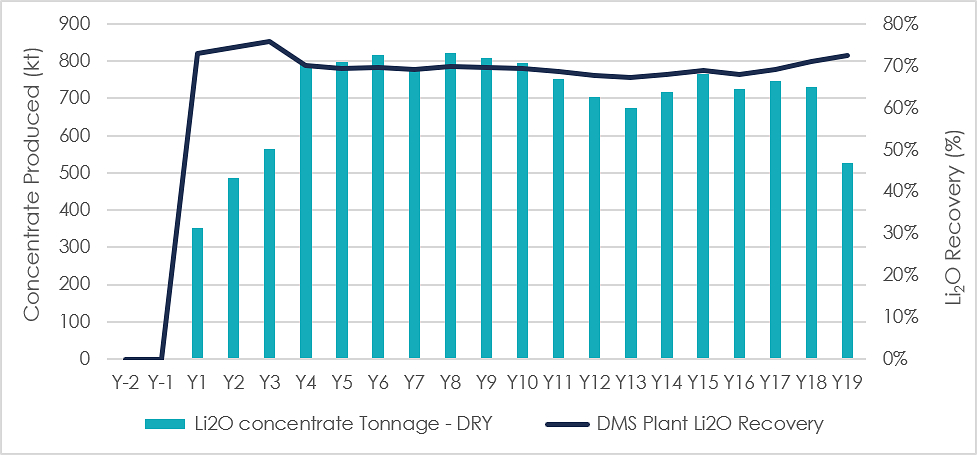
The revised plan also flips the sequencing. Phase 1 now starts underground and mines the higher grade Nova Zone first. That ore feeds a 2.2 million tonne per annum plant producing 560,000 tonnes of concentrate a year over its first three years. Phase 2 adds open pit mining and lifts throughput to 5.1 million tonnes per annum, which raises output to roughly 800,000 tonnes a year.
Over a 19 year mine life, CV5 is expected to produce 13.4 million tonnes of concentrate and about 635,000 pounds of tantalum per year. The probable reserve stands at 83.0 million tonnes grading 1.27% lithium oxide and 148 ppm tantalum pentoxide, including a maiden tantalum reserve.
Phase 1 capital is estimated at CA$1.39 billion, down from CA$1.50 billion, or CA$1.08 billion net of pre-production and tax credits. Total development capital edged up to CA$2.06 billion from CA$1.98 billion.
 Sponsored · Nord Precious Metals
Costs fell further. Cash operating costs net of the tantalum credit came in at US$433 per tonne, down 19%. All-in sustaining costs dropped 18% to US$480 per tonne.
“By bringing forward higher-grade Nova Zone material, simplifying the DMS-only flowsheet and incorporating tantalum recovery from the outset, we have materially lowered our costs,” said CEO Ken Brinsden.
The quick turnaround comes from PMET reworking its phased plan to fit within the environmental and social impact assessment it filed in March 2026. The update also folds in tantalum recovery work that was still underway when the original study came out.
A preliminary economic assessment covering lithium, tantalum and caesium across the CV5 and CV13 deposits is targeted for this quarter. PMET is aiming for a final investment decision in late 2027, with commissioning starting in the latter part of 2029.
Brinsden meanwhile announced his transition from the role of President and CEO to Executive Chair. That change, which will become effective in 2027, will be contingent upon the search for his replacement being successful. Brinsden then expects to transition to the role of Non-Executive Chair after a handover period has been completed.
PMET Resources last traded at $3.22 on the TSX.