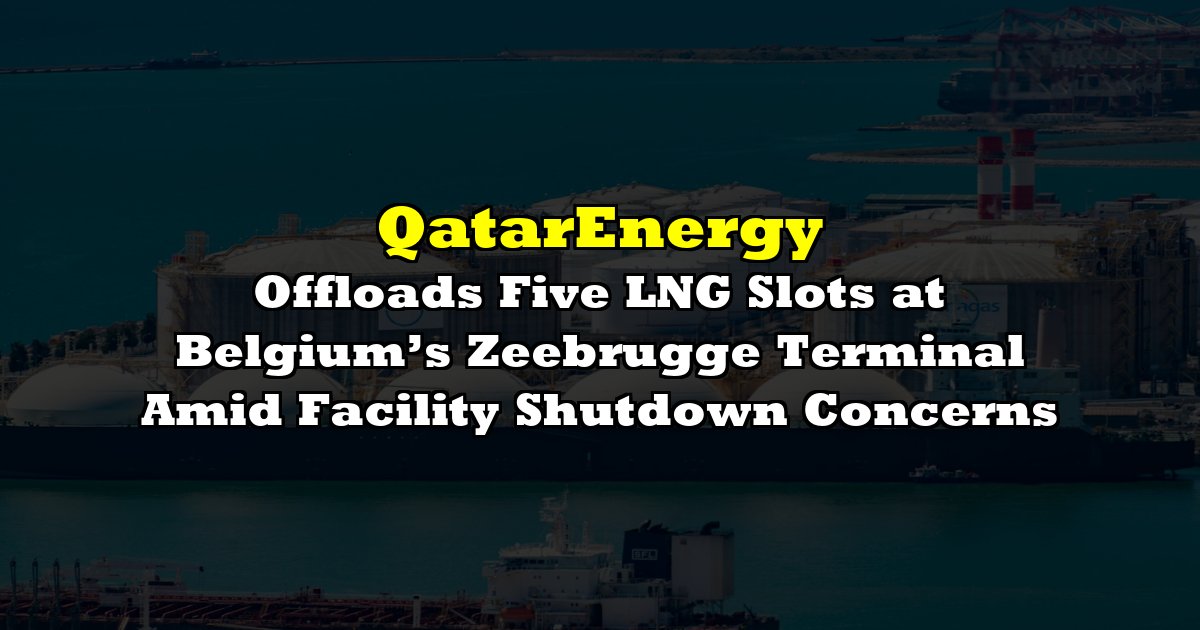

QatarEnergy, one of the world’s largest liquefied natural gas exporters, has offered five slots for unloading, storage, and regasification at Belgium’s Zeebrugge terminal for April 2026, signaling potential prolonged disruptions at its own facilities. Industry sources revealed the move on Wednesday, pointing to operational challenges that may extend downtime at Qatar’s LNG plants following reported damage from Iranian drone strikes.
The decision to offload these slots at Zeebrugge, a key European LNG hub, underscores the immediate need for alternative infrastructure to maintain supply flows to the continent. QatarEnergy’s facilities, critical to global LNG markets, have faced heightened risks amid escalating geopolitical tensions in the Middle East. While the company has not publicly detailed the extent of the damage or expected recovery timeline, the transfer of terminal slots suggests a strategic pivot to ensure delivery commitments are met.
Europe, heavily reliant on LNG imports to replace Russian pipeline gas, could face tighter supply dynamics if Qatar’s output remains constrained. The Zeebrugge terminal, operated by Fluxys, offers a vital entry point for LNG into the European market, with capacity to handle significant volumes. Sources noted that the five slots in April could help mitigate short-term gaps, though buyers are bracing for potential ripple effects on pricing and availability if Qatar’s production delays persist.
🚨🇶🇦 QatarEnergy has offered up five slots for unloading, storage and regasification of LNG at Belgium's Zeebrugge terminal for the month of April, three industry sources said on Wednesday, indicating its facilities could remain shut down for a longer period. 👀 https://t.co/axiPtD3x3S
— Susan Sakmar (@SusanSakmar) March 18, 2026
Geopolitical instability in the region continues to cast a shadow over energy markets, with Qatar’s LNG infrastructure emerging as a focal point. The reported drone strikes add to a complex web of challenges, including ongoing conflicts and supply chain pressures, that threaten to disrupt global gas trade. Qatar, which accounts for nearly a quarter of the world’s LNG supply, plays a pivotal role in stabilizing prices and meeting demand, particularly during peak consumption periods.
As of now, the slots at Zeebrugge are expected to be snapped up by market participants eager to secure capacity. Industry watchers estimate that these slots could cover shipments totaling up to 320,000 cubic meters of LNG, based on typical vessel sizes handled at the terminal. This volume, while a fraction of Qatar’s monthly output, represents a critical buffer for European buyers navigating an already strained market in early 2026.
Information for this story was found via the sources and companies mentioned. The author has no securities or affiliations related to the organizations discussed. Not a recommendation to buy or sell. Always do additional research and consult a professional before purchasing a security. The author holds no licenses.