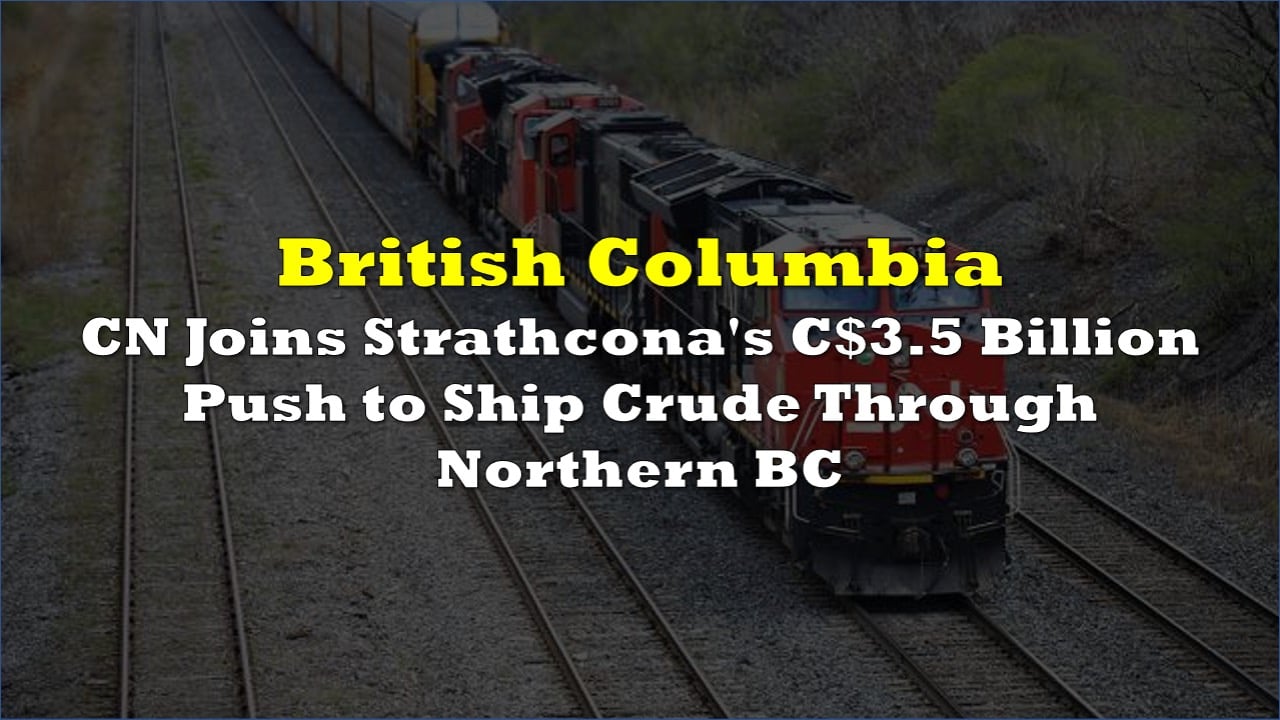

Strathcona Resources Ltd. (TSX: SCR) is teaming up with Canadian National Railway Co. (TSX: CNR) to move 250,000 barrels of crude a day by train to Prince Rupert, British Columbia. The companies announced the project, which they call Northern Express, on November 10 and put its cost at C$2.5 billion (US$1.8 billion) to C$3.5 billion.
Crude would run on CN’s existing line from Hardisty, Alberta, to the port, where Strathcona would build a marine terminal modeled on the propane export facility there. Strathcona already ships up to 80,000 barrels daily by rail to the US, some of it other companies’ crude.
The companies say Northern Express could start operating within two years of regulatory approval. Pacific Link, the C$43.7 billion, one-million-barrel-a-day pipeline Ottawa and Alberta back, is about eight years from operating.
 Sponsored · Selkirk Copper Mines
Since 2019, the Oil Tanker Moratorium Act has kept tankers hauling over 12,500 metric tonnes of crude away from northern coast loading docks, so Strathcona’s terminal would need an exemption. Adam Waterous, Strathcona’s executive chairman, says the rail project deserves the same flexibility, citing Prime Minister Mark Carney’s suggestion last year that the ban could bend for a Pacific pipeline. He says the two companies want Ottawa to list Northern Express as a project of national interest.
Carney and outgoing BC Premier David Eby agreed on July 2 to keep the ban, and the Liberals defeated a Conservative bill to repeal it on October 28. Conservatives cited Strathcona’s proposal in that debate. Charlotte Power, a spokeswoman for the natural resources minister, said Strathcona has raised such ideas at a high level and that meetings with the company do not amount to an endorsement.
Waterous says First Nations will eventually be able to take an equity stake in Northern Express and share in procurement contracts and jobs. Coastal First Nations, an alliance of coastal nations, opposes any exemption to the tanker ban. After the July deal, its president, Marilyn Slett, an elected Heiltsuk chief, said the alliance would “never allow oil tankers on our coast.” Last year, she said the group had no interest in co-owning the Alberta pipeline project.
A CN spokesperson said the railway “supports projects that help bring Canadian natural resources to market” and expects to work with Strathcona and other stakeholders on the plan.