
Starbucks has run into a very practical problem inside its technology-heavy turnaround: an inventory tool cannot protect margins if stores cannot trust the count.
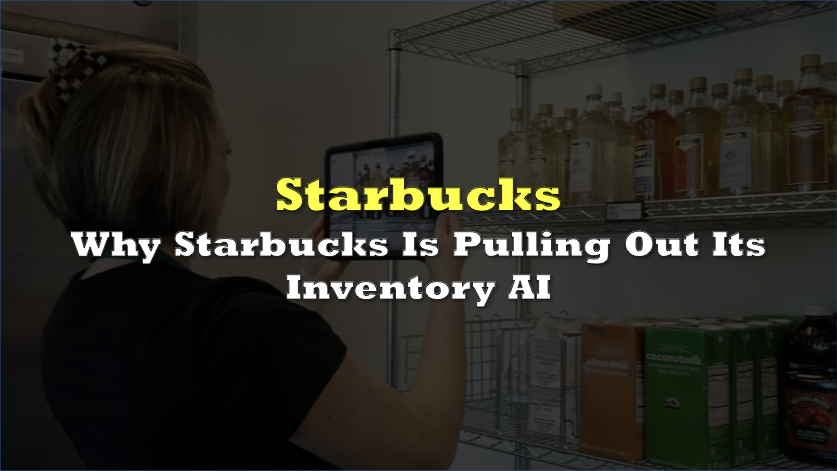
The company has ended a North American AI inventory program that had been designed to make stock checks faster and more frequent, Reuters reported, citing an internal newsletter and two people with direct knowledge. Starbucks confirmed the end of the program to Reuters, saying the move was part of an effort to make inventory counting more consistent across stores.
The retreat comes less than a year after Starbucks began putting the system into more than 11,000 company-operated North American stores. The September 2025 rollout was pitched as a way to give stores clearer visibility into products that drive customer orders, including milk alternatives, cold foam, caramel drizzle, and other beverage inputs. Reuters reported at the time that the system used tablets running NomadGo software and was expected to allow stores to count inventory eight times more frequently.
The issue was not whether Starbucks wanted more automation. It was whether the technology could handle the shelf-level reality of a chain selling customized drinks at scale. Reuters reported earlier this year that the system produced errors, including problems distinguishing or detecting similar milk products, according to workers it cited.
 Sponsored · Selkirk Copper Mines
The timing is also awkward because Starbucks’ sales recovery is no longer the only test for investors. In Q2 FY2026, Starbucks reported net revenue of $9.5 billion, up 8% year over year. Global comparable store sales rose 6.2%, while North America comparable store sales increased 7.1%, helped by a 4.4% increase in comparable transactions and a 2.6% increase in average ticket.
But the North America profit line still showed pressure. Segment operating income fell to $679.9 million from $748.3 million a year earlier, while North America operating margin narrowed to 9.9% from 11.6%. Starbucks said the decline reflected labor investments tied to its “Back to Starbucks” plan, product mix, tariffs, and higher coffee costs, partly offset by sales leverage.
That is where the inventory AI mattered. If it worked, it could have supported the turnaround by reducing stockroom friction, improving availability, and helping stores avoid manual fixes. Instead, Starbucks is moving those items back into its broader inventory-counting process, according to Reuters.
Reuters also reported in January that Starbucks’ supply chain pressures extended beyond a single app, citing current and former employees who described outdated systems, fragmented suppliers, and forecasting issues. Starbucks said at the time that it was improving forecasting, upgrading systems, and making its distribution network more responsive.
The company is not abandoning technology across the business. Under CEO Brian Niccol, Starbucks has continued to discuss digital tools, store innovation, and customer-service changes as part of its broader turnaround.
The inventory decision instead narrows the lesson: automation only creates leverage when the underlying data is reliable enough to remove work, not reroute it.
Information for this story was found via the sources and companies mentioned. The author has no securities or affiliations related to the organizations discussed. Not a recommendation to buy or sell. Always do additional research and consult a professional before purchasing a security. The author holds no licenses.