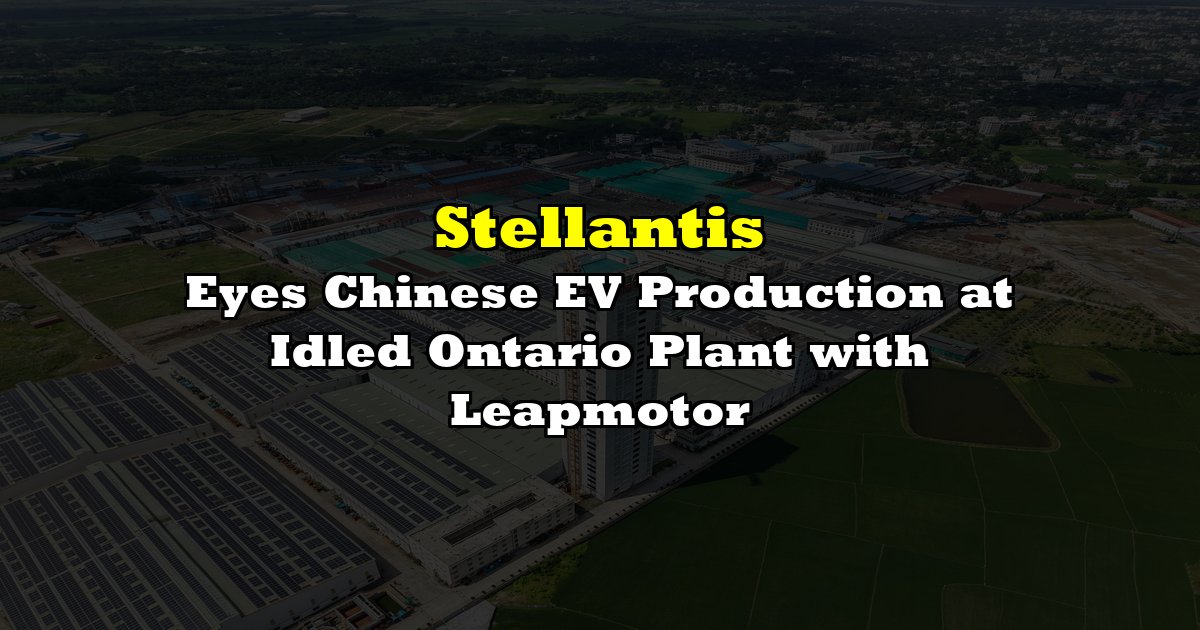

Stellantis NV (NYSE: STLA) is in early discussions with its Chinese partner, Zhejiang Leapmotor Technology Co., to potentially manufacture electric vehicles at an idled assembly plant in Brampton, Ontario, marking a significant shift in Canada’s auto sector as it opens to Chinese investment following a January tariff reduction agreement.
The talks center on reviving the Brampton facility, a suburb of Toronto, which has seen thousands of layoffs in recent years. Originally slated to produce a new Jeep SUV, Stellantis scrapped those plans last year after US President Donald Trump’s tariffs on foreign-made vehicles forced the company to relocate production to a US factory. This decision sparked outrage from Prime Minister Mark Carney’s government, which threatened to reclaim millions in taxpayer subsidies previously granted to Stellantis.
Stellantis exploring deal to manufacture Chinese EVs at its shuttered Ontario plant, potentially reviving the idled facility.
— The Dive Feed (@TheDeepDiveFeed) April 1, 2026
Now, the possibility of partnering with Leapmotor, in which Stellantis holds a 20% stake since 2023, offers a potential lifeline for the plant’s 3,000 unionized workers. The two firms already collaborate through Leapmotor International, a joint venture focused on global EV production, with plans to start building electric SUVs in Spain later this year. Similar projects are underway in Brazil and Malaysia, though those rely on knockdown kits assembled from parts largely made in China.
Canadian Industry Minister Melanie Joly has been vocal about welcoming Chinese auto production, provided it involves joint ventures using Canadian parts and software. She envisions a “Canadian-Chinese car” for global export, but emphasized the need for strict labor standards and local supply chains to address domestic concerns.
However, the path forward is fraught with geopolitical tension. US officials have cautioned Canada against becoming a conduit for Chinese vehicles into the American market, with Trump threatening 100% tariffs on all Canadian goods if such a deal materializes. US Ambassador Pete Hoekstra recently hinted that Chinese-made EVs imported into Canada under lowered tariffs could be blocked at the border, casting doubt on whether vehicles produced by a Stellantis-Leapmotor venture would gain US entry.
Labor unions and parts suppliers in Canada also remain wary of Chinese involvement, posing another hurdle for Carney’s administration. Negotiations with these stakeholders will be critical to any final agreement.
Stellantis, for its part, insists no decisions have been made. “Stellantis remains focused on a strong Canadian footprint and is actively evaluating future programs for Brampton, with the objective to ensure that any investment decision is sustainable and a long-term commitment that supports workers and suppliers,” said LouAnn Gosselin, North America spokesperson for Stellantis.
The outcome of these discussions could reshape North America’s auto landscape, with the Brampton plant’s fate hanging on a delicate balance of economic strategy and international trade pressures. A key deadline looms with Carney’s goal to secure new Chinese joint-venture investments in the Canadian auto sector by early 2028.
Information for this story was found via the sources and companies mentioned. The author has no securities or affiliations related to the organizations discussed. Not a recommendation to buy or sell. Always do additional research and consult a professional before purchasing a security. The author holds no licenses.