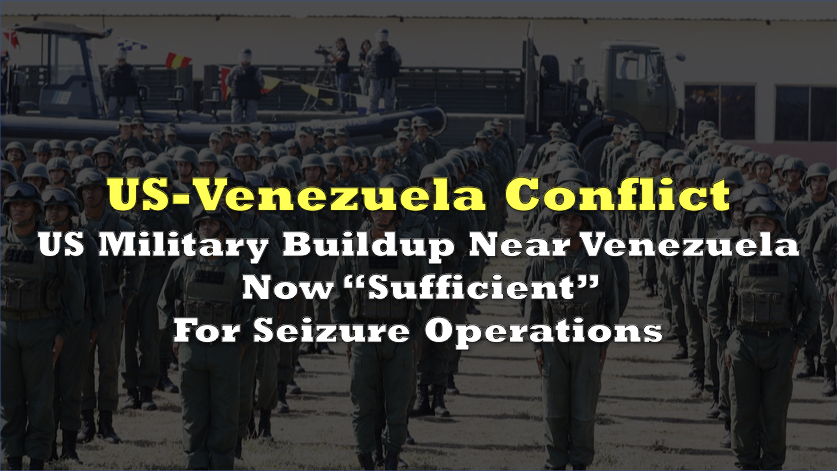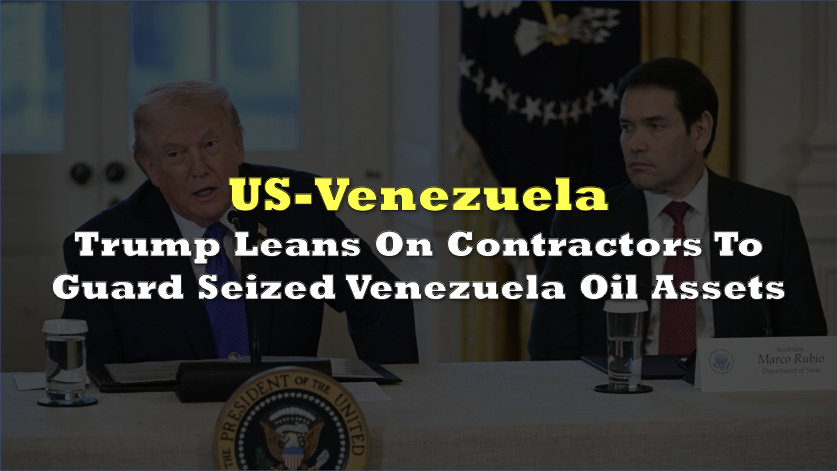

The Trump administration is preparing to use private military contractors to protect oil and energy assets in Venezuela rather than deploying US troops, according to two sources familiar with the plans, as the White House tries to prove it can secure multi-year operations in a volatile transition.
President Donald Trump has not ruled out a US military presence, but sources close to him describe deep wariness about putting American boots on the ground for an extended period, creating a practical need for an alternative security footprint after the US capture of Venezuela’s former President Nicolás Maduro.
New: The Trump administration is preparing to use private military contractors to protect oil & energy assets in Venezuela rather than deploying US troops, sources tell us, setting up a potential boon for security firms w/ experience in region & ties to POTUS.
— Zachary Cohen (@ZcohenCNN) January 15, 2026
Some familiar… pic.twitter.com/vm6rcM3XH3
The administration is simultaneously lobbying major oil companies to reinvest in Venezuela’s ailing oil industry and must convince them that personnel and infrastructure can be protected not just for months but for years, particularly amid what sources describe as a power vacuum triggered by Maduro’s seizure.
Multiple private security companies are already jockeying for involvement, according to a person familiar with the matter, with interest elevated by the scale of historical contractor spending.
During the Iraq War, the US spent about $138 billion on private security, logistics, and reconstruction contractors.
Last week, the Defense Department issued a request for information to contractors on their ability to support possible US military operations in Venezuela, according to the same person. Contractors are also contacting the State Department’s overseas building operations office to signal interest in providing security if and when the US embassy in Venezuela reopens.
One source said Grey Bull Rescue Foundation, a group of US special forces veterans, is well-positioned after helping opposition leader and Nobel laureate María Corina Machado secretly escape Venezuela last year. Grey Bull founder Bryan Stern said the group has been operating in the region “for months,” and framed private security as a standard adjunct to returning capital.
“Foreign investment comes back, and when it does, it brings a bunch of Navy SEAL dudes and Green Beret dudes and ninjas to keep them alive and safe,” he said, adding, “It’ll look a lot like that in Venezuela.”
A source also suggested Erik Prince, founder of Blackwater and a controversial Trump ally, could be tapped. Blackwater played an outsized role in Iraq after the 2003 invasion, including support for oil infrastructure, but came under intense scrutiny after the 2007 shooting of Iraqi civilians.
Asked about potential involvement, Prince responded: “No comment to CNN. Ever.”
Since Maduro’s capture, the administration has met resistance from Big Oil on reinvesting. ExxonMobil CEO Darren Woods told Trump in a White House meeting last week that Venezuela is “uninvestable” in its current state.
Trump later said he is now inclined to keep Exxon out of Venezuela because of that remark.
Rapidan Energy president Bob McNally said US oil companies will pressure-test whether personnel can operate safely, and whether any improvement survives beyond Trump’s term, citing a three-year horizon.
“If we send teams there, can we go to the countryside or will we be killed?” he quipped.
Venezuela remains under a State Department Level 4 “Do Not Travel” advisory citing risks including wrongful detention, torture in detention, terrorism, kidnapping, arbitrary enforcement of local laws, crime, civil unrest, and poor health infrastructure, and a recent post urged Americans to leave “immediately” while warning of armed militias known as colectivos.
Information for this story was found via the sources and companies mentioned. The author has no securities or affiliations related to the organizations discussed. Not a recommendation to buy or sell. Always do additional research and consult a professional before purchasing a security. The author holds no licenses.