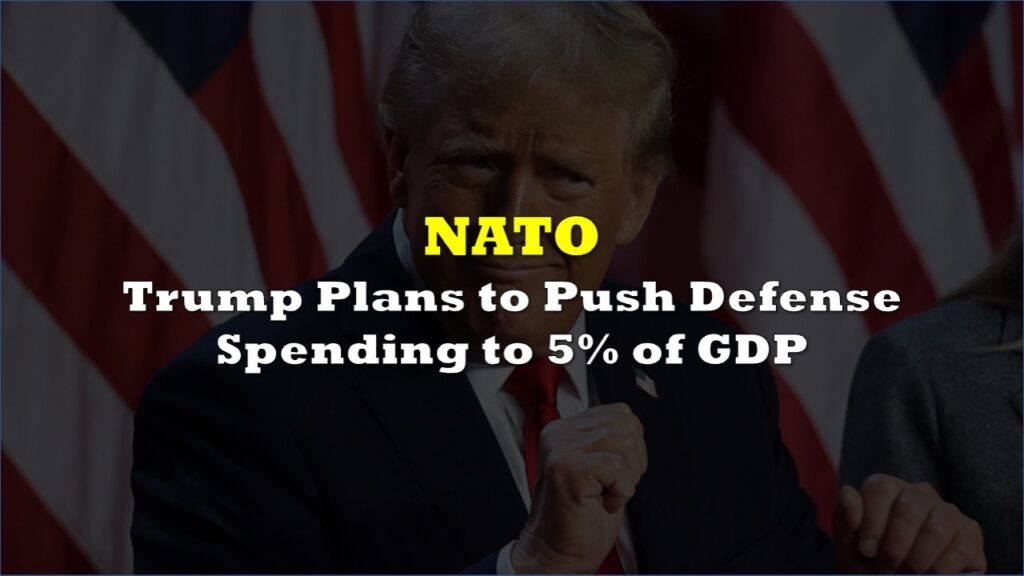

President Donald Trump is again casting doubt on NATO’s value to the US. But the sharper question for Canada is not whether the alliance is under strain, it is how Ottawa navigates a more volatile Washington when its defence, geography and continental security remain structurally tied to the US.
The latest rupture came as Trump tried to frame the US-Israeli war on Iran as a test of allied commitment. In a social media post, he said the US had been informed by most NATO allies that they did not want to get involved in the military operation against Iran, even though “almost every Country strongly agreed with what we are doing.”
“We will protect them, but they will do nothing for us, in particular, in a time of need,” he added.
That language deepens an existing crisis of confidence inside the 32-member alliance. NATO was founded in Washington in 1949 by 12 countries, including Canada, to provide collective security against the Soviet Union. Article 5, the alliance’s mutual-defence clause, has been invoked only once in its history, and it was invoked by the US after the Sept. 11, 2001, terrorist attacks.
Trump has nonetheless repeatedly argued he is unconvinced allies would come to America’s aid if needed, despite the record of allied soldiers fighting and dying alongside US forces.
Canada’s fixed constraint
For Canada, the core issue is less ideological than geographic. Alliances can shift, governments can turn over, but Canada cannot relocate away from the US, its superpower neighbour across the world’s longest defended border.
That is why the Canadian problem differs from Europe’s. European governments are increasingly debating strategic autonomy and accelerating military capacity after shocks generated by the Trump administration, including threats toward Greenland, the territory of a NATO ally.
Canada is also increasing military spending, partly in response to Trump-era pressure and threats, but both critics argue that true defence decoupling is not realistic for Ottawa.
For US’ commitment to NATO, Congress has passed legislation limiting the executive branch’s ability to reduce troop levels in Europe below certain thresholds and preserving the its role in NATO command. US Ambassador to NATO Matthew Whitaker also assured the alliance in February that Washington remained committed to Article 5.
Yet many observers say all bets are off with Trump, because the president is again publicly casting doubt on that commitment.
Political damage and strategic drift
The strategic cost is viewed that Trump’s provocations trigger reactions from allies rooted in anger, betrayal or resentment, making sober planning harder. After the airstrikes on Iran began, many European leaders responded to Trump’s war in language that echoed Trump’s own earlier arguments against support for Ukraine, saying this was not Europe’s war.
That dynamic matters because it reduces room for strategic coherence at exactly the moment NATO faces simultaneous stress points. Trump is questioning allied solidarity as European leaders are reassessing their exposure to US volatility. Meanwhile, Canada is confronting open threats not only to alliance norms but also to its own sovereignty, with Trump having repeatedly referred to both the current and previous prime ministers as governor.
The pattern reinforces Canadian doubts about relying on congressional safeguards alone. CUSMA was negotiated in Trump’s first term and approved by Congress, yet many experts argue Trump’s tariff agenda has still undercut the logic and stability of that pact. The same lesson now applies to security.
Even as Trump attacked allied resolve, some partners signalled limited operational willingness on a narrower issue. On Thursday, Canada joined the UK, France, Germany, Italy, the Netherlands and Japan in a joint statement on Iran’s blockage of the Strait of Hormuz, expressing “readiness to contribute to appropriate efforts to ensure safe passage through the Strait.” That stops short of validating Trump’s broader complaint that allies would do nothing but it suggests selective alignment where interests converge, especially around maritime security and energy flows.
The contradiction at the heart of the current moment is that NATO’s formal architecture remains intact while its political trust is fraying. The alliance may evolve, Europe may rearm, and Washington may oscillate, but Canada cannot change its southern neighbor.
Information for this story was found via CP24 and the sources and companies mentioned. The author has no securities or affiliations related to the organizations discussed. Not a recommendation to buy or sell. Always do additional research and consult a professional before purchasing a security. The author holds no licenses.